Yashamon Gate 夜叉門
Official explanation
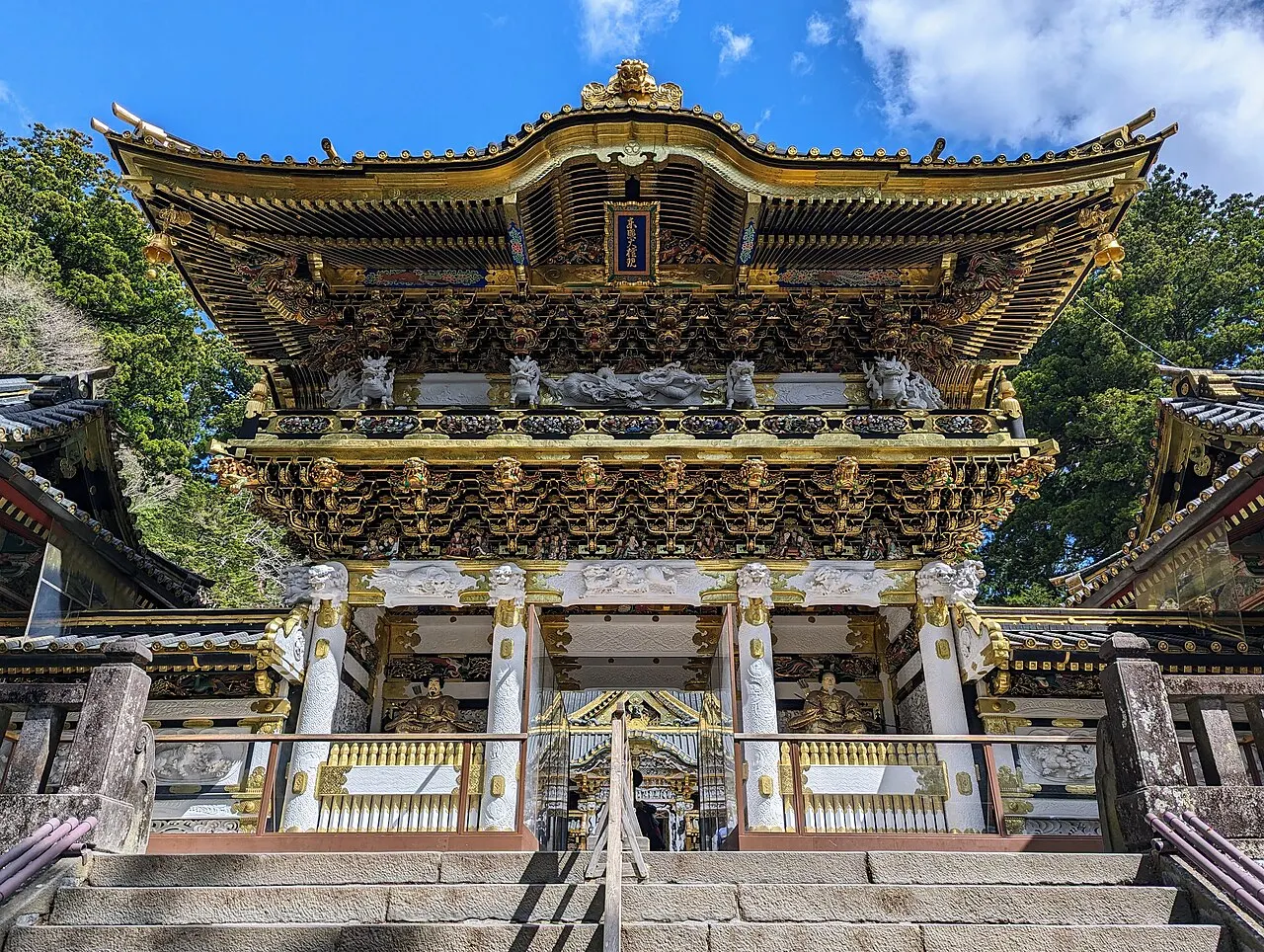
This is the final gate that defends the approach to Iemitsu’s mausoleum. It takes its name from the four yasha spirits that guard the way. Yasha are supernatural beings, Hindu in origin, who are followers of the deity Bishamonten. These four, in particular, vowed to protect the teachings of the Buddha, and each guards one of the cardinal directions. A series of dragons and lions carved on the exterior also protects the mausoleum. On the transom, wainscoting, and walls appear many carvings of peonies, which is why the gate is sometimes called the “Peony Gate.” The peony is considered the king of flowers and is a symbol of wealth and rank. This flower frequently appears as a motif on kimono even today. The prominent cusped gable over the entranceway is a Japanese interpretation of a Chinese style.
出典: 地域観光資源の多言語解説文データベース(観光庁) — www.mlit.go.jp/tagengo-db. この英語解説文は観光庁の地域観光資源の多言語解説整備支援事業で作成しました。
Source: Japan Tourism Agency, Multilingual Explanation Database. This English text was produced by the Japan Tourism Agency's multilingual explanation project and is shown unedited. Opening hours and services may have changed since it was written.
旅Nikkō tours
Live prices and reviews from GetYourGuide. Many tours can be cancelled for free — check each listing.
Ad: we may earn a commission if you book through these links, at no extra cost to you.
Treasure hunts nearby
Getting there
Stay in Nikkō or Kinugawa Onsen
Ad: we may earn a commission if you book through these links, at no extra cost to you.
More sites in Tochigi
Open the scanner and compare →