Kokamon Gate 皇嘉門
Official explanation
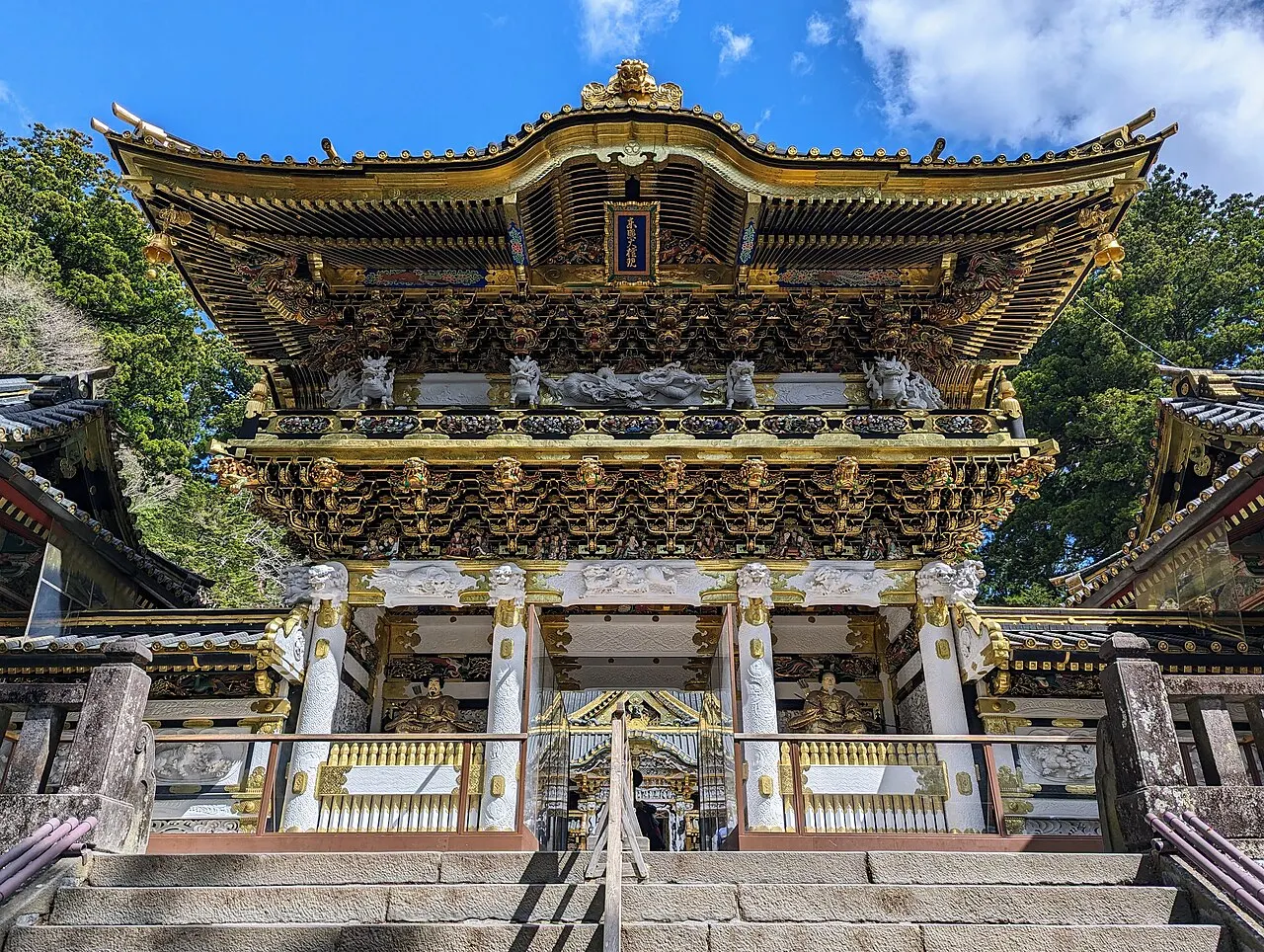
Iemitsu’s mausoleum, in which his physical remains are interred, lies beyond this gate. The name Kokamon was conferred on this gate by the emperor and is also the name of one of the twelve gates of the Imperial Palace in Kyoto. This honor is an indication of the close ties between the Imperial House and the Tokugawa shogunate. The gate is constructed in the ryugu, or Dragon Shrine style. Thus, it is also known as the Ryugumon, or Gate of the Dragon Shrine. The ryugu style draws its inspiration from the architecture of China’s Ming Dynasty (1368–1644) and was thus considered exotic by Japanese people of the time. This style is believed to have been chosen because Iemitsu was born in the year of the dragon. A tennyo, heavenly female spirit similar to an angel, which is painted on the ceiling of the gate, indicates that the visitor is entering sacred ground. Although the Taiyuin is generally understated when compared with the Toshogu, the Kokamon Gate is one of the most distinctive of all the gates of the Nikkosan complex.
出典: 地域観光資源の多言語解説文データベース(観光庁) — www.mlit.go.jp/tagengo-db. この英語解説文は観光庁の地域観光資源の多言語解説整備支援事業で作成しました。
Source: Japan Tourism Agency, Multilingual Explanation Database. This English text was produced by the Japan Tourism Agency's multilingual explanation project and is shown unedited. Opening hours and services may have changed since it was written.
旅Nikkō tours
Live prices and reviews from GetYourGuide. Many tours can be cancelled for free — check each listing.
Ad: we may earn a commission if you book through these links, at no extra cost to you.
Treasure hunts nearby
Getting there
Stay in Nikkō or Kinugawa Onsen
Ad: we may earn a commission if you book through these links, at no extra cost to you.
More sites in Tochigi
Open the scanner and compare →