Karamon Chinese Gate 唐門
Official explanation
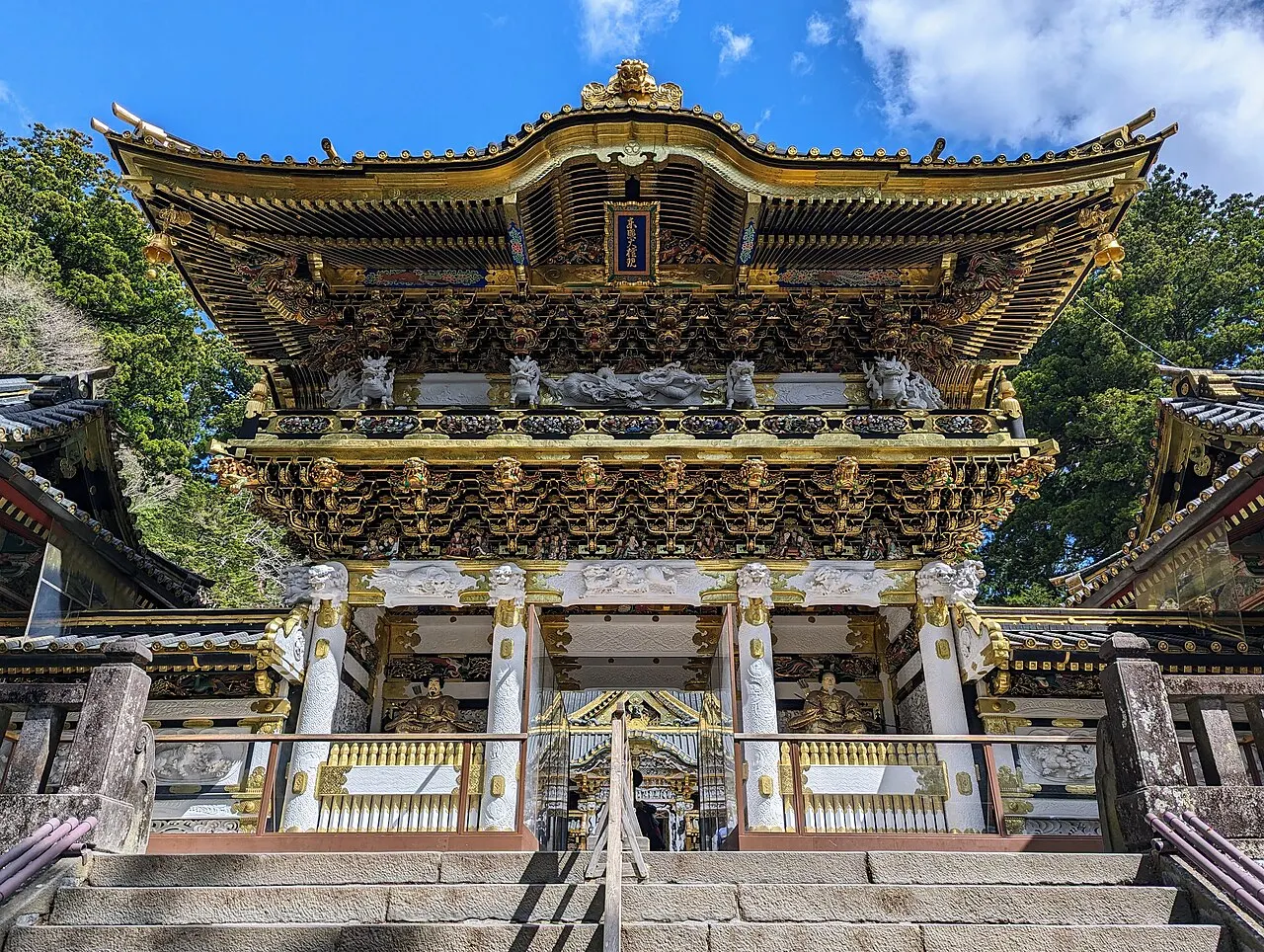
In contrast to the three previous gates, the Karamon is smaller in scale, and its carvings are very different from the fierce guardians displayed on the other gates. Above the entryway are a pair of dragons and a pair of cranes. Iemitsu was born in the year of the dragon, and the cranes symbolize long life. One hundred pigeons are carved along the wainscoting of the gate. The pigeon is associated with the god of warriors, Hachiman, and is symbolic of the Tokugawa house’s martial roots. These features combined together indicate that the visitor has passed from the dangers of the world below into the world above.
Chinese gates are defined by the karahafu Chinese gable over the entranceway, which has a rounded shape rather like the form of a recurve bow. The karahafu indicates high rank and was reserved for gates used by people of high rank, hence its utilization at the entrance to the main hall of Iemitsu’s mausoleum. The gate is called the Chinese Gate because it is based on Chinese architectural styles. However, as in the case of the Gate of the Yasha, this is actually a Japanese interpretation of a Chinese style.
出典: 地域観光資源の多言語解説文データベース(観光庁) — www.mlit.go.jp/tagengo-db. この英語解説文は観光庁の地域観光資源の多言語解説整備支援事業で作成しました。
Source: Japan Tourism Agency, Multilingual Explanation Database. This English text was produced by the Japan Tourism Agency's multilingual explanation project and is shown unedited. Opening hours and services may have changed since it was written.
旅Nikkō tours
Live prices and reviews from GetYourGuide. Many tours can be cancelled for free — check each listing.
Ad: we may earn a commission if you book through these links, at no extra cost to you.
Treasure hunts nearby
Getting there
Stay in Nikkō or Kinugawa Onsen
Ad: we may earn a commission if you book through these links, at no extra cost to you.
More sites in Tochigi
Open the scanner and compare →