Hakone Shrine 平和の鳥居、本殿など
Official explanation
If Lake Ashi is the natural symbol of Hakone, then Hakone Shrine is its spiritual hub. According to legend, this Shinto shrine was founded in 757 CE by Mangan Shonin, a priest engaged in ascetic practices who is said to have erected a simple lakeside sanctuary to the deities of the nearby mountains that had been worshiped in this region since antiquity. The shrine’s influence grew during the Kamakura period (1185–1333), after Minamoto no Yoritomo (1147–1199) sought refuge there after defeat in his first battle against the ruling Taira family. Yoritomo eventually vanquished the Taira and established the Kamakura shogunate, which was to last for almost 150 years.
Not one to forget how Hakone Shrine had provided refuge in time of need, Yoritomo and his successors continued to make regular pilgrimages there, inspiring their retainers to follow suit. By the time the Edo period began in 1603, the shrine’s power had grown considerably, and when the new Tokugawa shogunate sought to establish a checkpoint along the Tokaido highway passing quite close to the shrine precincts, the priests were able to effectively resist the plan. Ultimately the barrier was built a significant distance further down the road. Popular belief in the powers of the shrine remained strong through the late Edo period (late eighteenth century to 1867), when a change in official policy allowed people traveling along the Tokaido highway between Edo (present-day Tokyo) and Kyoto to part from the road for one night only, making it possible to offer prayers at the shrine on their way.
Read the full explanation
Today, the shrine precincts include several noteworthy structures. Among these is the main hall, rebuilt in 1936 after it was destroyed in a fire; an annex of Kuzuryu Shrine, which honors the nine-headed dragon deity known as the protector of Lake Ashi; and the bright red Heiwa no Torii (“Torii of Peace”), built by the lakeside in 1952 to commemorate the Treaty of San Francisco that ended the Allied occupation of Japan.
出典: 地域観光資源の多言語解説文データベース(観光庁) — www.mlit.go.jp/tagengo-db. この英語解説文は観光庁の地域観光資源の多言語解説整備支援事業で作成しました。
Source: Japan Tourism Agency, Multilingual Explanation Database. This English text was produced by the Japan Tourism Agency's multilingual explanation project and is shown unedited. Opening hours and services may have changed since it was written.
旅Kamakura tours
Live prices and reviews from GetYourGuide. Many tours can be cancelled for free — check each listing.
Ad: we may earn a commission if you book through these links, at no extra cost to you.
Things you may see here
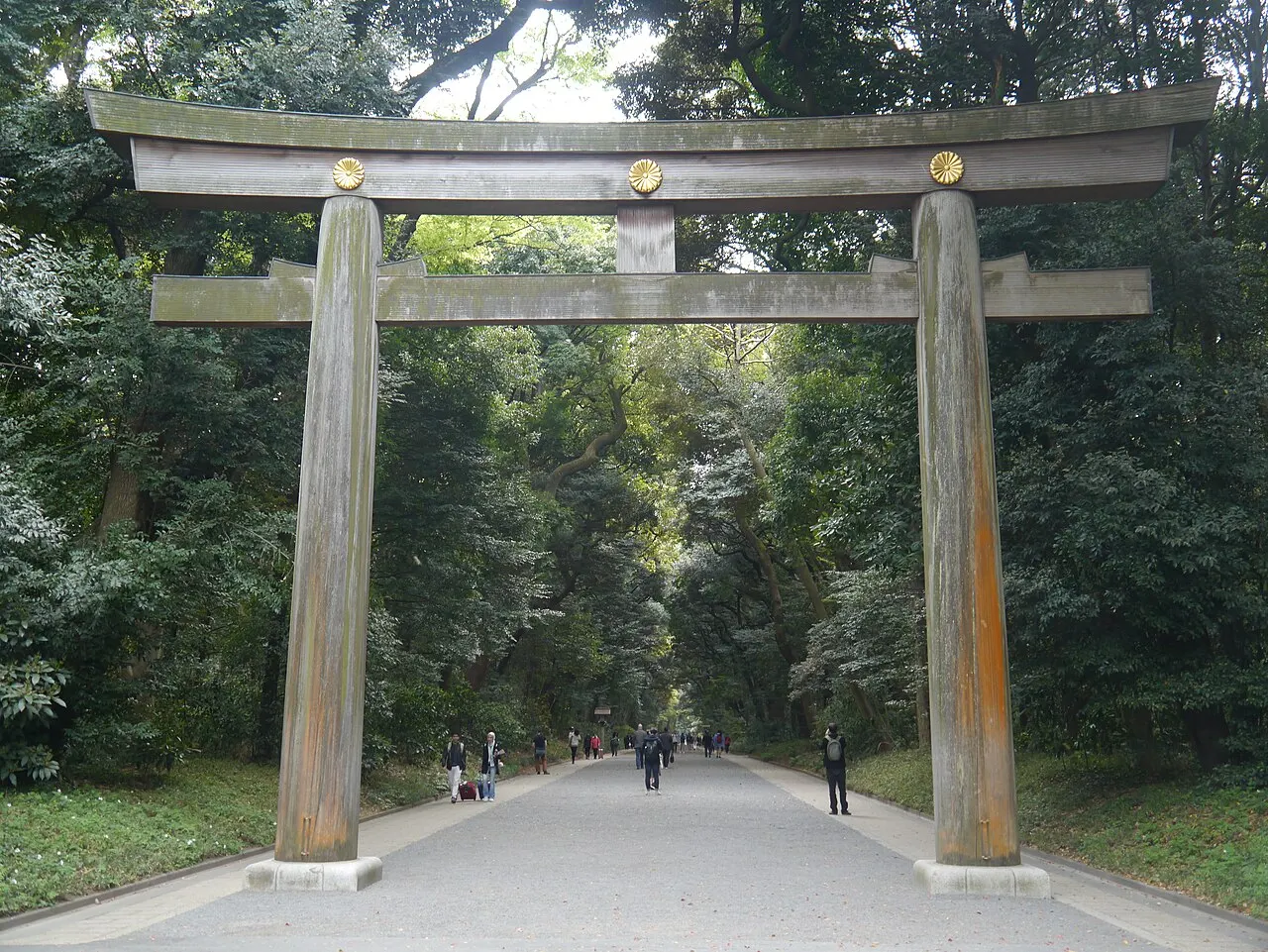 Torii gate鳥居
Getting there
Hotels in Kanagawa
Ad: we may earn a commission if you book through these links, at no extra cost to you.
More sites in Kanagawa
撮Standing in front of one?Open the scanner and compare →