Kofun Burial Mounds on Iki 壱岐古墳群
Official explanation
The landscape of Iki is dotted with kofun burial mounds. These tombs consist of a burial chamber sealed with a giant boulder, contained within a round or keyhole-shaped mound of earth. Some 280 kofun were built on the island, mainly between the second half of the sixth century and the early seventh century. The kofun on Iki are notable for their size as well as their number. The largest of them rival the grand tombs of the Yamato kings who ruled the Japanese archipelago at that time, and items of great value have been discovered inside.
The kofun testify to the strategic importance of Iki during the period in which the kofun were built. From the sixth to the seventh century, the Yamato court and its allies on the Korean Peninsula fought against the Korean kingdom of Silla, and Iki is likely to have functioned as a base from which manpower and supplies could be sent to the front. The powerful figures buried in the kofun may have been high-ranking Yamato warriors, either local chieftains or commanders dispatched from mainland Japan. As the building of sizable kofun required a substantial labor force, their presence indicates a large population. Several of the largest kofun were constructed on high ground facing the Korean Peninsula, possibly in order to scare off prospective intruders approaching from the sea.
Read the full explanation
Some of the kofun on Iki remained in use as tombs for centuries after their construction. Successive generations of the same family were buried in them, unlike elsewhere in Japan, where kofun were usually sealed after the initial interment and their entrance carefully concealed. Although the tombs’ continued use made them relatively easy targets for grave robbers, some of the valuable artifacts buried with the deceased have been recovered and are on display at the Ikikoku Museum. Six of the largest kofun on Iki have been designated a National Historic Site, and two of these—the Kakegi and Sasazuka kofun—are open to the public.
出典: 地域観光資源の多言語解説文データベース(観光庁) — www.mlit.go.jp/tagengo-db. この英語解説文は観光庁の地域観光資源の多言語解説整備支援事業で作成しました。
Source: Japan Tourism Agency, Multilingual Explanation Database. This English text was produced by the Japan Tourism Agency's multilingual explanation project and is shown unedited. Opening hours and services may have changed since it was written.
旅Kyūshū tours
Live prices and reviews from GetYourGuide. Many tours can be cancelled for free — check each listing.
Ad: we may earn a commission if you book through these links, at no extra cost to you.
Things you may see here
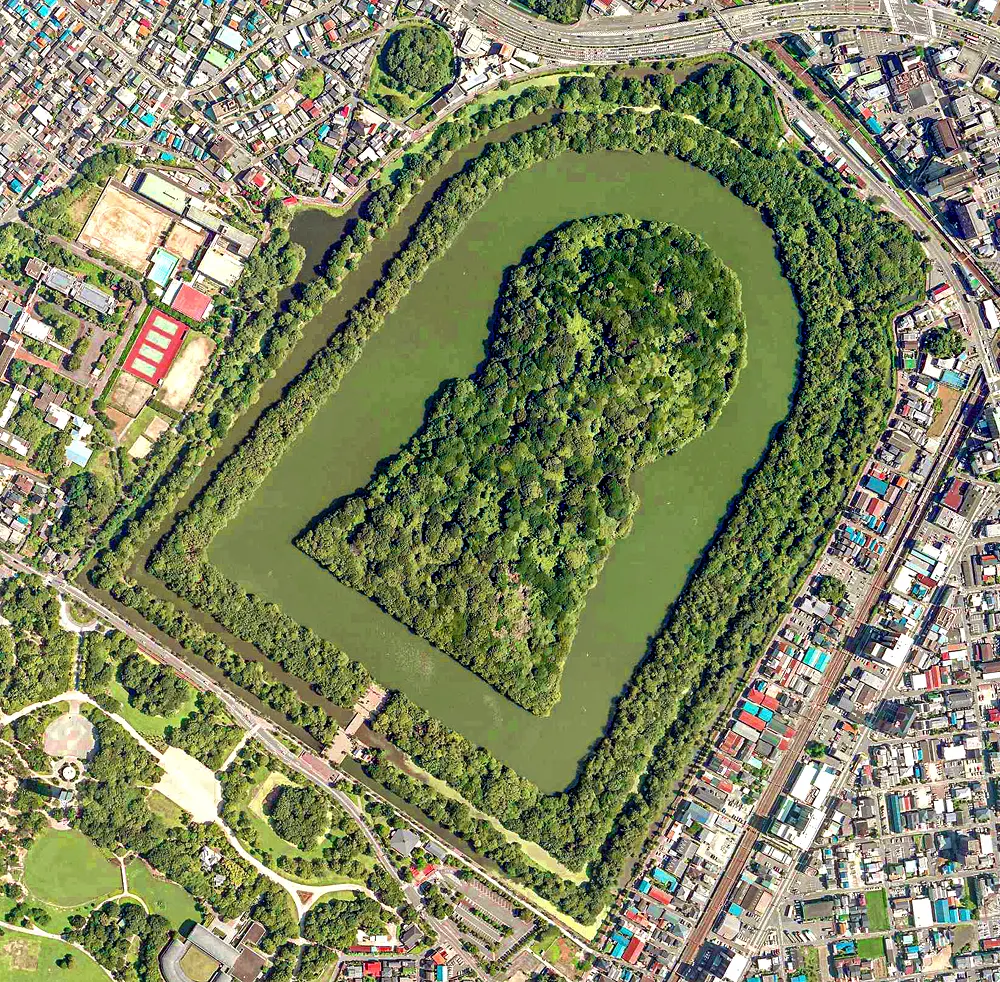 Kofun古墳
Getting there
Hotels in Nagasaki
Ad: we may earn a commission if you book through these links, at no extra cost to you.
More kofuns in Nagasaki
撮Standing in front of one?Open the scanner and compare →