Death’s Head Mound 首塚古墳
Official explanation
There are three theories about the mound’s origins, but as Oratio is a Christian site, we will only cover the Christian one here.
In 1637, the peasants of Shimabara revolted against local daimyo Matsukura Katsuie (1598–1638), whose cruelty and rapacity were made intolerable by a famine-inducing series of bad harvests. In January 1638, more than 20,000 rebels occupied Hara Castle and, in part thanks to the skilled leadership of samurai loyal to an earlier daimyo, held out against a shogunate force of some 120,000 men supported by Dutch ships. When the castle finally fell in April of that year, everyone in it—men, women, and children—was massacred. While the women and children were generally
Read the full explanation
killed where they were found, men of fighting age were rounded up and beheaded, their heads tallied as a means of keeping score. Five meters high and ten meters wide, this kubizuka kofun—literally “heaped-up severed-head mound”—contains the heads of such executed men.
Shocked by the scale of the Shimabara Rebellion and interpreting it purely as a Christian revolt, the shogunate responded the next year by implementing a policy of national seclusion, banning Portuguese ships from Japanese ports.
出典: 地域観光資源の多言語解説文データベース(観光庁) — www.mlit.go.jp/tagengo-db. この英語解説文は観光庁の地域観光資源の多言語解説整備支援事業で作成しました。
Source: Japan Tourism Agency, Multilingual Explanation Database. This English text was produced by the Japan Tourism Agency's multilingual explanation project and is shown unedited. Opening hours and services may have changed since it was written.
旅Kyūshū tours
Live prices and reviews from GetYourGuide. Many tours can be cancelled for free — check each listing.
Ad: we may earn a commission if you book through these links, at no extra cost to you.
Things you may see here
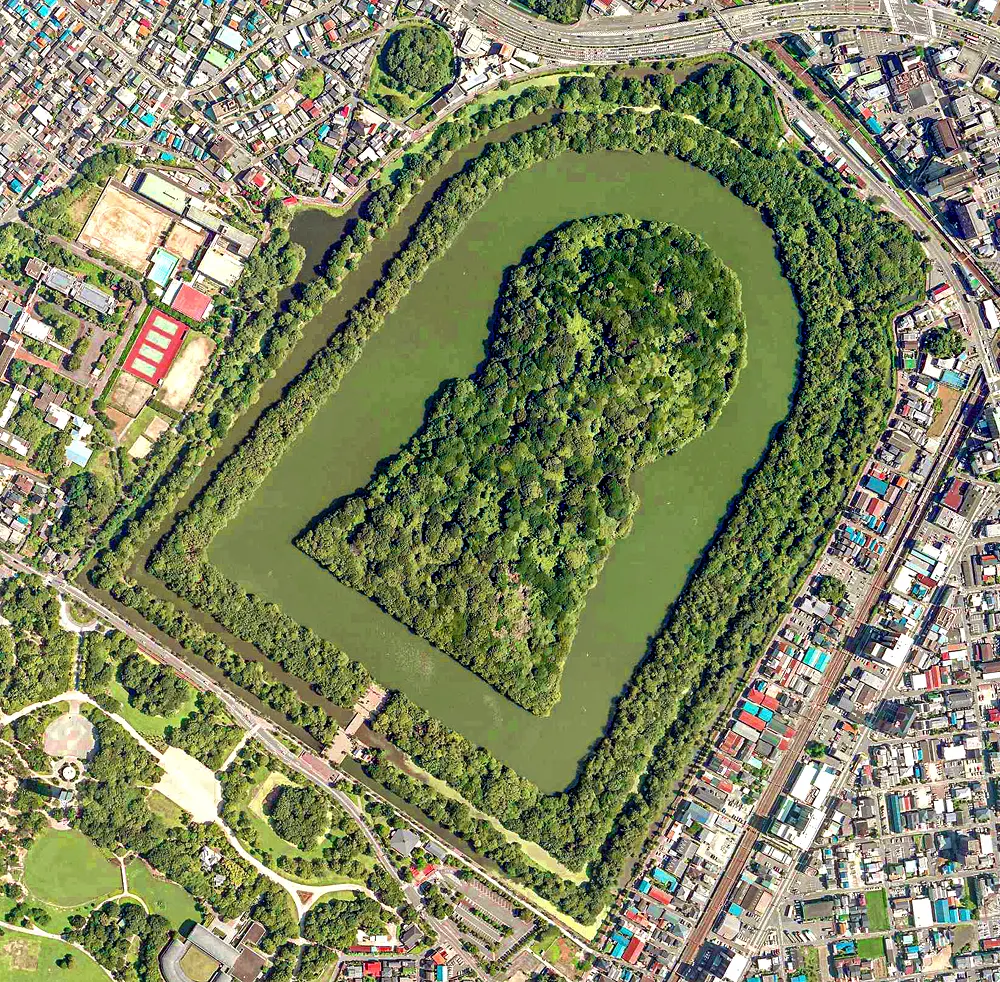 Kofun古墳
Getting there
Hotels in Nagasaki
Ad: we may earn a commission if you book through these links, at no extra cost to you.
More kofuns in Nagasaki
撮Standing in front of one?Open the scanner and compare →