What is a Kofun? 古墳とは?
Official explanation
Kofun are large burial mounds that were built between the third and seventh centuries throughout Japan. The practice of creating mounds in which to bury the deceased with treasures came from the Asian continent. More than 160,000 kofun have been found across the Japanese archipelago.
Kofun take various forms—square, rectangular, circular, and keyhole-shaped. The keyhole variety is rectangular at the entrance side with a circular burial chamber at the rear. The entire structure resembles a keyhole when viewed from above. Keyhole-shaped kofun are the largest type; of these, the largest is located in Osaka Prefecture and covers an area of about 32.3 hectares. It is thought to be the tomb of Emperor Nintoku (257?–399).
Read the full explanation
The manual labor needed to construct a kofun was available only to those with tremendous power and wealth. The bigger the kofun, the more power the person interred inside is thought to have had. After the mound was formed, its slopes were covered with fist-sized stones. Terracotta objects and sculptures were placed around the mound, perhaps to be used during rituals.
The burial chambers in the earliest kofun were unadorned, but painted decorations and murals commonly adorn kofun in northern Kyushu made during the sixth century and later. The deceased would be interred with funerary objects laid inside and around the coffin. The items discovered inside kofun provide insight into cultural and technological life in ancient Japan and interactions with the rest of Asia. Early kofun contain mainly comma-shaped beads, bronze mirrors, and other ritualistic objects, but from the sixth century onward, iron weaponry, armor, and other armaments were also common.
Ōmuta has numerous kofun, the most prominent of which are the Hagino-o, Kugurizuka, and Kurosaki Kanzeonzuka burial mounds. Artifacts excavated from local kofun are on display at the Miike Playing Cards and History Material Museum.
出典: 地域観光資源の多言語解説文データベース(観光庁) — www.mlit.go.jp/tagengo-db. この英語解説文は観光庁の地域観光資源の多言語解説整備支援事業で作成しました。
Source: Japan Tourism Agency, Multilingual Explanation Database. This English text was produced by the Japan Tourism Agency's multilingual explanation project and is shown unedited. Opening hours and services may have changed since it was written.
旅Kyūshū tours
Live prices and reviews from GetYourGuide. Many tours can be cancelled for free — check each listing.
Ad: we may earn a commission if you book through these links, at no extra cost to you.
Things you may see here
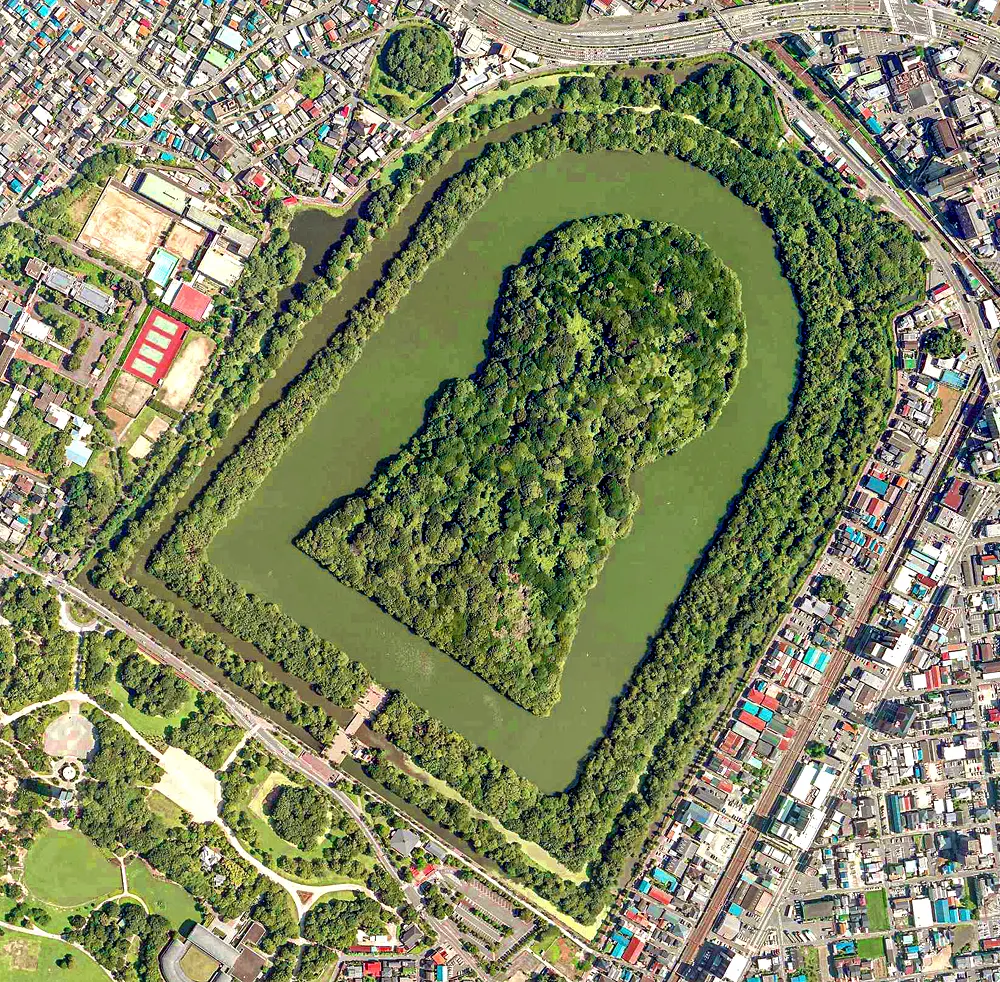 Kofun古墳
Getting there
Hotels in Kyūshū
Ad: we may earn a commission if you book through these links, at no extra cost to you.
More kofuns in Fukuoka
Open the scanner and compare →