Tumulus Tombs 新原・奴山古墳群
Official explanation
The construction of tumuli, large tombs under mounds of soil or rock (kofun) was common across prehistoric Europe and Asia but began around the mid-third century in Japan. The tradition of constructing burial mounds for emperors and important figures originated in ancient China, and spread to Japan via the Korean Peninsula. It is thought some 160,000 of them were built across the archipelago. During the Yamato period (300–710), these burial mounds were built for emperors but also for the leaders of powerful local families. They were buried with precious objects, similar to those found on Okinoshima. This was a well-established practice by the time the Shimbaru tumuli were built for the Munakata family, who had control over local shipping routes and close ties to the Yamato court.
For a better understanding of these tombs, download the dedicated AR (augmented reality) app, Okinoshima Finder, available on iTunes and Google Play.
出典: 地域観光資源の多言語解説文データベース(観光庁) — www.mlit.go.jp/tagengo-db. この英語解説文は観光庁の地域観光資源の多言語解説整備支援事業で作成しました。
Source: Japan Tourism Agency, Multilingual Explanation Database. This English text was produced by the Japan Tourism Agency's multilingual explanation project and is shown unedited. Opening hours and services may have changed since it was written.
旅Kyūshū tours
Live prices and reviews from GetYourGuide. Many tours can be cancelled for free — check each listing.
Ad: we may earn a commission if you book through these links, at no extra cost to you.
Things you may see here
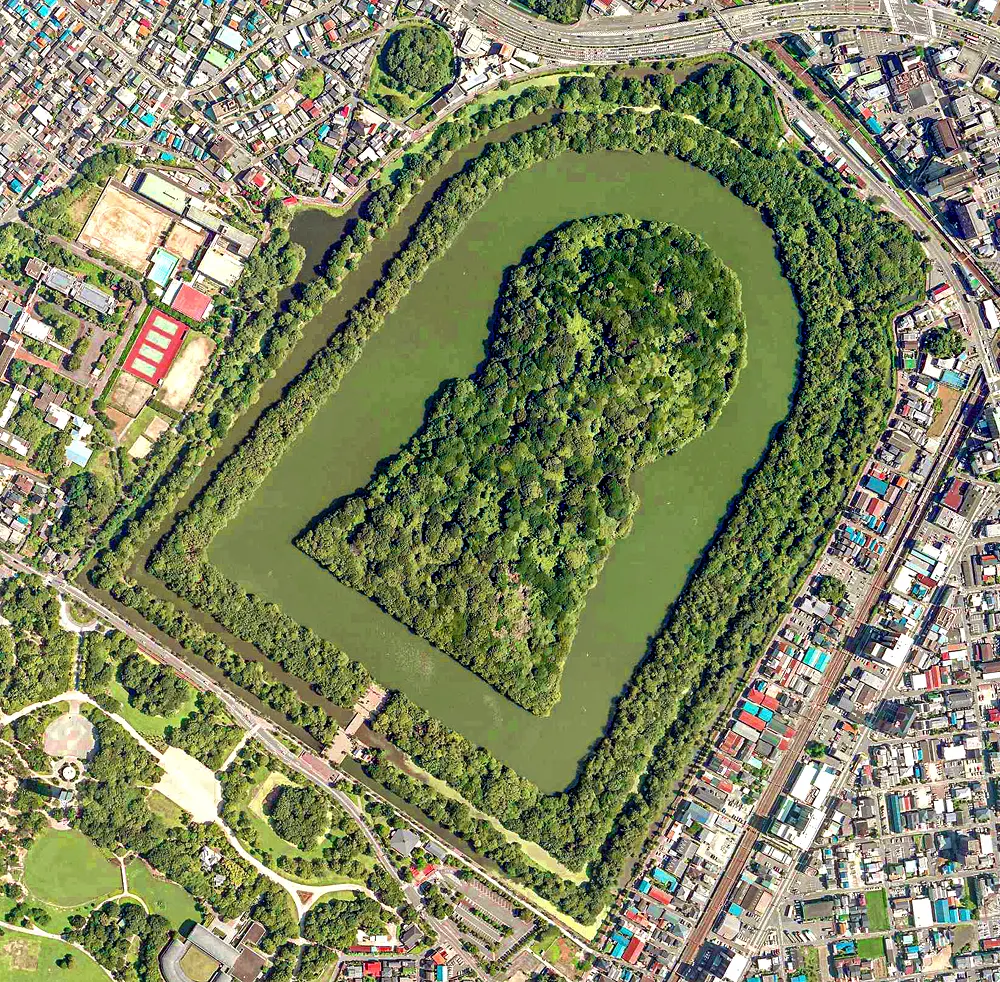 Kofun古墳
Getting there
Hotels in Kyūshū
Ad: we may earn a commission if you book through these links, at no extra cost to you.
More kofuns in Fukuoka
Open the scanner and compare →