 参拝
Japan · 5 min read
How to Pray at a Japanese Shrine: Bows, Claps and the Offering Box
How to pray at a Japanese shrine, step by step: bow twice, clap twice, pray, bow once. Plus the bell, the offering box, and how temples differ.
✓ Fact-checked 2026-11-10 · how we check
文A Summary in your language
日本語
神社でのお参りは、多くの神社で「二拝二拍手一拝」。鳥居で軽く一礼し、参道の端を歩き、手水で手と口を清めます。鈴があれば鳴らし、お賽銭を入れ、2回深くおじぎ、2回手を打って祈り、最後に1回おじぎ。金額の決まりはありません。出雲大社は四拍手。お寺では手を打たず、静かに手を合わせます。
繁體中文
在日本神社參拜,多數神社採用「二拜二拍手一拜」。在鳥居前輕輕一鞠躬,走參道兩側,在手水舍洗手漱口。若有鈴就輕輕搖響,投入香油錢,深深鞠躬兩次、拍手兩次後祈禱,最後再鞠躬一次。金額沒有規定。出雲大社是拍手四次。寺院則不拍手,安靜地合掌。
简体中文
在日本神社参拜,多数神社采用“二拜二拍手一拜”。在鸟居前轻轻一鞠躬,走参道两侧,在手水舍洗手漱口。若有铃就轻轻摇响,投入香油钱,深深鞠躬两次、拍手两次后祈祷,最后再鞠躬一次。金额没有规定。出云大社是拍手四次。寺院则不拍手,安静地合掌。
한국어
일본 신사 참배는 대부분 "두 번 절, 두 번 박수, 한 번 절"입니다. 도리이 앞에서 가볍게 인사하고, 참배길 가장자리로 걸으며, 데미즈야에서 손과 입을 씻습니다. 방울이 있으면 울리고 새전을 넣은 뒤, 두 번 깊이 절하고 두 번 손뼉을 치고 기도한 다음 한 번 더 절합니다. 금액은 정해져 있지 않습니다. 이즈모타이샤는 네 번 박수. 절에서는 손뼉을 치지 않고 조용히 합장합니다.
This story contains affiliate links. If you book through them, we may earn a commission at no extra cost to you.
Quick answer
At most Japanese shrines, you pray by bowing deeply twice, clapping your hands twice, saying your prayer silently, and bowing once more. Before that, ring the bell if there is one and put an offering in the box — any amount is fine, and everyone is welcome to pray, whatever their faith.
一On the way in: the torii and the path
A shrine visit begins before you reach the hall. The torii gate marks the entrance to the sacred ground of the kami (a god or spirit in Shinto).
- Bow once at the torii. A small, quiet bow before you pass through is enough.
- Walk at the side of the path. The centre of the approach, called the sandō, is thought of as the way of the kami. Keep to the left or right.
When you leave, many people turn back after passing through the torii and bow once more.
二At the water basin: rinse your hands and mouth
Near the entrance you will find a temizuya, a covered basin of water with wooden ladles. Rinsing here is a small act of purification before you stand before the kami.
- Hold the ladle in your right hand and pour water over your left hand.
- Switch hands and pour water over your right hand.
- Switch back, pour a little water into your cupped left hand, and rinse your mouth. Never put the ladle to your lips, and spit quietly to the side, not back into the basin.
- Rinse your left hand once more.
- Tilt the ladle upright so the last water runs down the handle, then put it back.
The order can differ a little from place to place, especially at temples. If there is a sign at the basin, follow it.
三At the hall: bell, offering, two bows, two claps, one bow
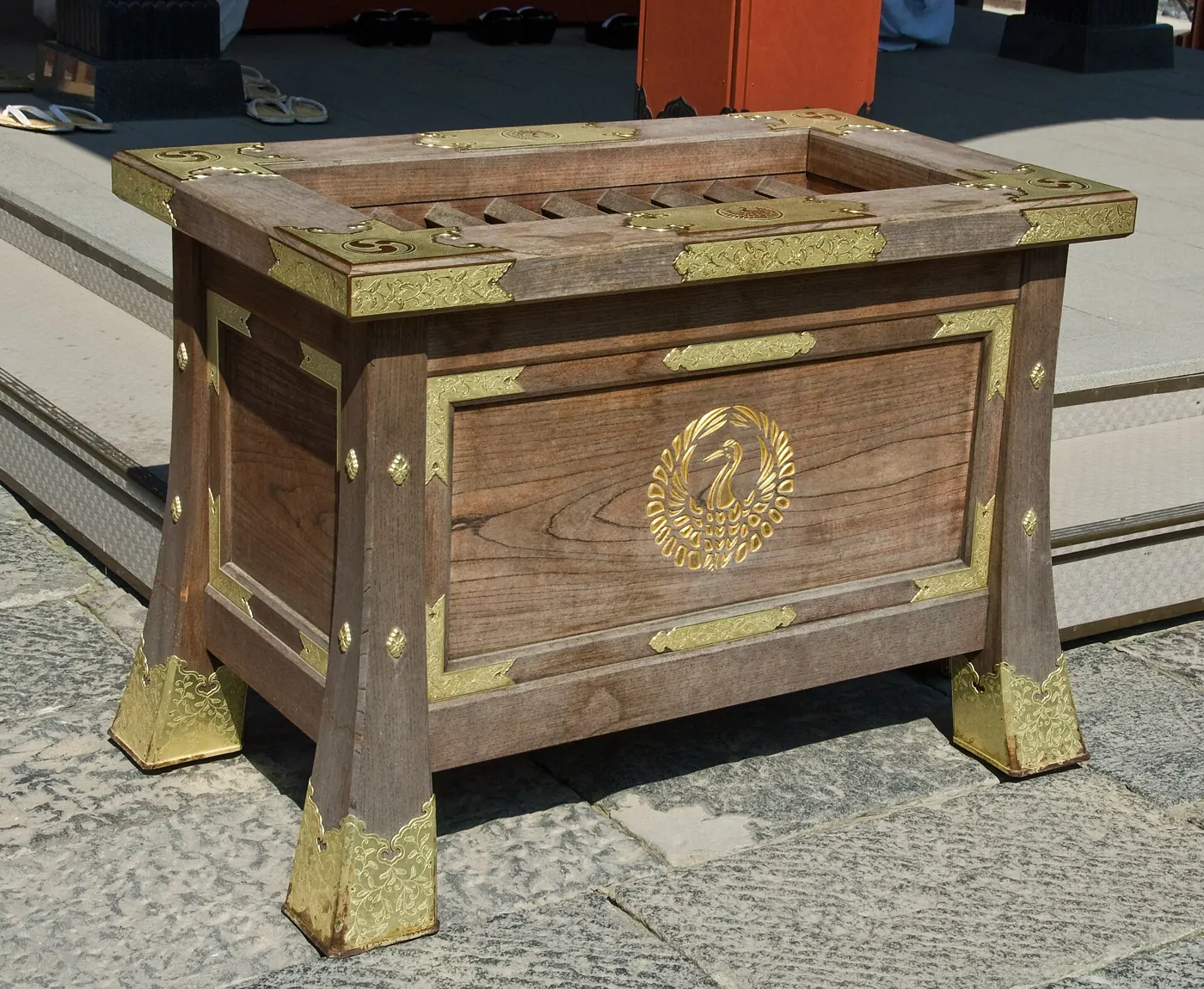
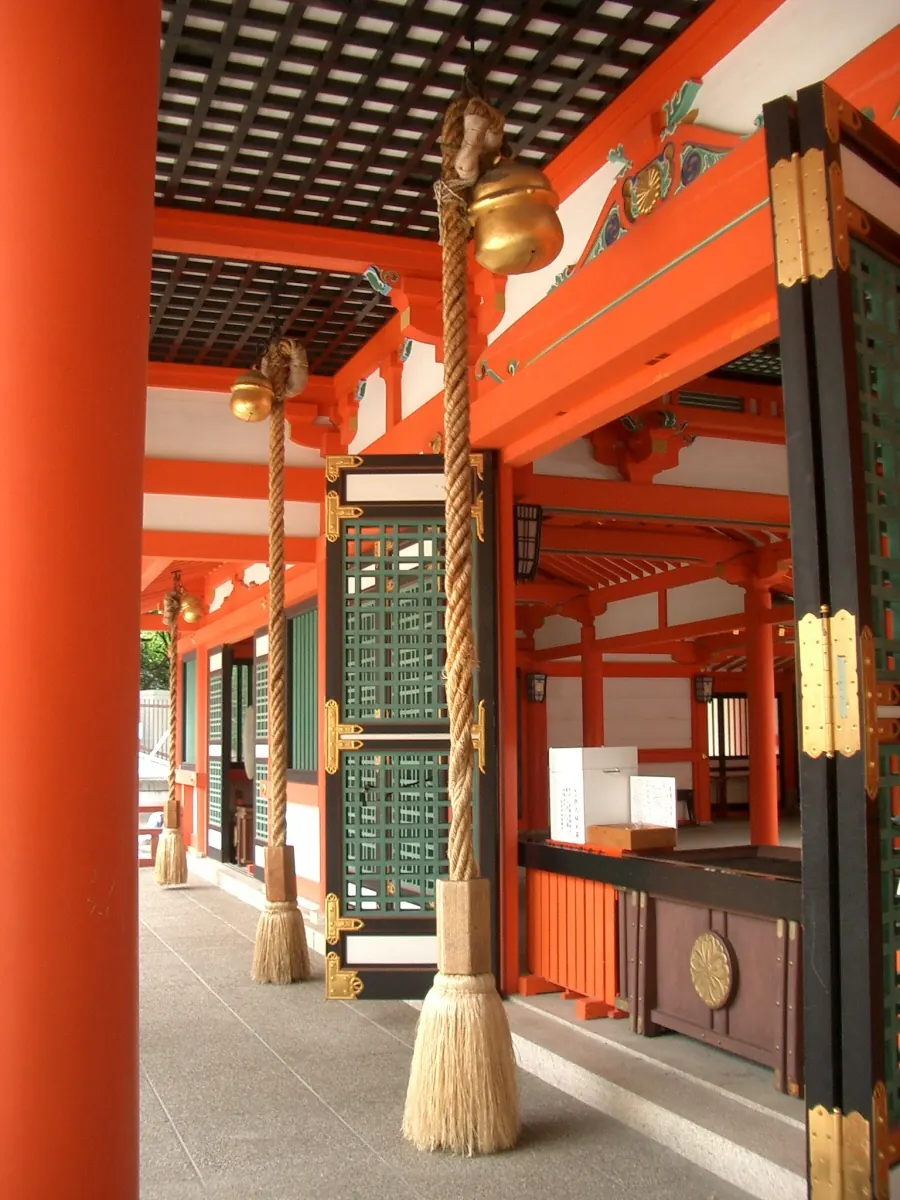
Walk up to the front of the worship hall, the haiden. You will usually see a large offering box, the saisen-bako, often with a thick rope and a bell hanging above it.
- Bow lightly as you step up to the box.
- Ring the bell by shaking the rope gently, if there is one. It lets the kami know you are there.
- Make an offering. Drop a coin into the box. There is no set amount; the act of reverence is what counts.
- Bow deeply twice, bending from the waist.
- Clap twice, with your hands at chest height.
- Pray silently with your palms still together.
- Bow deeply once more, then step aside for the next person.
Guides differ on whether the bell or the coin comes first. Either order is common, so do not worry about it.
四Not every shrine counts the same
"Two bows, two claps, one bow" is the standard at most shrines, but it is not the only form.
- Izumo Taisha in Shimane: visitors bow twice, clap four times, and bow once — twice the usual number of claps. Both the shrine's own website and the local tourism association say so.
- Older styles varied widely too, as Kokugakuin University's encyclopedia of Shinto describes.
The two-bows-two-claps rule is also younger than many people think. It began as a protocol for Shinto priests in the Meiji era (1868–1912), and spread to ordinary visitors only after the Second World War, when the Association of Shinto Shrines recommended it. Before that, many people simply put their palms together to pray.
If a shrine posts its own steps on a sign near the hall, follow the sign.
五At a Buddhist temple, do not clap
Temples are Buddhist, not Shinto, and the prayer is different:
- Do not clap. Put your palms together in front of your chest (gasshō), bow your head, and pray quietly.
- You may still make an offering at the box before you pray.
An easy way to tell where you are: a torii gate means a shrine, while a large roofed gate, often with two fierce guardian statues, usually means a temple.
How to see it
| Where | Any Shinto shrine in Japan, large or small |
| Hours | Differ by shrine; check before you go |
| Entry | Shrine grounds are usually free to enter |
| Time needed | 5–10 minutes to pray; longer to walk the grounds |
Hours and customs differ from shrine to shrine. Check the official website of the shrine you plan to visit.
Keep reading
- What Is Shichi-Go-San? Japan's 7-5-3 Day for Children, Explained
- Why Do Inari Foxes Hold Keys? And Who Paid for 10,000 Torii?
Sources
- Japan Tourism Agency, Multilingual Commentary Database: How to Pray (Meiji Jingu) — https://www.mlit.go.jp/tagengo-db/en/H30-00530.html
- Kokugakuin University, Encyclopedia of Shinto: Sanpai sahō (worship protocol) — https://d-museum.kokugakuin.ac.jp/eos/detail/?id=9055
- Izumo Ōyashiro (Izumo Taisha) official website: Precincts — https://izumooyashiro.or.jp/en/precincts
- Izumo Tourism Association: Izumo Taisha guide (PDF) — https://izumo-kankou.gr.jp/files/AddW033_2019012113210912745.pdf
- Kumano Taisha official website: Visiting Etiquette — https://kumano-taisha.or.jp/en/?p=380
- Japan National Tourism Organization: Two bows and two claps — https://www.japan.travel/en/uk/inspiration/two-bows-and-two-claps-the-ins-and-outs-of-shinto-shrines/
- Japan National Tourism Organization: Shrine and temple visits, best practices — https://www.japan.travel/en/us/blog/shrine-temple-visits-best-practices/
- Nippon.com: Is There a "Correct" Way to Pray at Temples and Shrines? — https://www.nippon.com/en/japan-topics/g02571/
- Sapporo Travel (official Sapporo tourism site): Visiting a Shrine — https://www.sapporo.travel/en/info/useful_information/visiting-a-shrine/
- Japan Tourism Agency, Multilingual Commentary Database: Temizuya, Ritual Purification — https://www.mlit.go.jp/tagengo-db/en/H30-00523.html