Lady Tachibana Shrine 橘夫人念持仏
Official explanation
Lady Tachibana was the mother of Empress Komyo (701–760), who was the consort of Emperor Shomu (701–756), Japan’s 45th emperor. Lady Tachibana may have prayed before this wooden altar-shrine containing a remarkably detailed bronze Amida triad that dates back to the second half of the seventh century. The Amida triad consists of the Amida Buddha and two bodhisattvas seated on lotus flower thrones.
The lotus flower is important in Buddhist iconography because it emerges from the mud at the bottom of a pond, but its flowers blossom on long stalks as if floating above murky waters, such as of earthly struggles with attachment and desire. It is because the world is full of such desires that the possibility of enlightenment exists.
Read the full explanation
The shrine is decorated on the sides with images of various bodhisattvas and figures of the Four Guardian Kings (Shitenno) and displays the influence of other cultures on Japanese culture during this period. The shrine is considered to represent a peak in the development of Far Eastern art.
出典: 地域観光資源の多言語解説文データベース(観光庁) — www.mlit.go.jp/tagengo-db. この英語解説文は観光庁の地域観光資源の多言語解説整備支援事業で作成しました。
Source: Japan Tourism Agency, Multilingual Explanation Database. This English text was produced by the Japan Tourism Agency's multilingual explanation project and is shown unedited. Opening hours and services may have changed since it was written.
旅Nara tours
Live prices and reviews from GetYourGuide. Many tours can be cancelled for free — check each listing.
Ad: we may earn a commission if you book through these links, at no extra cost to you.
Things you may see here
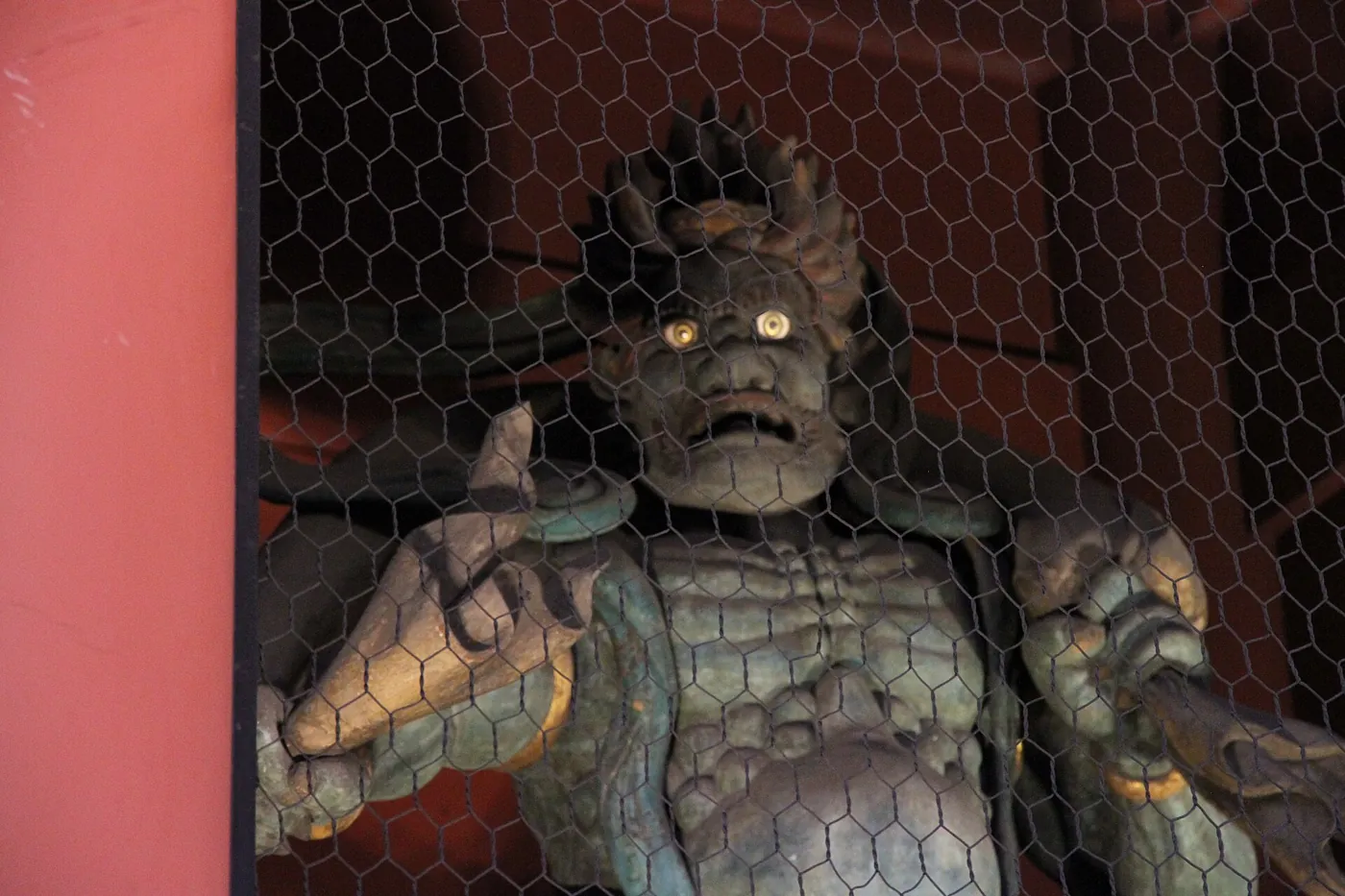 Niō仁王
Treasure hunts nearby
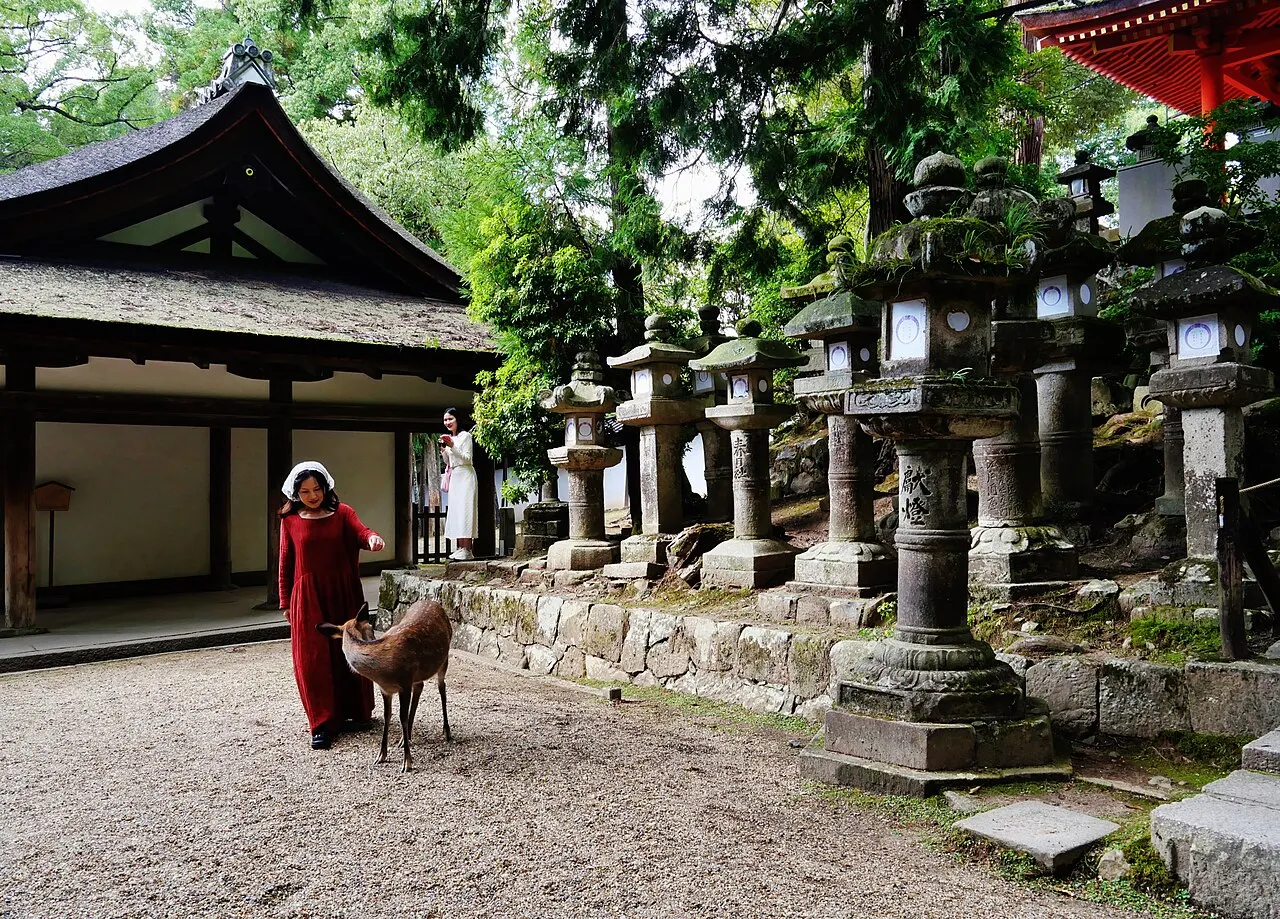
Getting there
Hotels in Nara
Ad: we may earn a commission if you book through these links, at no extra cost to you.
More sites in Nara
Open the scanner and compare →