Hokiji Temple Three-Storied Pagoda 三重塔
Official explanation
Pagodas at Buddhist temples in Japan were originally conceived as reliquaries and monuments dedicated to Shakyamuni, the historical Buddha. Hokiji Temple’s majestic Three-Story Pagoda, standing some 24 meters tall, is a rare example of architecture from Japan’s Asuka period (593–710), and the oldest three-storied pagoda in Japan. It is the only building surviving from the original establishment of Hokiji Temple in 706.
Scholars believe that the pagoda was modeled on the Five-Story Pagoda at Horyuji Temple, to which the Hokiji Temple belongs. The Buddhist priest Shinsei Ennin and his disciples restored the pagoda in 1678, and it was most recently dismantled and restored in 1975.
Read the full explanation
Three-story Pagoda
Three-story Pagoda
National Treasure
The graceful lines of Kofukuji’s Three-story Pagoda have made it famous as an example of Buddhist architecture of the Heian period (794–1185). Erected shortly after the destruction of the entire temple complex in 1180, it is one of the two oldest structures at Kofukuji today, along with the Northern Round Hall.
The 19-meter high pagoda was originally built in 1143 at the behest of Fujiwara no Kiyoko (posthumous name Kokamon’in; 1122–1182), the consort of Emperor Sutoku (1119–1164). The pillars and lintels of the inner sanctuary, as well as the ceiling, inner walls, and inside faces of the four doors, were richly decorated with floral vining patterns and paintings of Buddhas, bodhisattvas, pavilions, and what appear to be images of patrons. The first story contains a set of four murals painted on wooden panels that each depict 1,000 images of one of four Buddhas: Yakushi facing east, Shakyamuni facing south, Amida facing west, and Miroku facing north.
A notable feature is an image of the goddess Benzaiten enshrined on the eastern face of the central pillar and surrounded by images of 15 attendants. It is said to have been installed by the famous monk Kobo Daishi (Kukai; 774–835). Benzaiten’s crown has a coiled snake with the face of an old man that is surmounted by a Shinto-style torii gate. The image combines the Indian Buddhist goddess Benzaiten and the native Japanese deity Ugajin.
出典: 地域観光資源の多言語解説文データベース(観光庁) — www.mlit.go.jp/tagengo-db. この英語解説文は観光庁の地域観光資源の多言語解説整備支援事業で作成しました。
Source: Japan Tourism Agency, Multilingual Explanation Database. This English text was produced by the Japan Tourism Agency's multilingual explanation project and is shown unedited. Opening hours and services may have changed since it was written.
旅Nara tours
Live prices and reviews from GetYourGuide. Many tours can be cancelled for free — check each listing.
Ad: we may earn a commission if you book through these links, at no extra cost to you.
Things you may see here
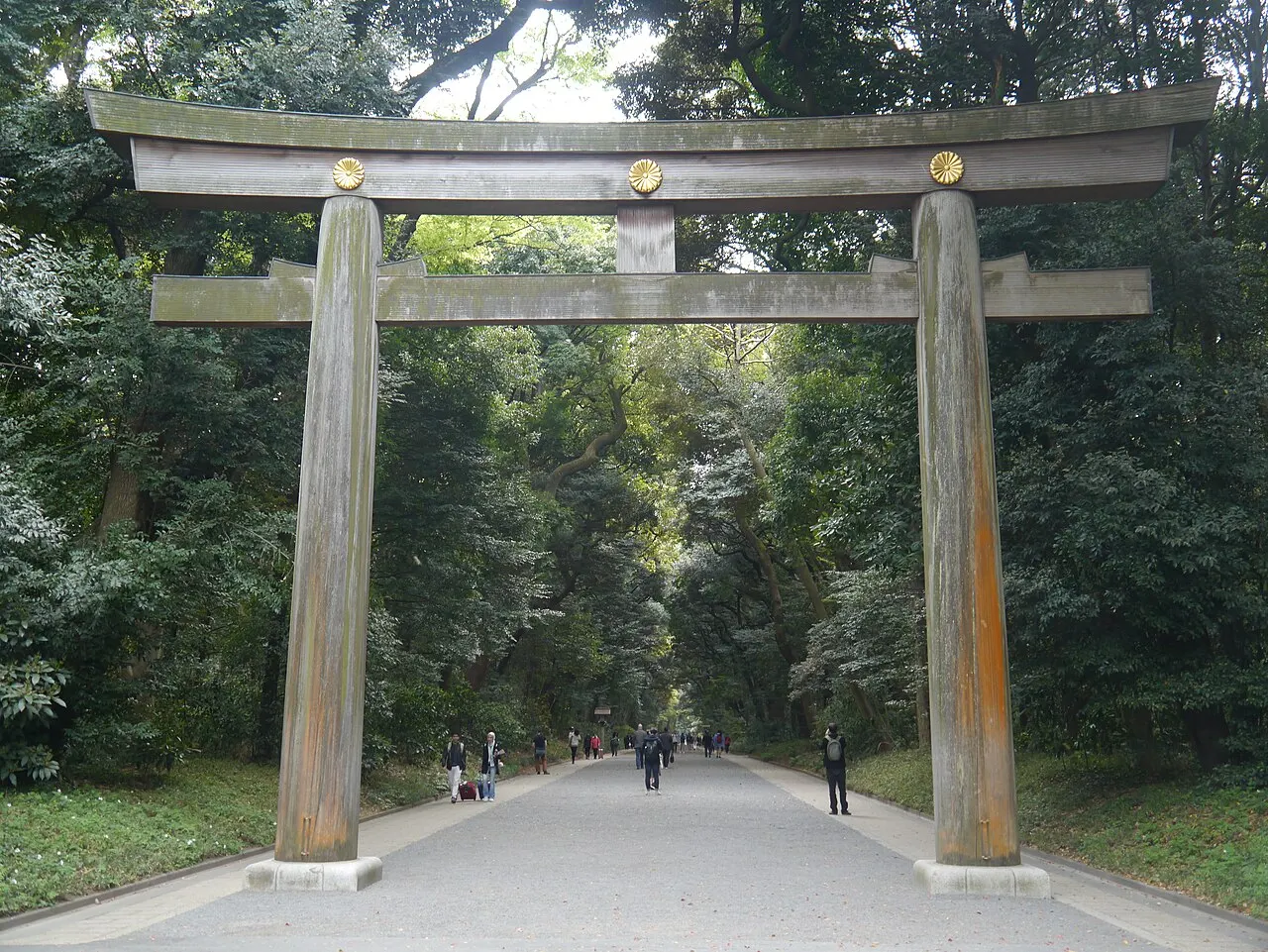 Torii gate鳥居
Treasure hunts nearby
Getting there
Hotels in Nara
Ad: we may earn a commission if you book through these links, at no extra cost to you.
More sites in Nara
Open the scanner and compare →