Five-Story Pagoda (Goju no To) 五重塔
Official explanation
The Five-Story Pagoda is the oldest pagoda of this type in Japan and one of the oldest surviving towers built of wood in the world. It was erected during the Asuka period (593–710) to enshrine sacred relics of the Buddha. The bones and ashes of the historical Buddha, Shakyamuni, were distributed among his followers after he died some 2,500 years ago. A portion of these remains are said to be buried several meters below the base of the pagoda today. The base displays a series of four tableaux depicting scenes from the Buddha’s life. On the north side, he is depicted passing into nirvana, mourned by his disciples.
The pagoda’s approximately 32.5-meter-tall central pillar is made of a Japanese cypress tree felled in 594. It runs through each of the box-like structures that make up the tower’s five independent tiers. The pagoda’s tiers use flexible wooden joints, helping the structure absorb the seismic energy of Japan’s countless earthquakes.
Read the full explanation
Note the scythes attached to the upper roof of the pagoda. Lightning was once considered a celestial monster, so swords and implements with sharp edges were added to this pagoda; it was believed that this would prevent creatures from the sky from alighting on them. These are rarely seen on other pagodas and are considered one of the “seven mysteries” of Horyuji. The pagoda was struck by lightning during the Kamakura period (1185–1333), but was unharmed. After that, talismans were hung on each level and four sickles were attached below to protect against future strikes. Today lightning rods protect the building.
Five-story Pagoda
Five-story Pagoda
National Treasure
The origins of the pagodas can be traced back to the stupas of ancient India, and are architectural structures that ultimately derive from burial mounds. They are used to enshrine the relics of Shakyamuni, the historical Buddha, and serve as reminders of the presence of the Buddha’s teachings in this world.
The Kofukuji Five-story Pagoda was originally erected in 730 by Empress Komyo (701–760), the daughter of Kofukuji’s founding patron, Fujiwara no Fuhito (659–720). Over its long history, it burned down a total of five times, with the current reconstruction dating to 1426. At 50.1 meters, it is the second-tallest wooden pagoda in Japan today. Famous for its deep eaves, the structure successfully blends references to architecture of the Nara period (710–794) with the dynamic architectural style of the Muromachi period (1136–1573) during which it was last rebuilt.
The pagoda houses sculptures of the Four Buddhas of the Four Directions, each flanked by two bodhisattvas. This represents a Mahayana Buddhist conception of time and space. The north-south axis represents the progression of time, and the east-west axis represents space. The Buddha of the past, Shakyamuni, is in the south, and Maitreya (Jp. Miroku), the Buddha of the Future, is in the north. Amida, the Buddha of the Western Realm of Ultimate Bliss is in the west, and Yakushi, lord of the Eastern Pure Beryl Radiance Realm, is in the east. The intersection of the two axes is here and now in this world and at its fulcrum is the central pillar, which rests on a stone foundation. It is not known if relics of Shakyamuni are interred in the foundation or in another location.
Miniature Five-Story Pagoda
The Hōrinkan’s intricately detailed five-story pagoda (gojūnotō) is a National Treasure. At a glance, the pagoda may appear to have been made recently, but in fact the majority of its components date to the Nara period (710–794). Though it is only 5.5 meters tall, both its interior and exterior perfectly replicate the architecture and joinery of full-sized five-story pagodas.
Due in part to the structure’s age, it is not known exactly when or why it was built. It is thought that the pagoda was made at the request of Empress Kōmyō (701–760) and was originally kept in Gangōji’s Nishi Shōtōin (“West Pagoda Hall”). Even so, the purpose of its creation is still unclear. For many years, it was believed to be a one-tenth scale model of the pagoda that once stood on the southeastern part of Gangōji’s grounds. This connection was disproven in 1927, when surveys of the larger pagoda’s foundations revealed that they had very different relative dimensions.
A second theory suggests that the miniature pagoda may have fulfilled the same function as a full-scale version. Five-story pagodas are derived from Indian stupas, which were originally built to mark and protect relics of the historical Buddha, Shakyamuni. Similarly, Japan’s five-story pagodas are built to hold Buddhist relics called busshari. These reliquary pagodas stand in the east and west of most temples in Nara, but in the case of Gangōji, records show only an eastern pagoda. Therefore, it is possible that the small pagoda kept in the West Pagoda Hall was not the model for a larger structure, but the structure itself. Appropriately, the miniature pagoda now houses busshari that were donated from Sri Lanka in 1966.
出典: 地域観光資源の多言語解説文データベース(観光庁) — www.mlit.go.jp/tagengo-db. この英語解説文は観光庁の地域観光資源の多言語解説整備支援事業で作成しました。
Source: Japan Tourism Agency, Multilingual Explanation Database. This English text was produced by the Japan Tourism Agency's multilingual explanation project and is shown unedited. Opening hours and services may have changed since it was written.
旅Nara tours
Live prices and reviews from GetYourGuide. Many tours can be cancelled for free — check each listing.
Ad: we may earn a commission if you book through these links, at no extra cost to you.
Things you may see here
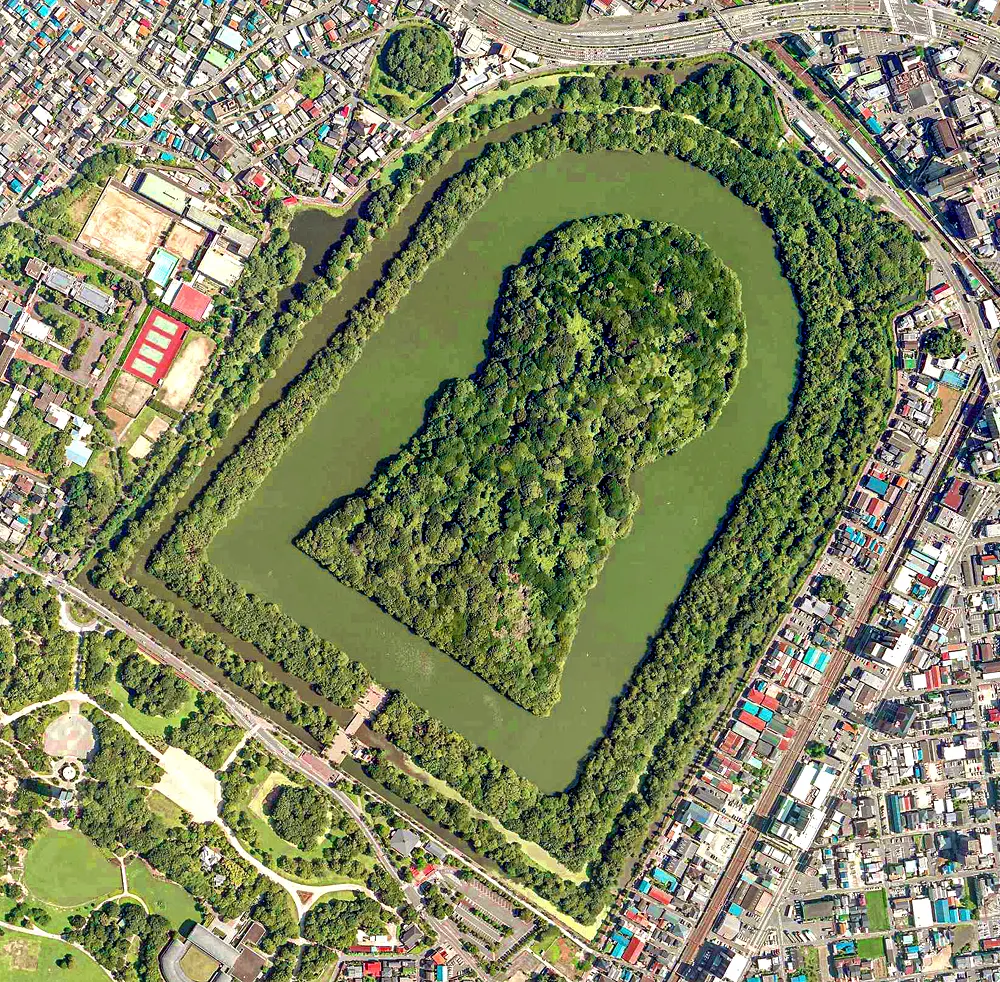 Kofun古墳
Treasure hunts nearby
Getting there
Hotels in Nara
Ad: we may earn a commission if you book through these links, at no extra cost to you.
More sites in Nara
Open the scanner and compare →