Obara Jinja Shrine 大原神社
Official explanation
Obara Jinja Shrine venerates the Shinto kami of creation: the primordial deity Izanami no Mikoto and two of her children, the sun goddess Amaterasu Omikami and the moon god Tsukuyomi no Mikoto. The shrine was originally established in 852, though the current buildings were constructed in 1796. The shrine has an impressive collection of 35 ema (votive tablets). These can be seen in the main shrine and the open-air emaden hall. The shrine also has a collection of materials on childbirth and child-rearing from the Edo period (1603–1867) and the Meiji era (1868–1912).
Ubuya
Read the full explanation
Ubuya are small thatched huts that were once used as the place for childbirth. The entrance faces the shrine so mothers could receive strength from the kami (deities) during labor. Inside there is a dirt floor, which was covered by 12 bundles of rice straw during use, and in the back a chikarazuna—a rope held by the mother during delivery—hangs from the ceiling. In front of the rope there is a small mound of sand demarcated by white paper streamers. This sand is known as koyasu no suna (“sand of easy childbirth”) and Obara Jinja includes it in good-luck charms. Records show that ubuya existed in some areas as early as the Nara period (710–794). They fell out of fashion in the postwar period, and were effectively banned from use by changes to the law in 1965.
Obara Jinja is a Shinto shrine that was established in 852. The main sanctuary was reconstructed in 1796. The shrine has a collection of 35 ema (votive tablets), which hang in the shrine buildings and the emaden (a special hall for displaying them). They depict scenes such as local silk farming, as well as images of Byodoin Temple south of the city of Kyoto. The oldest ema has been dated to 1599.
Obara Jinja is known for its association with childbearing. It has a collection of materials on childbirth and child-rearing from the Edo period (1603–1867) and the Meiji era (1868–1912) that attracts midwives from all over. Childbirth was stigmatized in ancient Japan for being unclean. Ubuya (childbirth huts) were constructed to remove some of the stigma and provide a place for women to receive the blessings of kami (deities) during childbirth.
Ubuya have existed in Japan since at least the Nara period (710–794). The Obara ubuya is one of the very few childbirth huts remaining. It is built next to a river; this is symbolic of the division the river creates between this world and the otherworld in Japanese belief, as childbirth is said to happen between the two worlds. New mothers would give birth in the hut and spend up to a week living here while recovering their strength. Although it is unclear when this ubuya was built, we do know the last birth here occurred around the turn of the twentieth century. Sand from the ubuya is considered auspicious and is used in good-luck charms for ensuring safe childbirth.
Obara Jinja is a Shinto shrine venerating the primordial being Izanami no Mikoto, the sun goddess Amaterasu Omikami, and the moon god Tsukuyomi no Mikoto. Because these are the kami (deities) of creation, the shrine is an auspicious place for protecting mothers and children during childbirth, and is often visited by expecting families. Obara Jinja was established in 852, and has a large collection of ema (votive tablets), the oldest of which has been dated to 1599. The shrine, its affiliated buildings, and the ubuya (house for childbirth) located across the river are designated Cultural Properties of Kyoto Prefecture.
The ubuya is a very small thatched hut, barely large enough to crouch in. It faces the shrine to receive the blessings of kami during childbirth, and is built next to a river; this is symbolic of the division the river creates between this world and the otherworld in Japanese belief, as childbirth is said to happen between the two worlds. Ubuya existed in Japan as early as the Nara period (710–794), and were used in this region from at least the 1600s, continuing to around 1900. This is one of the very few remaining ubuya nationwide.
Although ubuya are no longer in use, the ground is considered sacred. Obara Jinja offers charms for safe childbirth containing sand from the floor of the hut.
出典: 地域観光資源の多言語解説文データベース(観光庁) — www.mlit.go.jp/tagengo-db. この英語解説文は観光庁の地域観光資源の多言語解説整備支援事業で作成しました。
Source: Japan Tourism Agency, Multilingual Explanation Database. This English text was produced by the Japan Tourism Agency's multilingual explanation project and is shown unedited. Opening hours and services may have changed since it was written.
旅Kyoto tours
Live prices and reviews from GetYourGuide. Many tours can be cancelled for free — check each listing.
Ad: we may earn a commission if you book through these links, at no extra cost to you.
Things you may see here
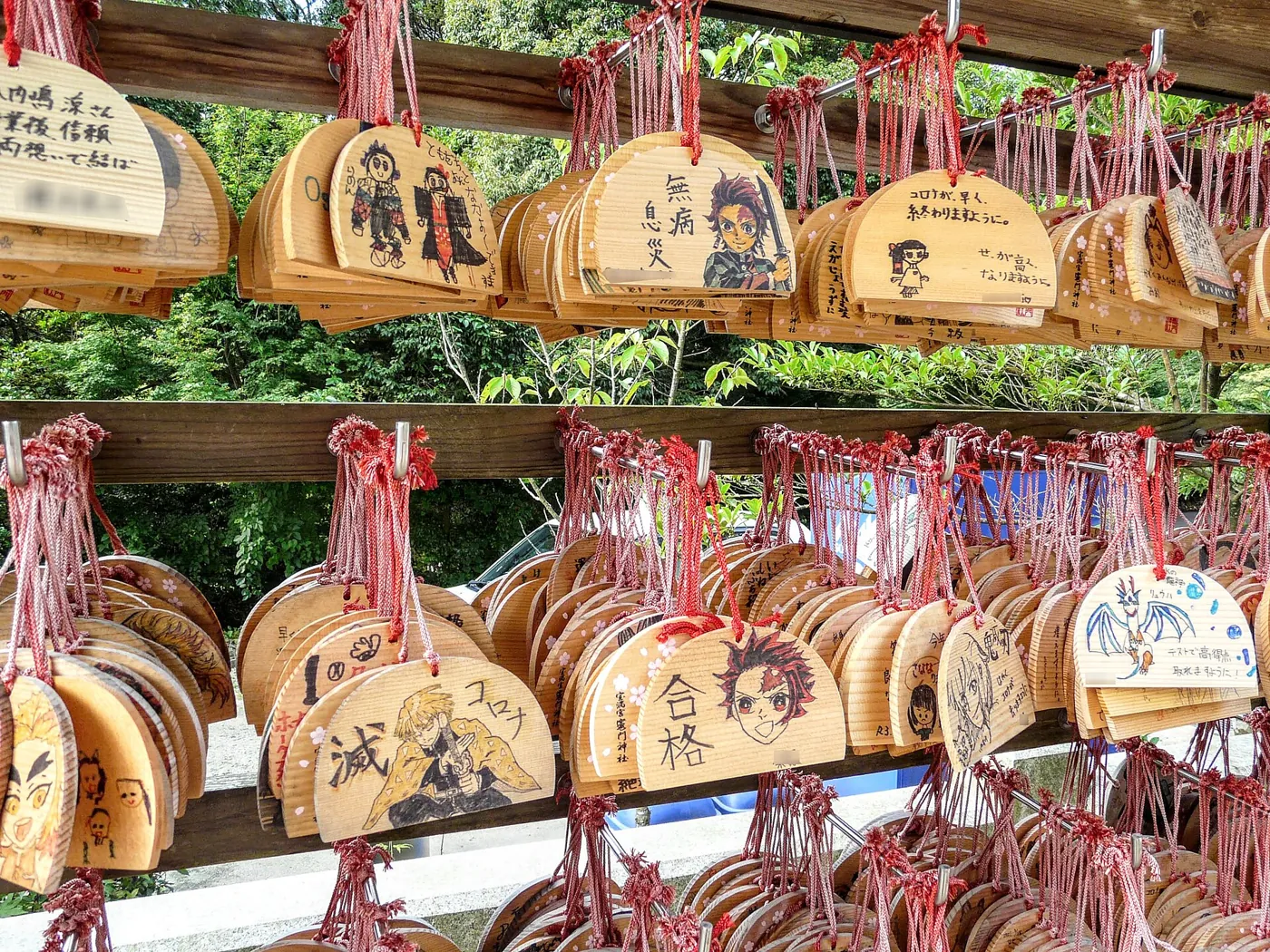 Ema絵馬
Treasure hunts nearby

Getting there
Hotels near Kyoto Station
Ad: we may earn a commission if you book through these links, at no extra cost to you.
More shrines in Kyoto
Open the scanner and compare →