Iwashimizu Hachimangu Shrine & Mt. Otokoyama 石清水八幡宮と男山
Official explanation
Iwashimizu Hachimangu is a Shinto shrine with a history spanning nearly 1,200 years. Its origin dates back to 859, when the deity Hachiman was ceremonially transferred from Usa Jingu Shrine in Kyushu to Mt. Otokoyama. Over the centuries, nobles and commoners alike made pilgrimages here, and eventually Iwashimizu Hachimangu grew to cover the entire mountain, with a large main shrine, subsidiary shrines, numerous temples, and a thriving town at the base of the mountain. Because Hachiman was worshipped as a guardian of Kyoto and the imperial family, people would come here to pray for protection against misfortune, a tradition that continues to this day.
For many centuries, Iwashimizu Hachimangu was a shrine-temple complex where religious elements from Shinto and Buddhism were combined. This style of worship of Shinto deities (kami) and Buddhist deities (Buddhas and bodhisattvas) as syncretic entities gradually became tradition after Buddhism was introduced to Japan in the sixth century. Since faith in Hachiman was particularly strong, Iwashimizu Hachimangu played a big part in the development of syncretism and the spread of Hachiman worship across the country. This mixture of Shinto and Buddhist practice lasted more than a thousand years until the government ordered the separation of these religions in 1868.
Read the full explanation
Iwashimizu Hachimangu remains one of the more prominent shrines in the country and is recognized for its long history, syncretic religious traditions, and notable architecture. In 2016, several of its structures, including the main sanctuary, were designated National Treasures.
The history of Iwashimizu Hachimangu Shrine spans nearly 1,200 years, and it has long been ranked among the most important Shinto shrines in Japan. Emperors, shoguns, nobles, warriors, merchants, and commoners have all paid their respects here over the centuries. Because Hachiman was worshipped as a guardian of Kyoto and the imperial family, people would visit the shrine to pray for protection against misfortune, and that tradition continues to this day.
The monk Gyokyo founded Iwashimizu Hachimangu in 859. It is said that he visited Usa Jingu Shrine in Kyushu and received a revelation from the deity Hachiman, who declared, “I shall go to the peak of Mt. Otokoyama near the capital and protect the nation!” Following this command, Hachiman was ceremonially transferred to the mountain, and the construction of a sanctuary ordered by the imperial court was completed in 860.
Iwashimizu Hachimangu received support from many prominent figures throughout its history, including the imperial family, legendary warriors from the Minamoto clan, powerful shoguns, and rich lords. The complex steadily grew, and from the fourteenth century to mid-nineteenth century it practically covered Mt. Otokoyama with a large main shrine, subsidiary shrines, and numerous temples. At the base of the mountain, a thriving town catered to pilgrims, merchants traveling between Osaka and Kyoto, and the many priests and monks of Iwashimizu Hachimangu.
For many centuries, Iwashimizu Hachimangu was a shrine-temple complex that combined both Shinto and Buddhist religious elements. Worship of Shinto deities (kami) and Buddhist deities (Buddhas and bodhisattvas) in the same place and as syncretic entities originally arose in some regions of Japan after the introduction of Buddhism in the sixth century. Since faith in Hachiman was particularly strong, the influential position of Iwashimizu Hachimangu played a big part in the development and spread of Shinto-Buddhist syncretism and Hachiman worship across the country. This mixture of Shinto and Buddhist practice lasted more than a thousand years until the Meiji government issued an order to separate the religions in 1868. After that, Buddhist elements were removed from the precincts.
Iwashimizu Hachimangu remains one of the more prominent shrines in the country. Along with its long history and syncretic religious traditions, it is also recognized for its notable architecture. Several structures, including the main sanctuary, were designated National Treasures in 2016. The richly decorated main shrine on top of Mt. Otokoyama dates back to the seventeenth century and is one of the few remaining examples of the hachiman-zukuri style of architecture. The grounds also contain numerous smaller shrines, torii gates, lantern-lined paths, bamboo groves, a sacred well, and historical remains scattered across the mountain.
出典: 地域観光資源の多言語解説文データベース(観光庁) — www.mlit.go.jp/tagengo-db. この英語解説文は観光庁の地域観光資源の多言語解説整備支援事業で作成しました。
Source: Japan Tourism Agency, Multilingual Explanation Database. This English text was produced by the Japan Tourism Agency's multilingual explanation project and is shown unedited. Opening hours and services may have changed since it was written.
旅Kyoto tours
Live prices and reviews from GetYourGuide. Many tours can be cancelled for free — check each listing.
Ad: we may earn a commission if you book through these links, at no extra cost to you.
Things you may see here
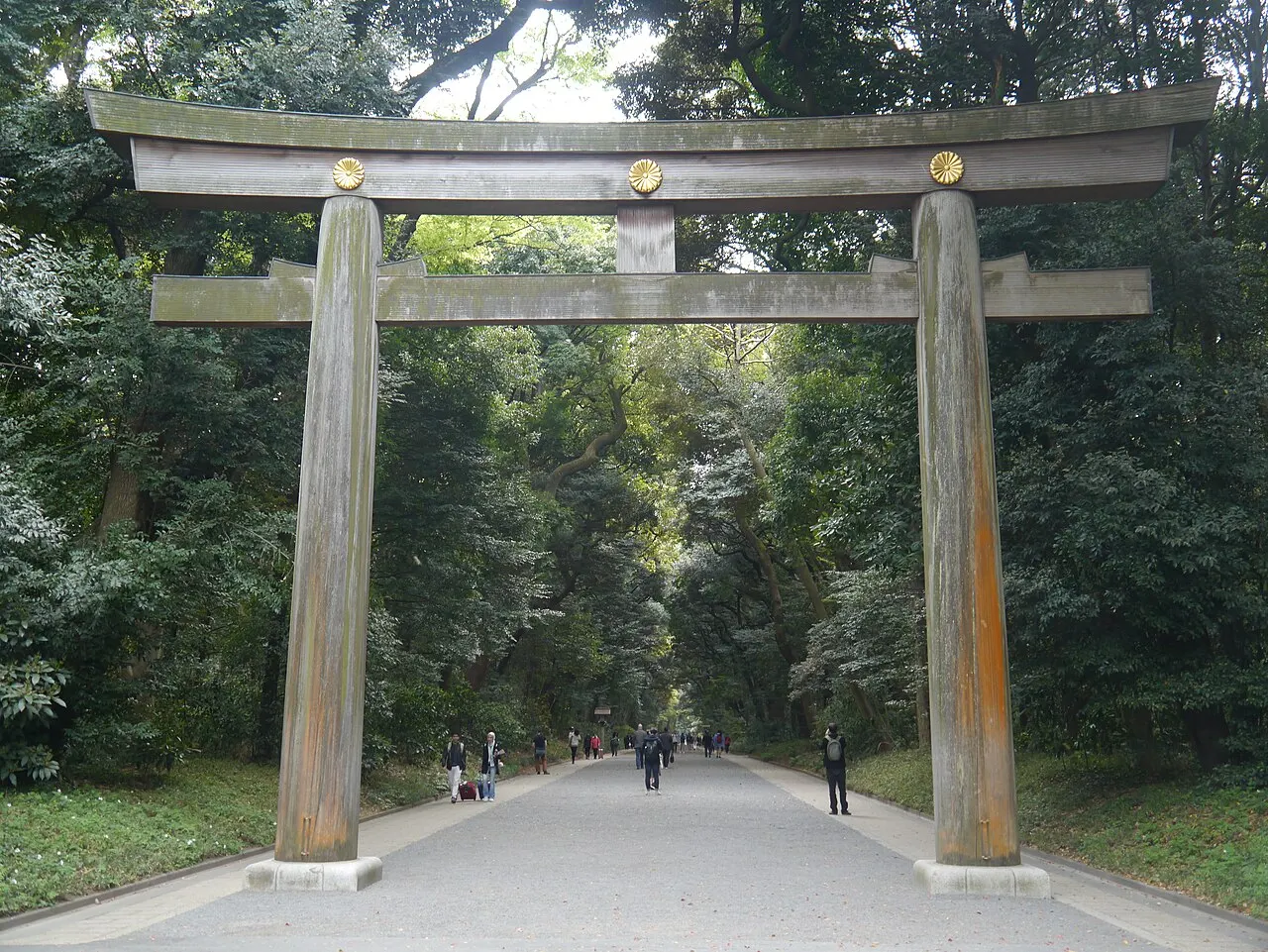 Torii gate鳥居
Treasure hunts nearby

Getting there
Hotels near Kyoto Station
Ad: we may earn a commission if you book through these links, at no extra cost to you.
More shrines in Kyoto
Open the scanner and compare →