Aitsuchi Jinja Shrine 相槌神社
Official explanation
Aitsuchi Jinja Shrine is strongly associated with sword making, as the well beside the shrine contains water thought to be suitable for creating excellent swords. The renowned swordsmiths Gorodayu Yasutsuna and Sanjo Munechika are said to have used water from this well to forge blades in the late Heian period (794–1185). The most famous of these are Higekiri and Hizamaru, two swords that are considered treasures of the Minamoto clan, which produced many heroic warriors throughout history. According to shrine legend, Inari, a deity of commerce and agriculture, appeared to help Gorodayu Yasutsuna forge the blades.
Sometime after the swords were successfully completed, Aitsuchi Shrine was founded next to the well to worship Inari. The well was paved with stone in the Edo period (1603–1867), and a reference to the swordsmith Sanjo Munechika was added to the shrine nameplate at an unknown date. Aitsuchi Shrine was managed by Iwashimizu Hachimangu Shrine until 1710, but belief in its blessings was so strong that people in the neighborhood raised money to care for the shrine independently.
Read the full explanation
The mountain behind Aitsuchi Shrine is Mt. Otokoyama, and the path that starts beside the shrine leads up to Iwashimizu Hachimangu.
Aitsuchi Jinja Shrine is located at the base of Mt. Otokoyama at the entrance to a path that leads up to Iwashimizu Hachimangu Shrine. The renowned swordsmiths Gorodayu Yasutsuna and Sanjo Munechika are said to have used water from the well next to Aitsuchi Shrine to forge blades in the late Heian period (794–1185). The most famous of these are Higekiri and Hizamaru, two swords considered treasures of the Minamoto clan, which produced many heroic warriors throughout history. Shrine legend states that Inari, a deity of commerce and agriculture, appeared to help Gorodayu Yasutsuna forge the blades.
Sometime after the swords were successfully completed, Aitsuchi Shrine was founded next to the well to worship Inari. The altar is flanked by two statues of foxes, who are considered the sacred messengers of the deity. The well, called Yama no I (“mountain well”) or Fujiki-i (“wisteria well”), was paved with stone in the Edo period (1603–1867). It is the only one of Yawata’s five historic wells that still produces water. A reference to the swordsmith Sanjo Munechika was added to the shrine nameplate at an unknown date. Aitsuchi Shrine was managed by Iwashimizu Hachimangu until 1710, but belief in its blessings was so strong that people in the neighborhood raised money to care for the shrine independently.
Much speculation remains about Higekiri and Hizamaru, the two swords associated with Aitsuchi Shrine. According to various ancient texts, they changed names and owners several times throughout history. It is now believed that two valuable historic swords stored at Kitano Tenmangu Shrine and Daikakuji Temple in Kyoto may be the legendary Higekiri and Hizamaru. Both swords are nationally designated Important Cultural Properties.
Aitsuchi Shrine is open for visitors, but the office is unmanned outside of regular rites, which are held on the 1st and the 15th of each month. For more information, visit the official Aitsuchi Shrine website. Inquiries through the website are accepted in simple English.
出典: 地域観光資源の多言語解説文データベース(観光庁) — www.mlit.go.jp/tagengo-db. この英語解説文は観光庁の地域観光資源の多言語解説整備支援事業で作成しました。
Source: Japan Tourism Agency, Multilingual Explanation Database. This English text was produced by the Japan Tourism Agency's multilingual explanation project and is shown unedited. Opening hours and services may have changed since it was written.
旅Kyoto tours
Live prices and reviews from GetYourGuide. Many tours can be cancelled for free — check each listing.
Ad: we may earn a commission if you book through these links, at no extra cost to you.
Things you may see here
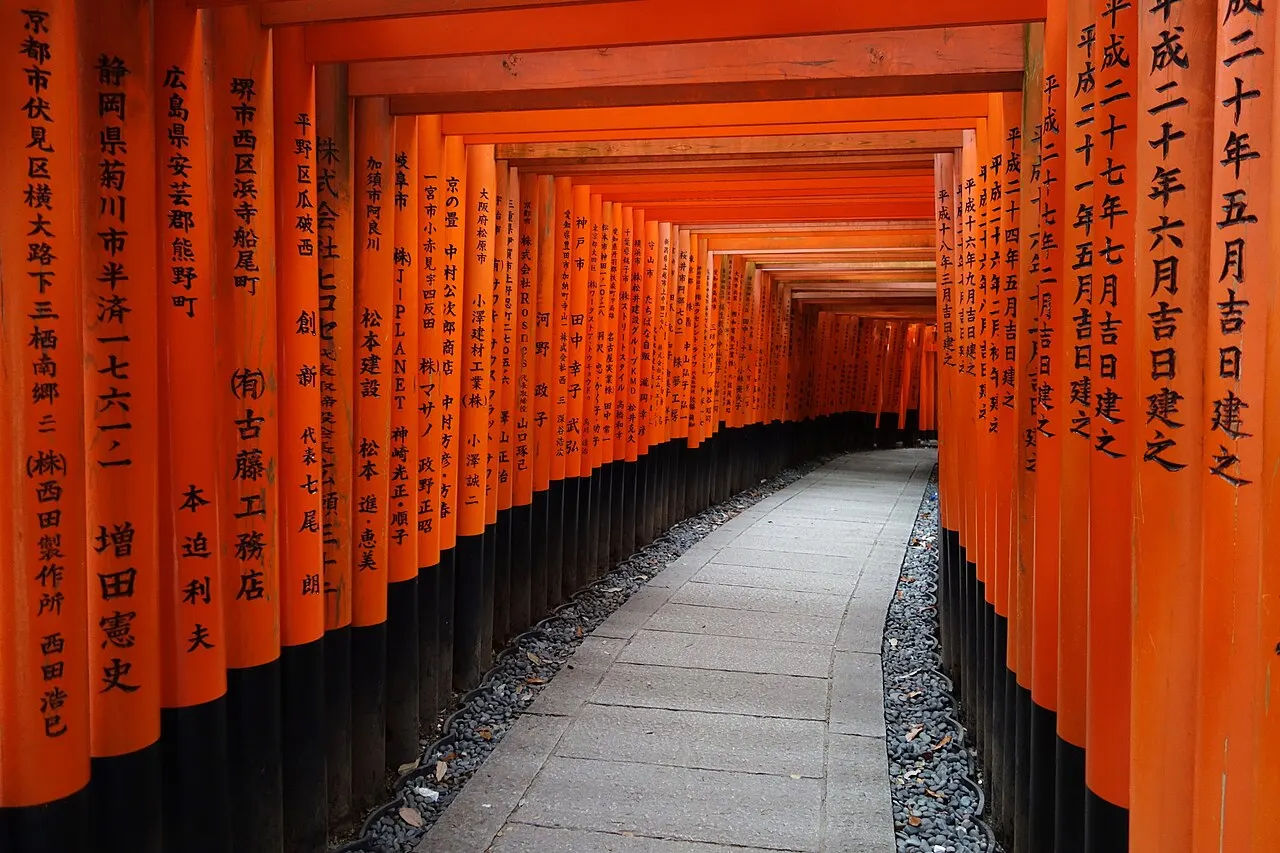 Inari foxes稲荷の狐
Treasure hunts nearby
Getting there
Hotels near Kyoto Station
Ad: we may earn a commission if you book through these links, at no extra cost to you.
More shrines in Kyoto
Open the scanner and compare →