First of 12,000 Tenjin Shrines in Japan 日本中にある天満宮12,000社の最初の天神さま
Official explanation
Hofu Tenmangu Shrine was founded in 904 for the worship of Tenjin, the deification of Sugawara no Michizane, a real-life aristocratic scholar, poet, and administrator who was banished to Kyushu from the court in Kyoto in 901. Michizane stayed in Hofu on his way into exile, hoping in vain for the charges against him to be dismissed as false. He eventually died in Kyushu in 903, but a number of miracles occurred in Hofu on the day of his death: a pillar of light shone into the sea and a mysterious cloud settled on the hill behind where the shrine now stands. These miracles were interpreted to mean that Michizane’s soul had returned to its last stop in Honshu, and so in 904, just one year after his death, this shrine was built for him in Hofu.
The miracles witnessed in Hofu were benign, but far more alarming events went on to unfold in Kyoto. Lightning struck not just the imperial palace, but also killed individual aristocrats who had helped engineer Michizane’s downfall. Clearly, Michizane had become a powerful god who needed to be propitiated.
Read the full explanation
As a god, Michizane was known as Tenjin, an abbreviation of Tenman-Daijizai-Tenjin, or “the heavenly god who can manipulate the weather freely,” in reference to his ability to control the lightning. After the deaths of Michizane’s arch-rival Fujiwara no Tokihara in 909 and Emperor Daigo in 930, propitiating Tenjin became a matter of national importance.
Today some 12,000 Tenjin shrines, or Tenmangu, are found in Japan. Hofu Tenmangu is the first in the country and ranks alongside Kitano Tenmangu in Kyoto and Dazaifu Tenmangu in Kyushu in importance. Hofu Tenmangu is unusual in a number of other ways: four gods are enshrined here, not just one (the other three are Michizane’s mythical ancestors). Also, the main sanctuary (honden), offering hall (heiden), and the worship hall (haiden) are three separate buildings in most shrines, but here they are all combined into a single one.
Hofu Tenmangu burned down in 1952, and was rebuilt over the next decade following the designs shown on ancient scrolls. Over time Tenjin came to be worshipped as the god of learning, reflecting Michizane’s accomplishments as a poet and scholar during his lifetime. That is why many people still come to Tenjin shrines to pray for academic success.
Hofu Tenmangu Quick Facts
• Dating from 904, Hofu Tenmangu is the oldest of the 12,000 Tenjin shrines in Japan.
• There are 57 stone steps leading up to the shrine, because Michizane was 57 years old when he reached Hofu en route to exile in Kyushu.
• The oldest tree in the shrine grounds is an 800-year-old camphor tree.
• The portable shrine and cart for the shrine’s Gojin-kosai Festival together weigh a massive 1.5 tons—as much as a rhinoceros!
• The torii gate at the entrance to the shrine grounds is the oldest stone torii in Yamaguchi Prefecture.
出典: 地域観光資源の多言語解説文データベース(観光庁) — www.mlit.go.jp/tagengo-db. この英語解説文は観光庁の地域観光資源の多言語解説整備支援事業で作成しました。
Source: Japan Tourism Agency, Multilingual Explanation Database. This English text was produced by the Japan Tourism Agency's multilingual explanation project and is shown unedited. Opening hours and services may have changed since it was written.
旅Hiroshima & Miyajima tours
Live prices and reviews from GetYourGuide. Many tours can be cancelled for free — check each listing.
See all Hiroshima & Miyajima tours →
Ad: we may earn a commission if you book through these links, at no extra cost to you.
Things you may see here
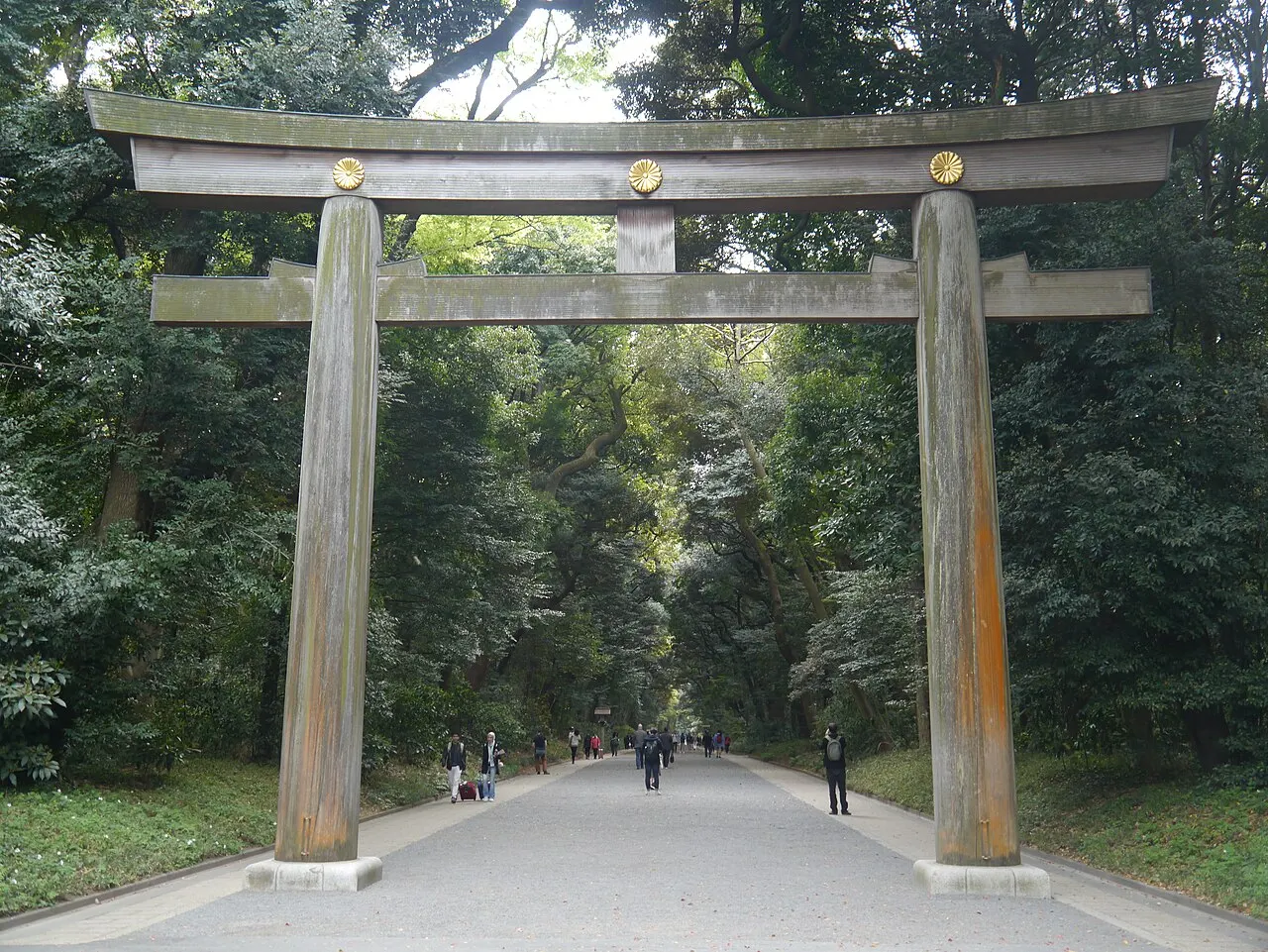 Torii gate鳥居
Getting there
Hotels in Yamaguchi
Ad: we may earn a commission if you book through these links, at no extra cost to you.
More shrines in Yamaguchi
撮Standing in front of one?Open the scanner and compare →