Mirokudo Hall 弥勒堂
Official explanation
This Buddha hall was built as the final resting place of Tamayori Gozen, the mother of the priest Kukai (known posthumously as Kobo Daishi; 774–835). Enshrined inside is a remarkable wooden statue of the Miroku Bosatsu (the Buddha of the Future), a designated National Treasure.
The hall is built in the tented-roof style with a thick roof of cypress bark. While the style dates back to the Heian period (794–1185), the construction of the interior balustrades dates from the middle of the later Kamakura period (1185–1333). The building was designated an Important Cultural Property in 1965.
Read the full explanation
The hall is particularly popular with female worshippers, who come to ask for divine help from Kukai’s beloved mother, who attained Buddhahood after her death. After the custom of leaving behind a breast-shaped offering or prayer plaque (ema) was described in The River Ki, a book by Wakayama-born author Sawako Ariyoshi, those coming to pray revived the practice.
出典: 地域観光資源の多言語解説文データベース(観光庁) — www.mlit.go.jp/tagengo-db. この英語解説文は観光庁の地域観光資源の多言語解説整備支援事業で作成しました。
Source: Japan Tourism Agency, Multilingual Explanation Database. This English text was produced by the Japan Tourism Agency's multilingual explanation project and is shown unedited. Opening hours and services may have changed since it was written.
旅Kōya-san & Kumano tours
Live prices and reviews from GetYourGuide. Many tours can be cancelled for free — check each listing.
See all Kōya-san & Kumano tours →
Ad: we may earn a commission if you book through these links, at no extra cost to you.
Things you may see here
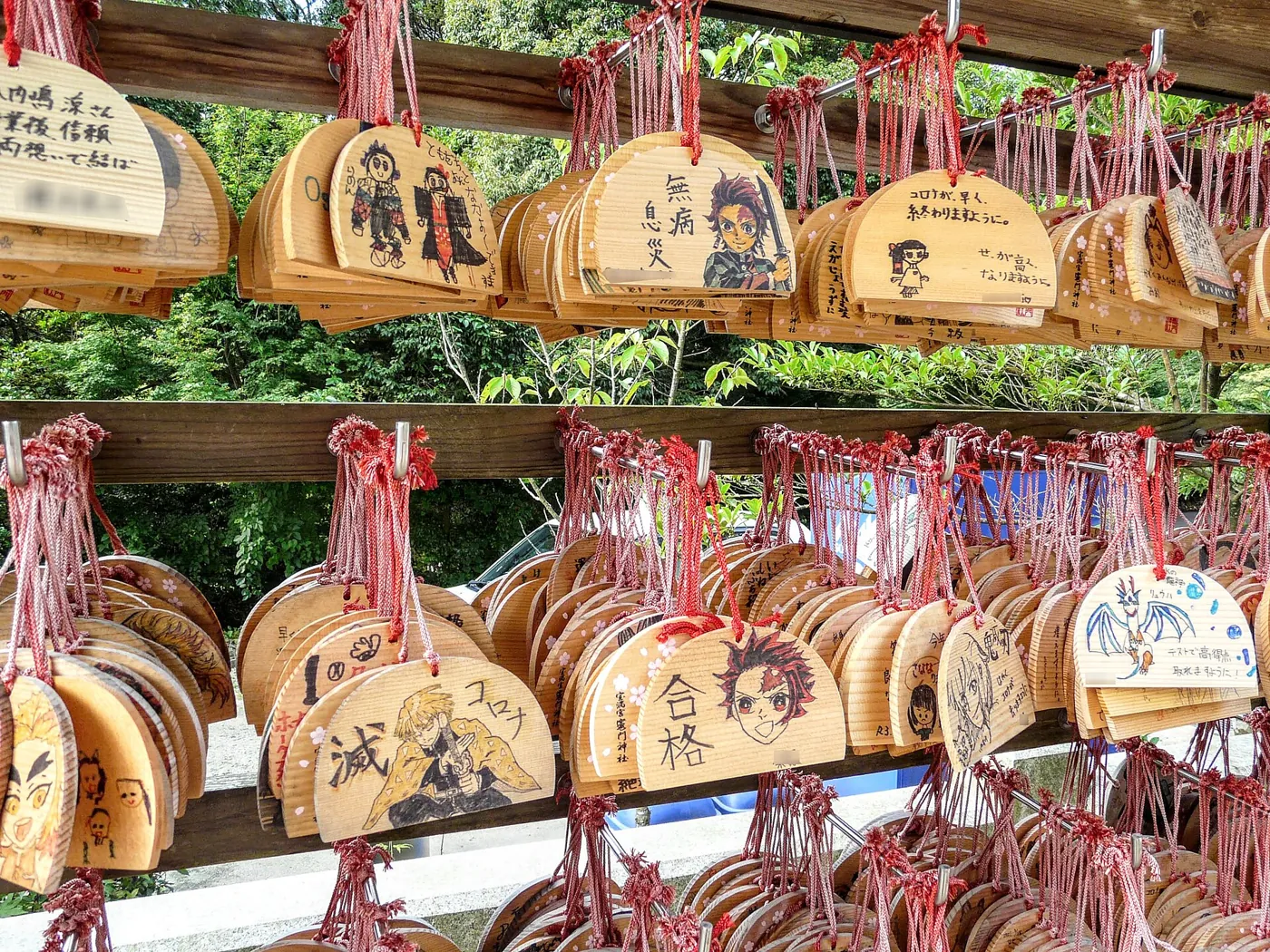 Ema絵馬
Getting there
Hotels in Wakayama
Ad: we may earn a commission if you book through these links, at no extra cost to you.
More temples in Wakayama
Open the scanner and compare →