Portrait of Tosho Daigongen 東照大権現の肖像
Official explanation
Shortly before he died, Tokugawa Ieyasu (1542–1616), the first shogun of the Tokugawa shogunate (1603–1867), summoned his military and religious advisors to hear his last wishes. He instructed them to bury his body at Kunozan and enshrine his spirit at Nikko. Until the end of World War II, it was common in Japan for prominent people to be worshipped as gods following their death. After Ieyasu’s passing, his advisors debated what kind of deity he ought to become. They ultimately decided that his spirit would be worshipped as Tosho Daigongen, or the “Great Shining Gongen of the East.” A gongen is a Buddhist deity incarnated as a Shinto kami, and Ieyasu’s spirit was venerated by both Buddhist monks and Shinto priests throughout Japan.
Portraits of Tosho Daigongen were used to venerate Ieyasu in his divine form—serving as images to which worshippers would direct their prayers. Many shrines have at least one portrait of the deified shogun, but the images are especially prevalent at Toshogu shrines. “Toshogu” literally means “Tosho (Daigongen) Shrine.” Kunozan Toshogu Shrine has five portraits of Tosho Daigongen in its collection.
Read the full explanation
Ieyasu’s portrait as Tosho Daigongen is thought to be an accurate representation of what he looked like while wearing formal court robes.
Portrait 1
The setting of the painting indicates Ieyasu’s status as a deity. The tatami platform, the hanging curtains with the Tokugawa family crest, and the railed veranda indicate that the space is a shrine. The clouds in the upper and lower portions of the painting convey that this is a heavenly space rather than an earthly one.
Color on paper
Artist unknown
Inscription by Tenkai (d. 1643), high-ranking Tendai Buddhist monk and religious advisor to Ieyasu
Portrait 2
This portrait is attributed to Kano Tan’yu (1602–1674), foremost painter of the renowned Kano school and the first official painter to the Tokugawa shogunate. In the lower right is the seal that Tan’yu used between 1636 and 1662. The inscription at the top is a poem attributed to Tenshin Hoshinno (1664–1690), the fifth son of Emperor Gosai (1638–1685). Tenshin was chief abbot of the Toeizan Kan’eiji Temple in Tokyo, which was founded to pray for the safety and prosperity of the Tokugawa shogunate.
Ink on paper
Attributed to Kano Tan’yu (1602–1674)
Inscription by Tenshin Hoshinno (1664–1690)
Portrait 3
This painting is attributed to Kano Osanobu (1796–1846), head of the Kano school of painters during the first half of the nineteenth century. Osanobu was in charge of renovating the wall paintings in Edo Castle in the 1830s and 1840s, when it was rebuilt after a fire.
Color on silk
Attributed to Kano Osanobu (1796–1846)
Portrait 4
The setting of this painting indicates Ieyasu’s divine status—the tatami platform, the veranda with railings, and the komainu lion-dog on one side and shishi lion on the other identify the space as a shrine. The clouds in the upper and lower portions of the painting are used to show that this is a heavenly space rather than an earthly one.
Color on paper
Artist unknown
Portrait 5
Unlike most extant portraits of Tosho Daigongen, this one is not set in a shrine. Whether it represents Tokugawa Ieyasu as human or divine is not clear from the iconography alone, but the similarity to other such portraits in basic composition—including the figure, the posture, and the raised tatami mat—suggests that it portrays not the man, but the deity Tosho Daigongen.
Color on paper
Artist unknown
Donated to Kunozan Toshogu in 1967
出典: 地域観光資源の多言語解説文データベース(観光庁) — www.mlit.go.jp/tagengo-db. この英語解説文は観光庁の地域観光資源の多言語解説整備支援事業で作成しました。
Source: Japan Tourism Agency, Multilingual Explanation Database. This English text was produced by the Japan Tourism Agency's multilingual explanation project and is shown unedited. Opening hours and services may have changed since it was written.
旅Mt Fuji & Hakone tours
Live prices and reviews from GetYourGuide. Many tours can be cancelled for free — check each listing.
See all Mt Fuji & Hakone tours →
Ad: we may earn a commission if you book through these links, at no extra cost to you.
Things you may see here
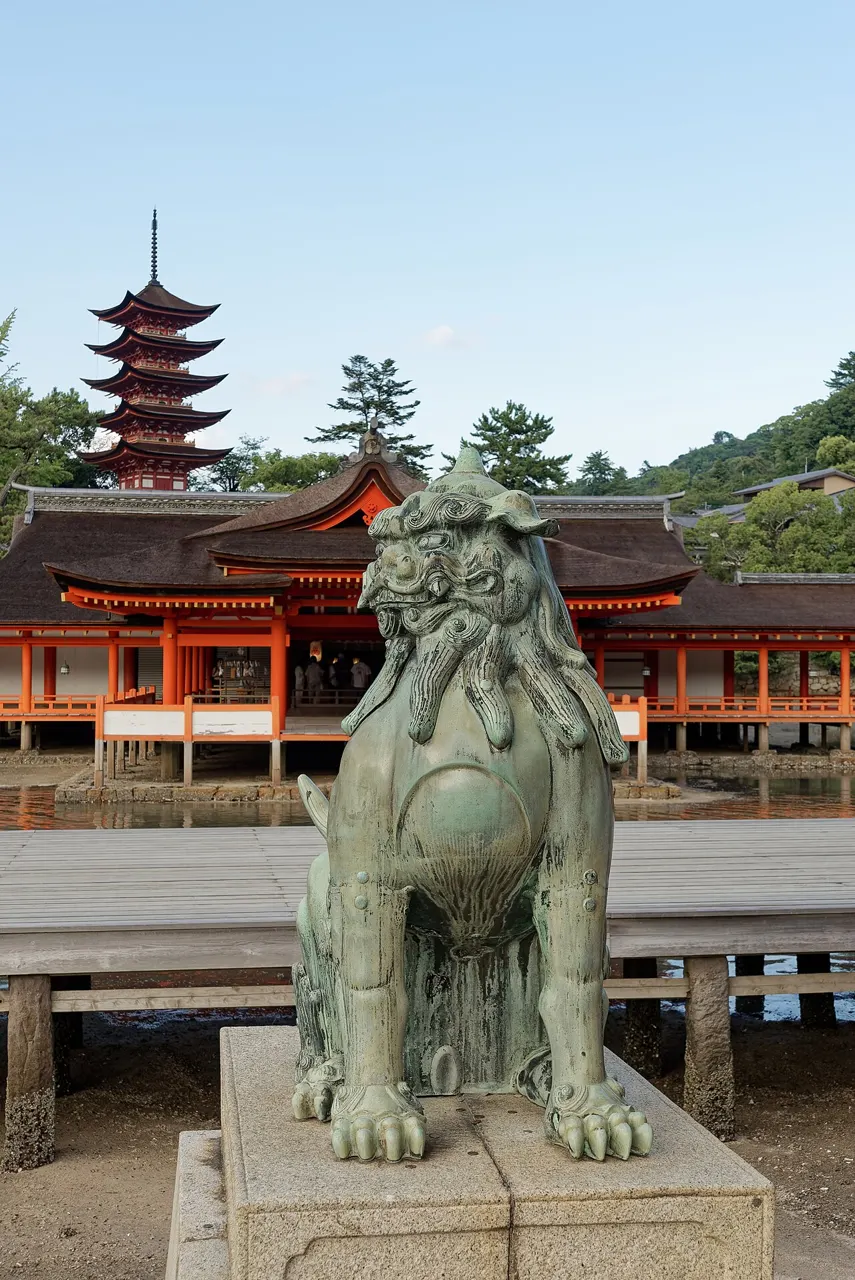 Komainu狛犬
Getting there
Hotels in Shizuoka
Ad: we may earn a commission if you book through these links, at no extra cost to you.
More shrines in Shizuoka
撮Standing in front of one?Open the scanner and compare →