Omoto-sha 侍者社
Official explanation
This small shrine is dedicated to the legendary first head priest of Sumiyoshi Taisha, Tamomi no Sukune, and his wife, Ichihime no Mikoto. It is located in the building where food offerings are prepared before being presented to the gods enshrined in the four main shrines. Omoto means “attendant”—the first of the two kanji characters was later applied to warriors and read samurai—and likely refers to Tamomi no Sukune’s role as a servant of the gods.
The shrine is popular with people seeking romantic partners and happy marriages. It offers small wooden plaques (ema) for writing prayers and wishes for love, as well as clay dolls that serve as romantic charms. Among the dolls are a naked husband and wife called a hadaka bina. The pair represents an ideal marital relationship in which the couple has no secrets.
Read the full explanation
Tamomi no Sukune was the first head priest of Sumiyoshi Taisha. Empress-regent Jingū entrusted him with the building of the first Sumiyoshi shrine at the beginning of the third century after she had a vision of the three deities called the Sumiyoshi Sanjin.
Omoto-sha is a small shrine representing the devotion of Tamomi no Sukune and his wife Ichihime no Mikoto to the deities and each other. It is inside the building used to prepare food offerings for the Sumiyoshi Sanjin and Jingū. Omoto means “attendant” and refers to Tamomi no Sukune’s role as a servant of the deities.
Today, the shrine is frequented by people looking for love or wanting spiritual support in their romantic relationships. Visitors may purchase small wooden plaques (ema), write down their prayers and wishes for love, and hang the plaques up outside the shrine to be fulfilled by Tamomi no Sukune and Ichihime no Mikoto. There are two kinds of clay charm associated with Omoto-sha available at Sumiyoshi Taisha. One, called a hadaka bina, depicts a naked man and woman. It is thought to represent an ideal marital relationship in which the couple has no secrets. The other is called omoto ningyō and depicts a husband and wife in classical dress. It is thought to ensure happy relationships.
出典: 地域観光資源の多言語解説文データベース(観光庁) — www.mlit.go.jp/tagengo-db. この英語解説文は観光庁の地域観光資源の多言語解説整備支援事業で作成しました。
Source: Japan Tourism Agency, Multilingual Explanation Database. This English text was produced by the Japan Tourism Agency's multilingual explanation project and is shown unedited. Opening hours and services may have changed since it was written.
旅Osaka & Kōbe tours
Live prices and reviews from GetYourGuide. Many tours can be cancelled for free — check each listing.
Ad: we may earn a commission if you book through these links, at no extra cost to you.
Things you may see here
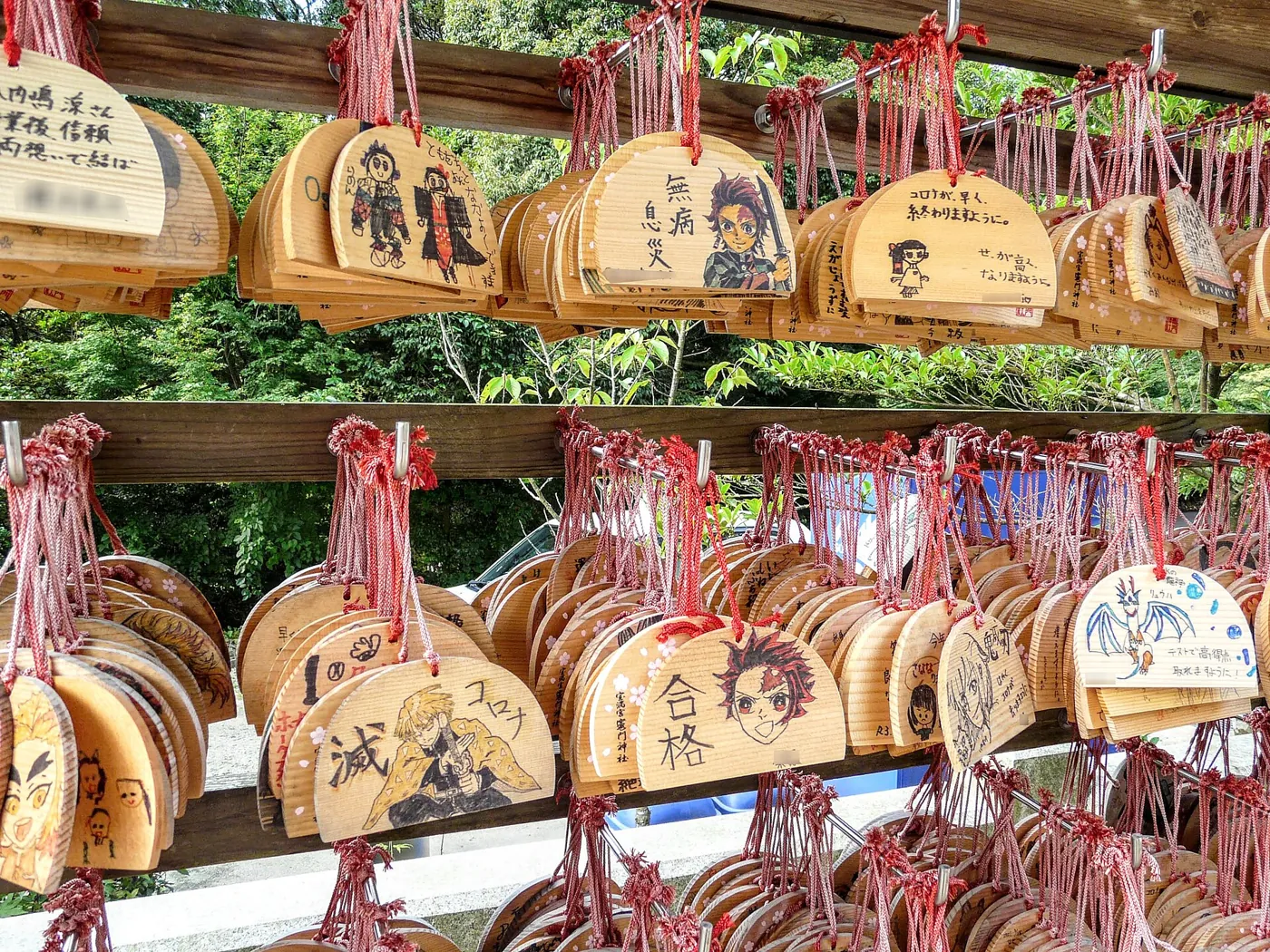 Ema絵馬
Treasure hunts nearby
Getting there
Hotels in Osaka
Ad: we may earn a commission if you book through these links, at no extra cost to you.
More sites in Osaka
Open the scanner and compare →