Kikōji’s Main Hall, Amida Buddha Statue, and Southern Gate 喜光寺の本堂、阿弥陀如来像、南大門
Official explanation
Two of Kikōji Temple’s most significant treasures are its main hall (hondō) and the wooden statue of Amida Buddha (Amitābha) housed within it. Both are Important Cultural Properties.
The current main hall was built in 1544. The original hall, which dated to the 700s, had been destroyed 45 years earlier, during a century-long period of countrywide upheaval. The hall is notable for its resemblance and possible connection to the Great Buddha Hall at Tōdaiji, one of Nara’s most renowned temples. Kikōji’s founder, a Buddhist priest named Gyōki, was closely involved in the creation of Tōdaiji. According to temple lore, Kikōji’s original main hall functioned as a prototype for Tōdaiji’s Great Buddha Hall.
Read the full explanation
The temple’s principal image of veneration is a wooden statue of Amida Buddha that dates to the Heian period (794–1185). Its gentle expression and flowing garments reflect the style of Jōchō (d. 1057), a famous sculptor of that period. Even seated, the statue is 2.33 meters tall, keeping with the canonically established height of a buddha. The temple’s image of Amida Buddha is flanked by statues of Amida’s two bodhisattva attendants, Kannon Bosatsu and Seishi Bosatsu.
Southern Gate (Nandaimon)
Like the main hall, the temple’s original southern gate was destroyed in the 1570s. The gate was finally reconstructed in 2010 with funds raised through the temple’s promotion of sutra-copying (shakyō). The bays on either side of the 12-meter gate are occupied by statues of two Niō guardians created by celebrated sculptor Nakamura Shinya (b. 1926). They are thought to purify the hearts of those who pass through the gate.
出典: 地域観光資源の多言語解説文データベース(観光庁) — www.mlit.go.jp/tagengo-db. この英語解説文は観光庁の地域観光資源の多言語解説整備支援事業で作成しました。
Source: Japan Tourism Agency, Multilingual Explanation Database. This English text was produced by the Japan Tourism Agency's multilingual explanation project and is shown unedited. Opening hours and services may have changed since it was written.
貸Private tours in Nara
Your own guide and often your own car — the route, pace and pickup are set around you. Prices are usually per group, so they work out well for 2–6 people.
Ad: we may earn a commission if you book through these links, at no extra cost to you.
Things you may see here
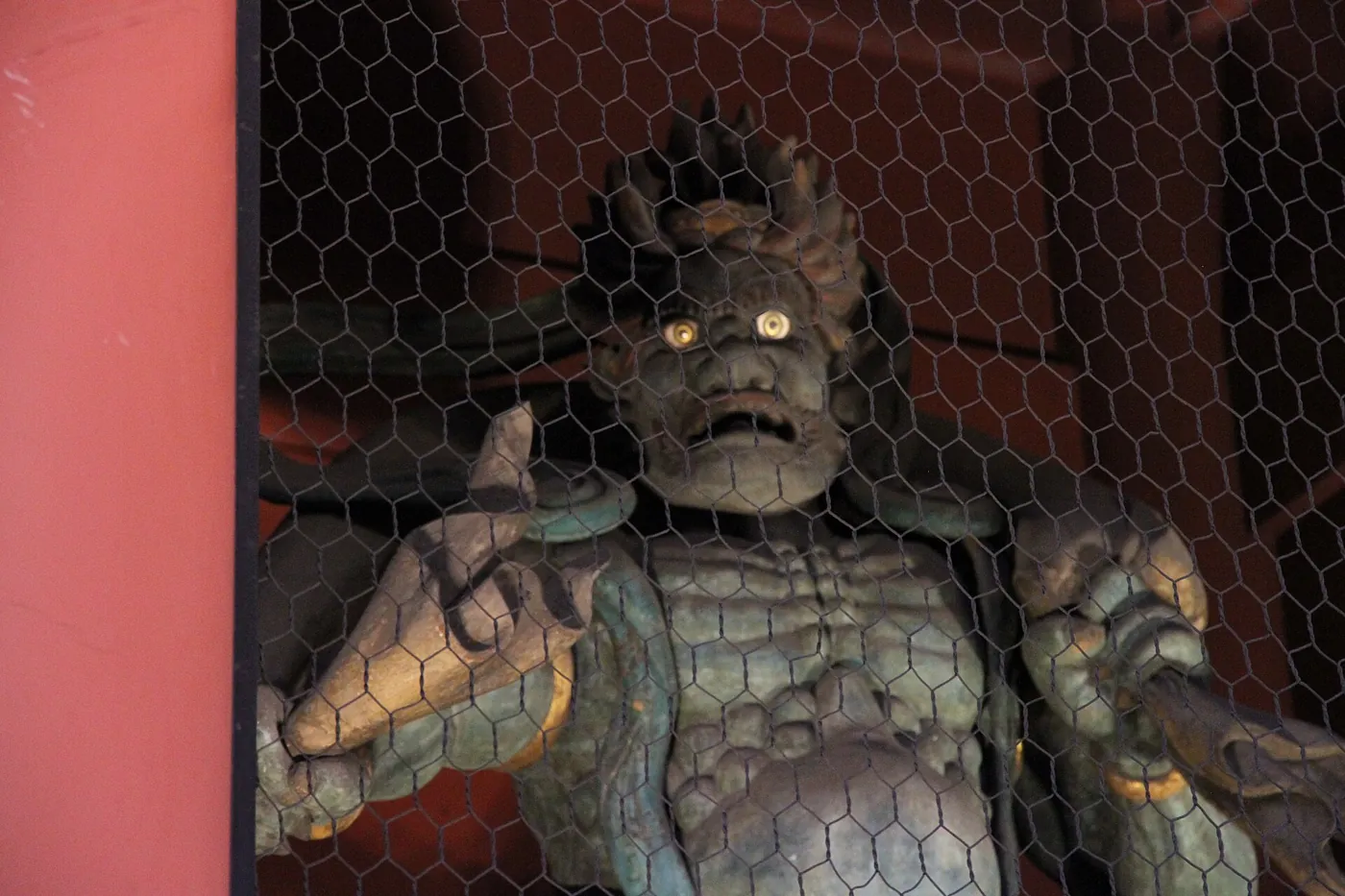 Niō仁王
Treasure hunts nearby
Getting there
Hotels in Nara
Ad: we may earn a commission if you book through these links, at no extra cost to you.
More temples in Nara
Open the scanner and compare →