Futaiji Temple’s Main Hall, Pagoda, and Southern Gate 不退寺の本堂、多宝塔、南大門
Official explanation
Main Hall
The central statue in Futaiji Temple’s main hall depicts Kannon, the bodhisattva of compassion. The wooden image of Kannon, thought to date to the mid-800s, is flanked by statues of the Five Wisdom Kings (myō-ō) and surrounded by tapestries and other historical items. The hall itself dates to sometime between the twelfth and fourteenth centuries. In 1930, when the hall was dismantled for repairs, caches of Buddhist statues and sutras were discovered hidden above the ceiling and under the floorboards.
Read the full explanation
Architecturally, the main hall is notable for the crisscross latticework on the transoms that separate the inner and outer sanctuaries. This pattern, referred to as “Narihira lattice,” is said to have decorated the clothing of aristocratic poet Ariwara no Narihira (825–880), the founder of Futaiji Temple.
The partitioned chambers on either side of the central Kannon statue hold clues to the temple’s origin. The east side houses a subsidiary shrine (massha) to Ise Jingū, the most highly revered shrine in Japan. The presence of a Shinto shrine inside a Buddhist temple’s main hall is quite rare, and it coincides with the story that Narihira was inspired to establish Futaiji during a visit to Ise Jingū. There, the deity Amaterasu appeared and presented him with a sacred mirror, commanding him to ensure it was properly venerated. The west end of the hall houses a statue of Narihira’s father, Prince Abo (792–842). Futaiji was founded in his memory.
Pagoda
This pagoda, which dates to the mid-Kamakura period (1185–1333), is the oldest structure at Futaiji Temple. Pagodas of this design are generally two stories tall, but the second story of this pagoda is thought to have been lost between 1873 and 1923, when the temple was uninhabited. The interior of the pagoda is decorated with paintings of the Shingon Hasso, the Eight Patriarchs of the Shingon sect. The pagoda is opened once a year on May 28, the anniversary of Ariwara no Narihira’s (825–880) death.
The pagoda was dismantled for repairs in 1934. At that time, an inscription discovered on the rafters indicated that it once contained hundreds of statues of the bodhisattva Jizō created by Kaikei (c. 1192), the renowned Kamakura-period sculptor.
Southern Gate
Futaiji Temple’s main entrance is its southern gate, which was built in 1317. The gate’s notable architectural characteristics include intricate wooden “frog-leg” struts (kaerumata) and the decorative carvings found mainly on the central crossbeam. The plaster walls on either side of the gate are marked by five horizontal divisions. These indicate that Futaiji holds the highest rank awarded to temples in Nara. These markings also indicate the temple’s connection to the imperial family.
Some parts of the gate doors date to the Kamakura period (1185–1333), while others were replaced in the Meiji era (1868–1912). The older planks are dotted with small holes. Once thought to have been made by arrows or bullets, it is now suspected these marks were left by local farmers who stuck their hand scythes into the door while resting at the temple.
Main Hall
This is Futaiji Temple’s main hall, which dates to the late Kamakura period (1185–1333).
Notice the crisscross latticework on the transoms separating the inner and outer sanctuaries. This pattern, referred to as “Narihira lattice,” is said to have adorned the robes of poet Ariwara no Narihira (825–880), the founder of Futaiji.
The east end of the hall houses a subsidiary shrine to Ise Jingū, Japan’s most highly revered Shinto shrine. On the opposite side is a statue of Prince Abo (792–842), Narihira’s father, across from which is a display case of kawara roof tiles signed by famous visitors.
Pagoda
This pagoda dates to the mid-Kamakura period (1185–1333), making it the oldest structure at the temple. Single-story pagodas of this type are rare. In fact, it is thought this pagoda once had a second story that was destroyed between 1873 and 1923. Inside the pagoda are paintings of the Shingon Hasso, the Eight Patriarchs of the Shingon sect of Buddhism. The doors are opened once a year on May 28, the anniversary of the death of temple founder Ariwara no Narihira (825–880). Poems by Narihira are engraved on large stone monuments that stand to either side of the pagoda.
Southern Gate
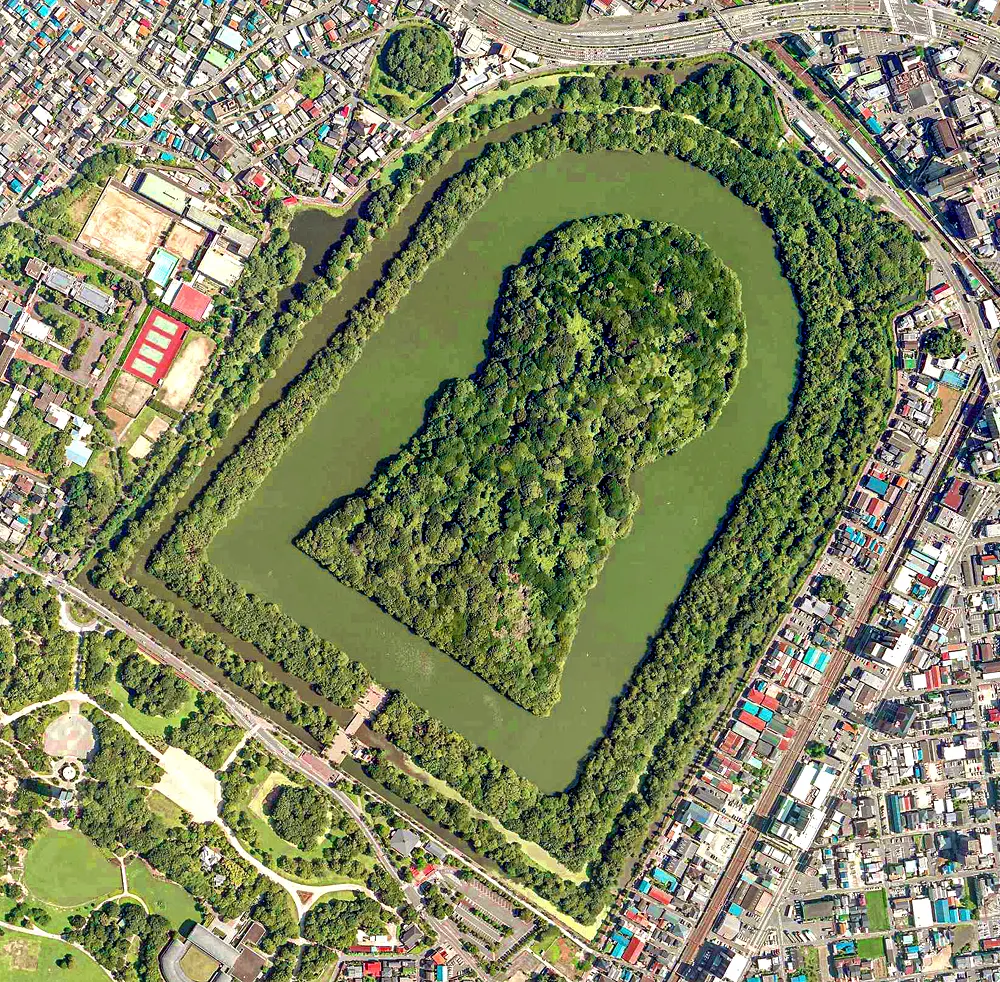
This is Futaiji Temple’s main entrance. Built in 1317, the gate is one of several historical structures at the temple. Futaiji also houses Buddhist statues made during the Heian period (794–1185) and a stone coffin excavated from one of Nara’s many burial mounds.
A close inspection of the gate’s doors will show that they differ in age. Some sections date to the Kamakura period (1185–1333), and others to the Meiji era (1868–1912). The older sections are dotted with small holes, likely created when local farmers stuck their hand-scythes into the door for temporary safekeeping.
出典: 地域観光資源の多言語解説文データベース(観光庁) — www.mlit.go.jp/tagengo-db. この英語解説文は観光庁の地域観光資源の多言語解説整備支援事業で作成しました。
Source: Japan Tourism Agency, Multilingual Explanation Database. This English text was produced by the Japan Tourism Agency's multilingual explanation project and is shown unedited. Opening hours and services may have changed since it was written.
貸Private tours in Nara
Your own guide and often your own car — the route, pace and pickup are set around you. Prices are usually per group, so they work out well for 2–6 people.
Ad: we may earn a commission if you book through these links, at no extra cost to you.
Things you may see here
 Kofun古墳
Treasure hunts nearby
Getting there
Hotels in Nara
Ad: we may earn a commission if you book through these links, at no extra cost to you.
More temples in Nara
Open the scanner and compare →