Futaiji Temple and Ariwara no Narihira 不退寺と在原業平
Official explanation
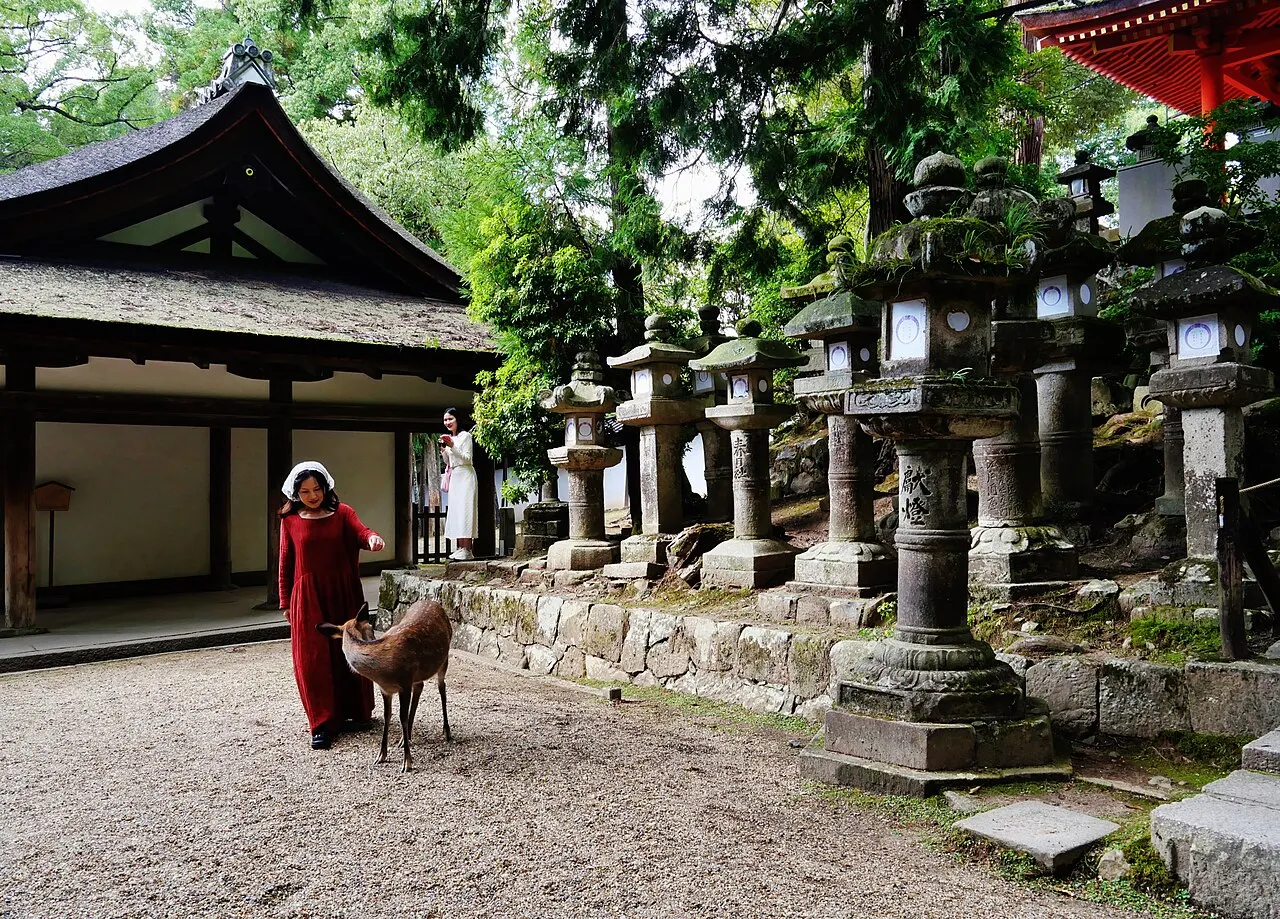
Futaiji Temple was founded in 847 by Ariwara no Narihira (825–880), an aristocrat and renowned author of romantic poetry. Narihira himself is said to have carved the temple’s wooden statue of Kannon, the bodhisattva of compassion. In recognition of the temple’s close association with the ninth-century poet, Futaiji is also referred to as Narihira-dera, or “Narihira Temple.” Unlike the sprawling compounds of Nara’s best-known temples, Futaiji’s compact, greenery-filled grounds are crossed by narrow footpaths.
The temple occupies a plot of land that was previously the residence of Emperor Heizei (773–824), whose brief reign lasted from 806 to 809. A sudden illness forced Heizei to abdicate the throne to his younger brother and move from Kyoto to Nara. The following year, Heizei tried and failed to reclaim his position. He then retreated to Nara, where he built a thatched-roof villa in which to spend the remainder of his life.
Read the full explanation
That land was passed down to Heizei’s son, Prince Abo (792–842), and then to his grandson, Ariwara no Narihira. In 847, Narihira took his grandfather’s residence and converted it, creating a place of Buddhist learning as a memorial to his father. The facility he founded would later become Futaiji Temple.
Narihira is one of the most notable figures of the ninth century, admired for his waka poetry, his reputedly handsome and refined appearance, and his many romantic escapades. He is associated with The Tales of Ise, a famous collection of waka poems and narratives that form a fictional account of Narihira’s life. The poems themselves are attributed to Narihira, but later writers organized them and added their own imagined context.
Today, the temple is known for the 500 or so varieties of flowers and other plants that grow among its buildings and around its pond. It is especially popular in autumn, when the grounds are enfolded by red-tinged maple boughs, and in spring, when the blooms of the yellow flag irises (kishōbu) that ring the pond are reflected in the water.
出典: 地域観光資源の多言語解説文データベース(観光庁) — www.mlit.go.jp/tagengo-db. この英語解説文は観光庁の地域観光資源の多言語解説整備支援事業で作成しました。
Source: Japan Tourism Agency, Multilingual Explanation Database. This English text was produced by the Japan Tourism Agency's multilingual explanation project and is shown unedited. Opening hours and services may have changed since it was written.
旅Nara tours
Live prices and reviews from GetYourGuide. Many tours can be cancelled for free — check each listing.
Ad: we may earn a commission if you book through these links, at no extra cost to you.
Treasure hunts nearby
Getting there
Hotels in Nara
Ad: we may earn a commission if you book through these links, at no extra cost to you.
More temples in Nara
Open the scanner and compare →