Yanagidani Kannon (Yokokuji Temple) 柳谷観音(楊谷寺)
Official explanation
Worshippers have been coming to Yokokuji Temple, commonly called Yanagidani (“willow valley”) Kannon, to pray for recovery from eye ailments since its founding. Both the principal object of worship (a statue of Kannon, the bodhisattva of compassion) and the water flowing on the grounds are regarded as having divine powers. The temple complex has many halls, some of which are connected by covered corridors. Its vast precincts are known for seasonal beauty, especially cherry blossoms in spring, hydrangeas in summer, and colorful maple foliage in autumn. In recent years, the temple’s practice of creating hanachozu (artistic, flower-filled water basins) has led to an increase in the number of visitors. Yokokuji is located in the Nishiyama mountains in the city of Nagaokakyo and belongs to the Seizan Jodo school of Buddhism.
Origins
Read the full explanation
Yokokuji was founded in 806 by the monk Enchin, also the founder of Kyoto’s famous Kiyomizudera Temple. It is said that Enchin saw a prophetic dream about meeting the bodhisattva Kannon that compelled him to travel to the Nishiyama mountains west of Kyoto. There, he saw a manifestation of Kannon with eleven heads, a thousand arms, and a thousand eyes sitting on a rock in a valley of willow trees. This form of Kannon is believed to possess the power to cure eye diseases. Elated, Enchin built a hall to worship the bodhisattva at the location and named it Yokokuji.
Legend of the Eye-Healing Water
In 811, the monk Kukai (Kobo Daishi, 774–835), the founder of the Shingon school of Buddhism, made a pilgrimage to Yokokuji from Otokunidera Temple. According to legend, Kukai encountered a monkey washing the eyes of its blind child in a pool near the temple hall, and after he prayed for 17 days, the baby monkey’s eyesight returned. Kukai continued his chanting for 17 more days and then used a Buddhist ritual tool called a vajra to deepen the pool, which turned into sacred water that could heal eye ailments. The water, called okozui (“vajra water”), was used by several historical figures and is still sought by believers for the prevention of eye illnesses.
Temple Grounds
The route begins from the Chokushimon, a gate once reserved solely for messengers from the imperial court. It is flanked by statues of Fujin and Raijin, the deities of wind and thunder. The early-seventeenth-century Hondo (Main Hall) contains the principal object of worship, a statue of Kannon with eleven heads, a thousand hands, and a thousand eyes. The sculpture is available for public viewing only on the 17th and 18th of each month. It is a designated Tangible Cultural Property of Kyoto Prefecture.
The Shoin is a guest hall connected to the Hondo by a covered corridor. Inside, visitors can take part in ritual practices such as sutra copying (shakyo) or drawing a Buddhist divinity as an offering (shabutsu). Artwork displayed in the hall is changed to match the seasons or traditional holidays. The Jodoen (“garden of the Pure Land”) next to the Shoin was created in the mid-Edo period (1603–1867) and is designated a Place of Scenic Beauty by Kyoto Prefecture. The garden is designed for viewing from three different elevations and angles: from the Shoin, from the stairs, and from the Kami-Shoin (Upper Guest Hall). Please note that the Kami-Shoin is only open in the morning of the 17th of each month and during special viewing periods in spring, summer, and autumn.
A long, covered stairway leads to the Okunoin (Inner Sanctuary). It contains a statue of Kannon given to the temple by Emperor Nakamikado (1702–1737) and 28 sculptures of the bodhisattva’s guardian deities. Descending from the Okunoin, visitors may walk past several other small halls and altars. The Aizendo Hall is dedicated to Aizen Myo-o, a Wisdom King associated with relationships and marital harmony. The Yodo Bentendo Hall displays a large doll of Lady Yodo (1569–1615), a consort of the warlord Toyotomi Hideyoshi (1536–1598). Two shrines are dedicated to Ganriki Inari, a guardian deity of the temple believed to bless worshippers with insights that will guide them through difficult situations in their lives.
Flower-Filled Water Basins
Almost all shrines and temples have water basins for ritual purification near the entrance. In recent years, it has become popular to fill these basins with artistic arrangements of seasonal flowers, attracting repeat visitors throughout the year and generating interest on social media. Yanagidani Kannon was at the forefront of this new practice, and every month, different flower compositions decorate the five water basins on the grounds. There is a large rectangular metal basin in front of the Hondo that is fed from the mouth of a dragon sculpture, three round basins in the Jodoen Garden, and another small basin near the temple treasury. The artfully displayed seasonal flowers and accompanying decorations serve as bright visual elements that add even more charm to the historic temple.
出典: 地域観光資源の多言語解説文データベース(観光庁) — www.mlit.go.jp/tagengo-db. この英語解説文は観光庁の地域観光資源の多言語解説整備支援事業で作成しました。
Source: Japan Tourism Agency, Multilingual Explanation Database. This English text was produced by the Japan Tourism Agency's multilingual explanation project and is shown unedited. Opening hours and services may have changed since it was written.
旅Kyoto tours
Live prices and reviews from GetYourGuide. Many tours can be cancelled for free — check each listing.
Ad: we may earn a commission if you book through these links, at no extra cost to you.
Things you may see here
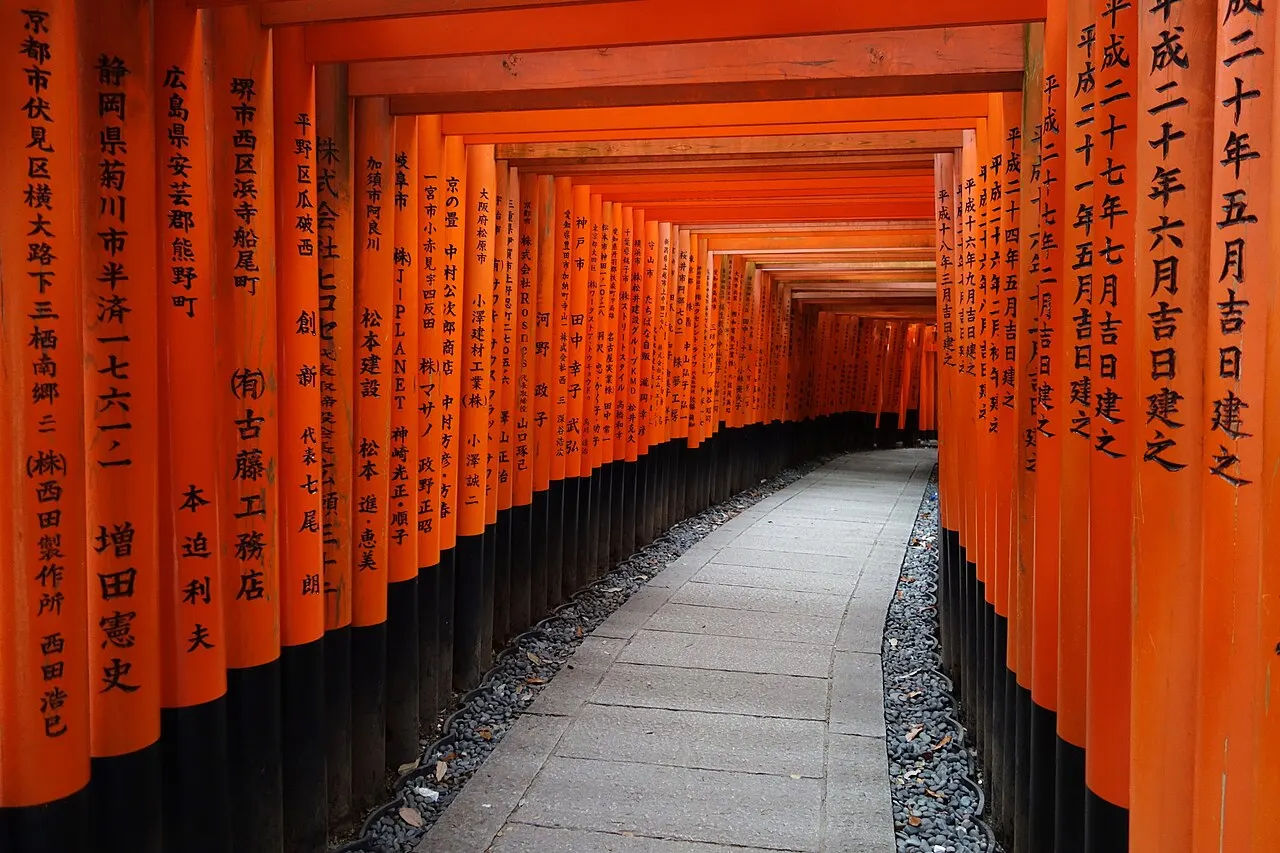 Inari foxes稲荷の狐
Treasure hunts nearby
Getting there
Hotels near Kyoto Station
Ad: we may earn a commission if you book through these links, at no extra cost to you.
More temples in Kyoto
Open the scanner and compare →