Komyoji Temple 光明寺
Official explanation
According to legend, Komyoji Temple was commissioned in 599 by Prince Shotoku (574–622), a significant figure in the spread of Buddhism. The temple lies on the side of Mt. Kimino-o, where a total of 72 Buddhist temples once stood; clearings in the forest still seen today hint of their location. Most of Komyoji’s original buildings were destroyed during periods of local conflict. However, the main hall, rebuilt in 1836, remains in good condition, and the 400-year-old temple bell sits inside the bell tower. The gate of the guardian kings and the statues inside are precious reminders of the temple’s more distant past.
The gate is two-tiered with three bays, and temple visitors will pass through the central bay as they enter the temple grounds. The hip-and-gable roof is covered by 4,500 thick chestnut-wood shingles. Inscriptions revealed during 1950 renovations date the gate’s construction to between 1242 and 1253. Two-tiered gates were uncommon at this time, a sign of the temple’s high status, and the shingling is also unusual. The gate was designated a National Treasure in 1954.
Read the full explanation
The wooden guardian-king statues are painted in vermillion and displayed in the rear corners of the gate, with the open-mouthed guardian on the right and the closed-mouthed statue on the left. Although the sculptor and year of construction have not been verified, parallels have been drawn with the guardian-king statues of Sekiganji Temple in Hyogo Prefecture, which were carved by Higo Jokei in 1242.
Komyoji is the head temple of the Seizan Jodo school of Buddhism. The vast temple complex at the base of the Nishiyama mountains has a strong historical connection with Honen (1133–1212), the founder of the Jodo (Pure Land) school. Komyoji is also a popular place to view maple foliage. Highlights include the stone stairway leading to the Miedo Hall and the 200-meter “maple path” to the left from the main gate. The tunnel of leaves formed by some 250 trees is bright green from spring through summer and turns fiery red and orange in autumn.
Brief History
The origin of Komyoji dates to 1198, when the monk Rensei (Kumagai Naozane, 1141–1208), a disciple of Honen, built Nenbutsu Zanmaiin Temple. Honen’s teachings centered on practicing nenbutsu, the ritual recitation of the name of Amida, the Buddha of Infinite Light and Life. According to temple legend, in 1228, on the 17th anniversary of Honen’s death, his stone coffin emitted rays of light that shone toward Nenbutsu Zanmaiin. Honen’s remains were brought to the temple, cremated, and enshrined on the grounds. Shortly after, the temple name was changed to Komyoji, which is written with kanji characters for “radiant light,” a phrase that carries spiritual connotations in Buddhism.
Miedo, Amidado, and Shakado Halls
The Miedo Hall was built in 1754 and is the main hall of Komyoji. The principal object of worship is a papier-mâché figure of Honen. It is believed that he made it himself using letters from his mother. At the top of a steep stairway behind the Miedo is the mausoleum enshrining Honen’s bones (closed to the public). His stone coffin and cremation site are located near the Amidado Hall and the Shakado Hall, respectively.
The Amidado enshrines a 2-meter statue of Amida Buddha flanked by smaller sculptures of Seishi, the bodhisattva of wisdom, and Kannon, the bodhisattva of compassion. Amida’s hands form a mudra welcoming the souls of the devotees to the Pure Land. The hall dates to 1799 and is said to reflect the traditional Jodo style characteristic of the Heian period (794–1185).
The Shakado was constructed in 1736 and enshrines a statue of Shakyamuni, the historical Buddha. In front of the hall is a dry landscape garden with several carefully placed rocks. The three largest stones represent Amida Buddha, Seishi Bodhisattva, and Kannon Bodhisattva, while the other 18 symbolize Amida’s 18th vow (out of 48), which is considered to be the cornerstone of Jodo school teachings. It is an oath that all sentient beings who sincerely call upon the name of Amida will be reborn in a paradise-like realm known as the Pure Land. On the opposite side of the garden is the Chokushimon Gate, which was solely used by messengers from the emperor’s court.
出典: 地域観光資源の多言語解説文データベース(観光庁) — www.mlit.go.jp/tagengo-db. この英語解説文は観光庁の地域観光資源の多言語解説整備支援事業で作成しました。
Source: Japan Tourism Agency, Multilingual Explanation Database. This English text was produced by the Japan Tourism Agency's multilingual explanation project and is shown unedited. Opening hours and services may have changed since it was written.
旅Kyoto tours
Live prices and reviews from GetYourGuide. Many tours can be cancelled for free — check each listing.
Ad: we may earn a commission if you book through these links, at no extra cost to you.
Things you may see here
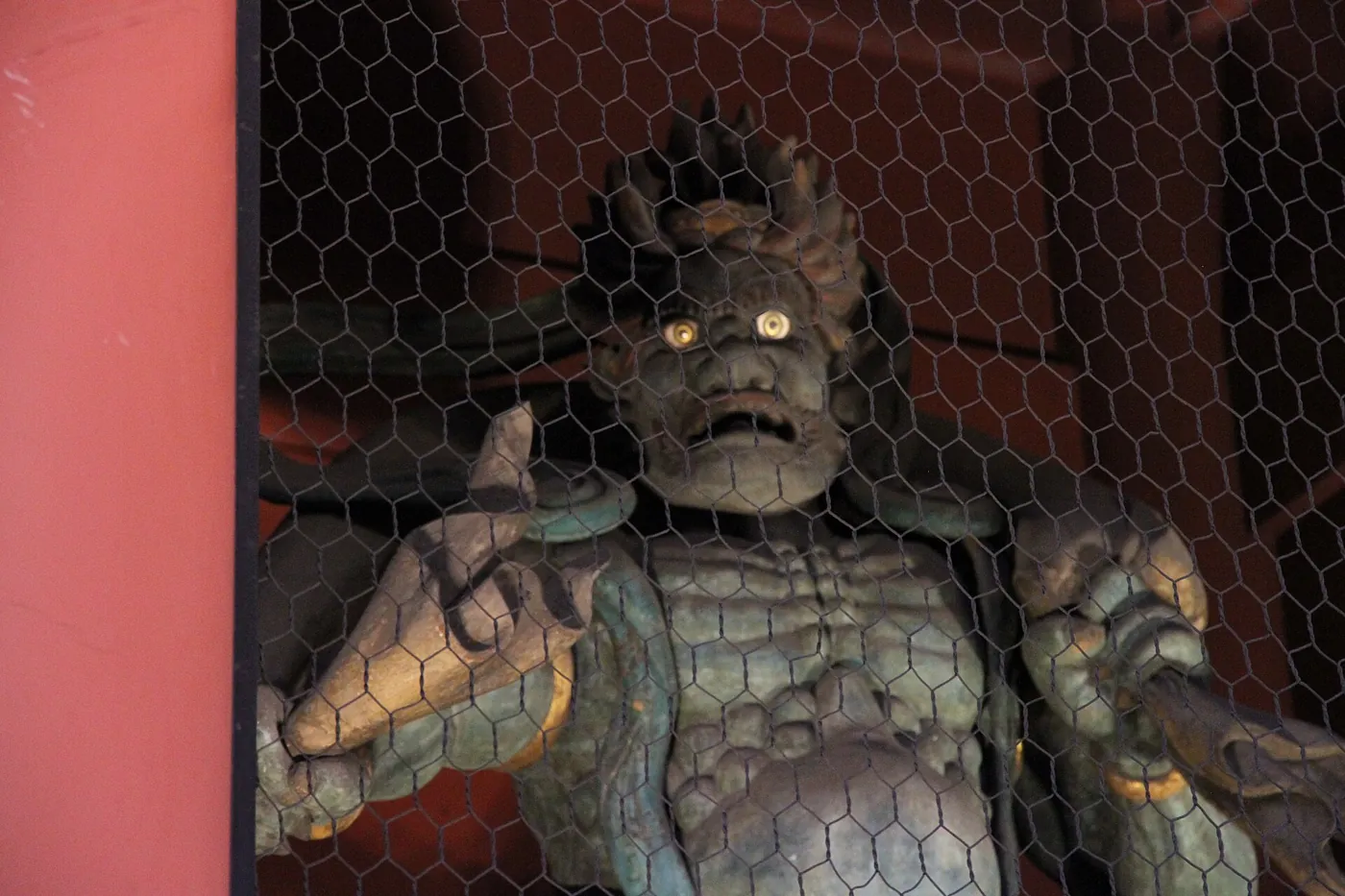 Niō仁王
Treasure hunts nearby

Getting there
Hotels near Kyoto Station
Ad: we may earn a commission if you book through these links, at no extra cost to you.
More temples in Kyoto
Open the scanner and compare →