Hoshakuji Temple 宝積寺
Official explanation
Hoshakuji, often called the “treasure temple,” owns many valuable examples of Buddhist statuary and ritual tools. The most notable are five statues that portray King Enma, the Judge of hell, and his four attendants. It is the oldest known set depicting this group of divinities. The temple treasures also include a lucky hammer and wand that have been used to bestow good fortune on worshippers for centuries. A ritual called Oni Kusube, held in April, uses peach wood bows, mugwort arrows, cypress leaves, and kagami mochi rice cakes to exorcise demons. The tradition is thought to reflect the earliest style of ceremonies to ward off evil.
History and Legends
Read the full explanation
Following a decree by Emperor Shomu (701–756), the monk Gyoki (668–749) founded Hoshakuji in 724. According to legend, the temple was built to enshrine the wish-granting kozuchi hammer and uchide wand that the emperor received from a divine dragon in a dream. In another tale, an imperial procession in 784 was stalled by floods that washed away a bridge until an old man appeared and walked upon the water, miraculously restoring the bridge before vanishing in a ray of light that shone toward Hoshakuji. Upon inspection, the feet of the temple’s statue of Kannon, the bodhisattva of compassion, turned out to be wet, and it became known as the “bridge-building Kannon.”
Throughout history, Hoshakuji was occasionally embroiled in fighting that occurred around Mt. Tennozan. During the Battle of Yamazaki in 1582, the powerful warlord Toyotomi Hideyoshi (1537–1598) used the temple as the base for his troops. In 1864, there was an attempted rebellion against the Tokugawa shogunate at the Kinmon Gate to Kyoto Imperial Palace. After the incident, the remaining anti-shogunate forces set up camp at Hoshakuji before making their last stand on Mt. Tennozan.
Enmado Hall
The temple’s most famous statues depict King Enma, the overseer of Hell, and his four administrators. Enma, who judges the spirits of the deceased, is portrayed wearing a large crown and holding a ceremonial baton. Around him are Shiroku, Shimyo, Kushojin, and Ankoku-doji, deities that write down misdeeds, read out crimes, announce judgments, and record verdicts. The statues date to the Kamakura period (1185–1333) and are nationally designated Important Cultural Properties. Worshippers pray to Enma for the forgiveness of their sins, and a special post box set up in the hall can be used to “send” him letters of repentance.
Temple Grounds and Halls
The Hondo enshrines the temple’s principal object of worship, a Kamakura-period statue of the Eleven-Headed Kannon, a nationally designated Important Cultural Property. The Kozuchinomiya Hall contains countless wooden figures of Daikokuten, one of the Seven Gods of Fortune, a takarabune (“treasure ship”) carving that depicts all the seven gods, and a kozuchi hammer and uchide wand used in rituals to bestow good luck and grant wishes. In the past, a worshipper’s hand would be tapped with these sacred tools three times as a blessing to be carried home in a closed fist, but now the blessings are ritually placed in a small, bright-colored pouch. The pouches also serve as votive tablets (ema) on which to write wishes and hang outside the hall.
Several reminders of Toyotomi Hideyoshi’s presence remain on the temple grounds. A three-story pagoda, called the “one-night tower,” is said to have been built by his forces in a single night. The “success stone” near the Hondo is where Hideyoshi reportedly sat, contemplating his goal to unify Japan. It is said that visitors who sit on the stone may be similarly blessed with success in life. (Please ask a monk or temple staff for permission before taking a seat.)
出典: 地域観光資源の多言語解説文データベース(観光庁) — www.mlit.go.jp/tagengo-db. この英語解説文は観光庁の地域観光資源の多言語解説整備支援事業で作成しました。
Source: Japan Tourism Agency, Multilingual Explanation Database. This English text was produced by the Japan Tourism Agency's multilingual explanation project and is shown unedited. Opening hours and services may have changed since it was written.
旅Kyoto tours
Live prices and reviews from GetYourGuide. Many tours can be cancelled for free — check each listing.
Ad: we may earn a commission if you book through these links, at no extra cost to you.
Things you may see here
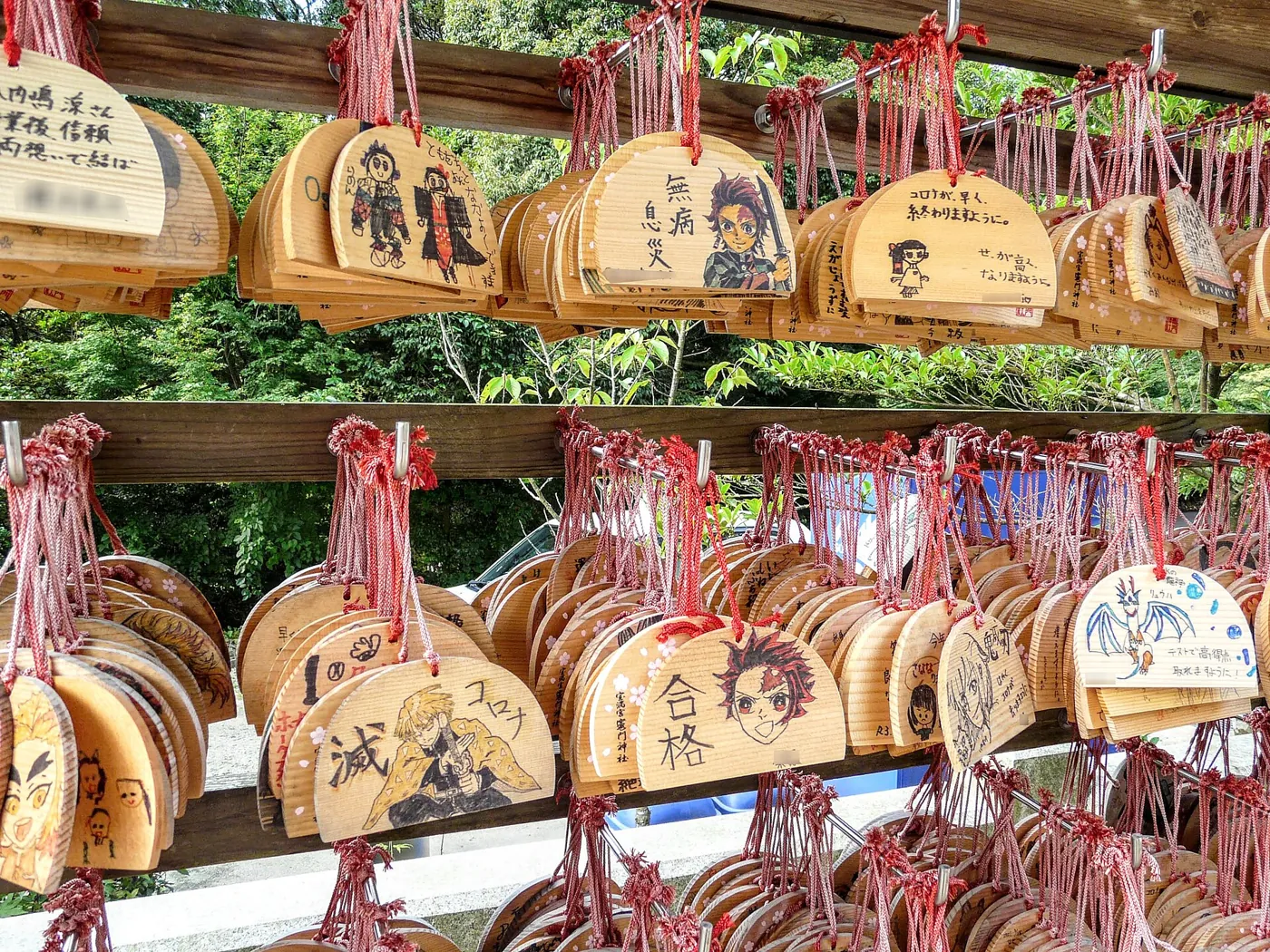 Ema絵馬
Treasure hunts nearby
Getting there
Hotels near Kyoto Station
Ad: we may earn a commission if you book through these links, at no extra cost to you.
More temples in Kyoto
Open the scanner and compare →