Hakkakudo (Octagonal Hall) 八角堂
Official explanation
Hakkakudo is the only remaining hall of the important Buddhist structures that used to be part of Iwashimizu Hachimangu, historically a shrine-temple complex that practiced a syncretic fusion of Shinto and Buddhism. The architectural style of this eight-sided hall is rather rare: it is not a regular octagon, so its sides are not all of equal length. Hakkakudo once housed a three-meter-tall wooden statue of Amida, a Buddha strongly connected to the deity Hachiman still worshipped at the main hall of Iwashimizu Hachimangu.
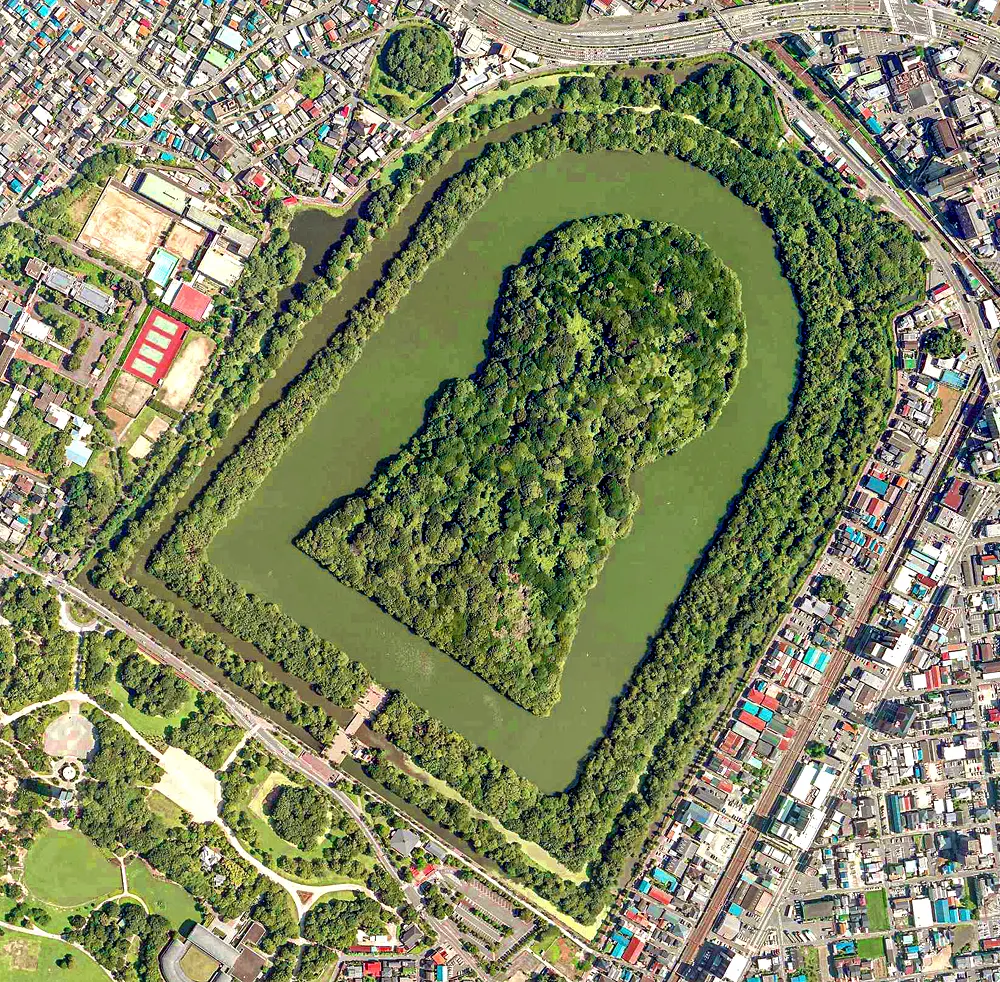
Hakkakudo was originally constructed in the thirteenth century and was rebuilt and repaired several times with donations from high-ranking nobility and powerful lords. Its current shape dates back to the seventeenth century. In 1868, the Meiji government ordered the separation of Shinto and Buddhism, and all Buddhist structures had to be removed from Iwashimizu Hachimangu. To save Hakkakudo, a former chief abbot of the nearby Shoboji Temple had it moved to this location atop an ancient burial mound in 1870.
Read the full explanation
The statue of Amida, now a nationally designated Important Cultural Property, was displayed at the Kyoto National Museum from 1998 and transferred to Shoboji in 2008. In 2012, both the past and present locations of Hakkakudo were designated National Historic Sites as part of the Iwashimizu Hachimangu precincts.
Hakkakudo is the only remaining hall of the important Buddhist structures that used to be part of Iwashimizu Hachimangu, historically a shrine-temple complex that practiced a syncretic fusion of Shinto and Buddhism. Hakkakudo housed a three-meter-tall wooden statue of Amida, a Buddha strongly connected to the deity Hachiman still worshipped at the main hall of Iwashimizu Hachimangu.
The architectural style of this eight-sided vermilion hall is rather rare: it is not a regular octagon, so its sides are not all of equal length. The shape of the structure can be described as a square with the corners cut off. Though Hakkakudo was originally built in the thirteenth century, its current form dates back to the seventeenth century. The hall was rebuilt and repaired several times with donations from high-ranking nobility and powerful lords. This financial support reflects the strength of belief in Amida Buddha and Hachiman that was widespread at that time.
In 1868, the Meiji government ordered the separation of Shinto and Buddhism, and all Buddhist structures and objects of worship had to be removed from Iwashimizu Hachimangu. To save Hakkakudo, a former chief abbot of the nearby Shoboji Temple had it moved to its present location atop an ancient burial mound in 1870.
The statue of Amida was displayed at the Kyoto National Museum from 1998 and transferred to Shoboji in 2008. It does not have the creator’s signature; however, based on the style researchers suggest that it could be the work of Kaikei, a renowned sculptor of the Kamakura period (1185–1333). The statue is now a nationally designated Important Cultural Property.
In 2012, the past and present locations of Hakkakudo were designated National Historic Sites as part of the Iwashimizu Hachimangu precincts. The hall itself underwent a large-scale restoration that was completed in 2019. Based on extensive analysis, the interior and exterior of the hall were repainted in bright colors to reflect the way it looked centuries ago.
The interior of Hakkakudo is usually closed to the public, but it is open several times a year on special occasions.
出典: 地域観光資源の多言語解説文データベース(観光庁) — www.mlit.go.jp/tagengo-db. この英語解説文は観光庁の地域観光資源の多言語解説整備支援事業で作成しました。
Source: Japan Tourism Agency, Multilingual Explanation Database. This English text was produced by the Japan Tourism Agency's multilingual explanation project and is shown unedited. Opening hours and services may have changed since it was written.
旅Kyoto tours
Live prices and reviews from GetYourGuide. Many tours can be cancelled for free — check each listing.
Ad: we may earn a commission if you book through these links, at no extra cost to you.
Things you may see here
 Kofun古墳
Treasure hunts nearby
Getting there
Hotels near Kyoto Station
Ad: we may earn a commission if you book through these links, at no extra cost to you.
More temples in Kyoto
Open the scanner and compare →