Gate of the Guardian Kings 二王門
Official explanation
The imposing entranceway to the Ninnaji complex is the Gate of the Guardian Kings, or the Niomon. Ninnaji’s history stretches back to the ninth century, but this gate (mon) was erected as part of a large rebuilding project after most of the temple’s buildings burned down during the Onin War (1467–1477). The gate has undergone extensive renovation and conservation work over the years. The people of old Japan esteemed it so highly that they named it one of the “Three Great Gates of Kyoto,” along with the gates of Chionin and Nanzenji temples.
The Niomon not only allows the pious to pass through, but also symbolically wards off evil spirits, thieves, and those who harbor ill will toward Buddhism. To this end, Ungyo and Agyo, the “Nio” guardian deities, stand on either side of the gate. These two fierce-looking and physically imposing protectors can be found at the main entrances to many temples across Japan. While they look similar, you can easily tell them apart: Agyo’s mouth is always open; Ungyo’s is always closed. You can almost hear them, Agyo roaring “Ah,” and Ungyo rumbling “Un.”
出典: 地域観光資源の多言語解説文データベース(観光庁) — www.mlit.go.jp/tagengo-db. この英語解説文は観光庁の地域観光資源の多言語解説整備支援事業で作成しました。
Source: Japan Tourism Agency, Multilingual Explanation Database. This English text was produced by the Japan Tourism Agency's multilingual explanation project and is shown unedited. Opening hours and services may have changed since it was written.
旅Kyoto tours
Live prices and reviews from GetYourGuide. Many tours can be cancelled for free — check each listing.
Ad: we may earn a commission if you book through these links, at no extra cost to you.
Things you may see here
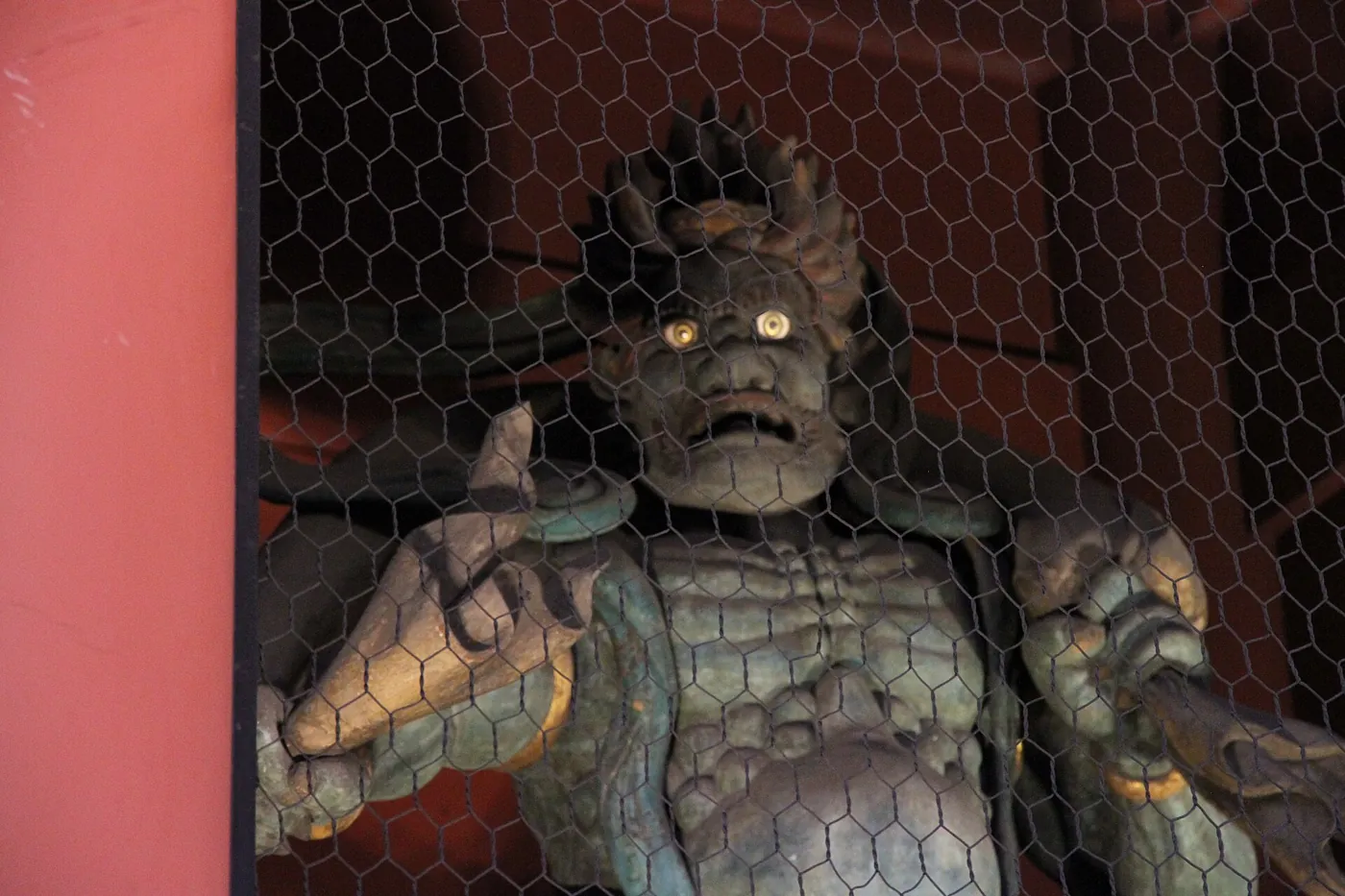 Niō仁王
Treasure hunts nearby
Getting there
Hotels near Kyoto Station
Ad: we may earn a commission if you book through these links, at no extra cost to you.
More sites in Kyoto
Open the scanner and compare →