Chibusan Burial Mound チブサン古墳
Official explanation
Colorful geometric patterns and a humanlike figure decorate the inner chambers of the Chibusan Burial Mound, which dates from the Kofun period (300–538 CE). The term kofun means “ancient burial mound” and refers to the tombs that were built for members of the ruling class during this time.
From the outside, the burial mound has the appearance of two small hills approximately 55 meters in length. It contains a burial chamber made of rocks stacked up to nearly 4 meters high.
Read the full explanation
Ancient symbols and colors
The burial chamber is built from large slabs of stone, measuring 2.3 meters in length, 0.9 meters in depth, and 1.45 meters in height. The slabs are painted with geometric patterns in vivid red, white, and black. The red color was applied using burnt soil rich in iron oxide, while clay and manganese were used for the white and black colors. Numerous triangular shapes immediately draw the eye; archaeologists believe these may have been intended to ward off evil spirits. Two white circles with black dots are painted in the center of the chamber wall. These shapes have been alternately explained as stars, mirrors, or breasts.
On the adjoining slab to the right is a humanlike figure with outstretched arms and what appears to be a crown on its head. Seven circles are painted in the space above it. Some believe these circles may represent the seven stars of the Big Dipper constellation.
Vestiges of history nearby
No bodies or artifacts are known to have been found in the chamber interior. A stone sculpture of a human figure measuring 150 centimeters high and 80 centimeters wide was discovered nearby, however. It was possibly placed there to protect the tomb. The original statue is held at the Tokyo National Museum, and a replica is displayed at the site of the mound.
The Chibusan Burial Mound is located less than 10 minutes to the west of Yamaga by car. The access road is narrow and large vehicles may not be able to easily reach the area. The outdoor site and an open-air re-creation of the inner chamber’s sarcophagus can be visited at any time. However, advance reservations are required to visit the interior, and the innermost chamber of the mound can only be viewed through a window.
At a separate site nearby, there is a series of 61 chambers dug into a section of rocky hillside. These have been dubbed the Nabeta Caves. They also date to the Kofun period and may have served as tombs. For more about burial mounds, the Kumamoto Prefectural Decorated Tumulus Museum in Yamaga offers detailed information and extensive exhibitions about this cultural practice.
出典: 地域観光資源の多言語解説文データベース(観光庁) — www.mlit.go.jp/tagengo-db. この英語解説文は観光庁の地域観光資源の多言語解説整備支援事業で作成しました。
Source: Japan Tourism Agency, Multilingual Explanation Database. This English text was produced by the Japan Tourism Agency's multilingual explanation project and is shown unedited. Opening hours and services may have changed since it was written.
旅Kyūshū tours
Live prices and reviews from GetYourGuide. Many tours can be cancelled for free — check each listing.
Ad: we may earn a commission if you book through these links, at no extra cost to you.
Things you may see here
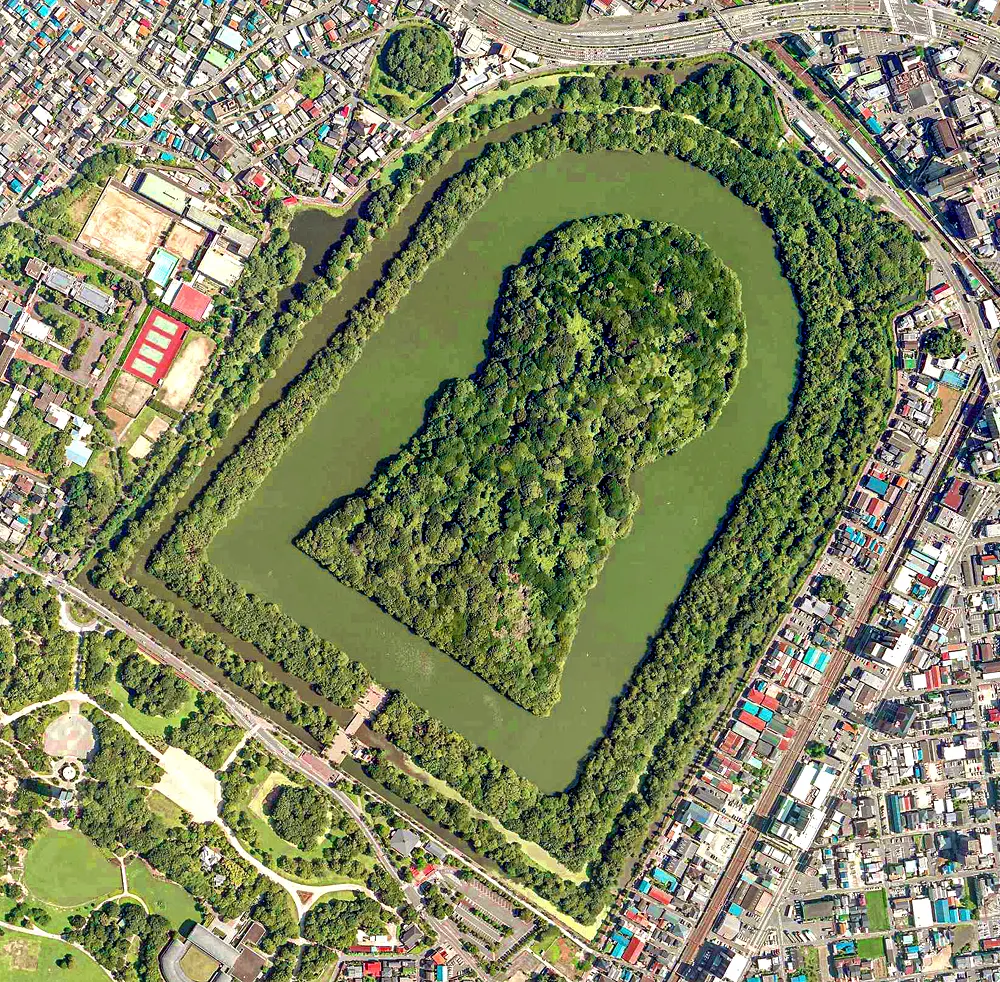 Kofun古墳
Getting there
Hotels in Kumamoto
Ad: we may earn a commission if you book through these links, at no extra cost to you.
More kofuns in Kumamoto
撮Standing in front of one?Open the scanner and compare →