Sone Tenmangu Shrine Fall Festival 曽根天満宮秋祭り
Official explanation
Each year over October 13–14, eleven colorful floats (yatai) weighing more than 2,000 kilograms pass through Sone Tenmangu Shrine and are paraded through the city’s streets. After sunset, they are illuminated with lights.
Sone is regarded as the pioneer of its characteristic futon yatai, which feature a futon mattress on the roof of each float. This form of float is thought to date from the era of Bunka-Bunsei culture (1804–1830). A votive tablet (ema) from 1861 depicts a Sone-style float, but it was not until the turn of the twentieth century that the floats began to be decorated as flamboyantly as they are today.
Read the full explanation
The various festival rituals include takewari, in which men slam bamboo sticks adorned with streamers on the ground to indicate their position for viewers some distance away, and hitotsumono, which involves drawing characters on the foreheads of young children who are then dressed in hats and hunting costumes before entering the shrine on horseback. Hitosumono is carried out because young children are believed to be more likely than adults to attract divine beings.
出典: 地域観光資源の多言語解説文データベース(観光庁) — www.mlit.go.jp/tagengo-db. この英語解説文は観光庁の地域観光資源の多言語解説整備支援事業で作成しました。
Source: Japan Tourism Agency, Multilingual Explanation Database. This English text was produced by the Japan Tourism Agency's multilingual explanation project and is shown unedited. Opening hours and services may have changed since it was written.
貸Private tours in Himeji
Your own guide and often your own car — the route, pace and pickup are set around you. Prices are usually per group, so they work out well for 2–6 people.
Ad: we may earn a commission if you book through these links, at no extra cost to you.
Things you may see here
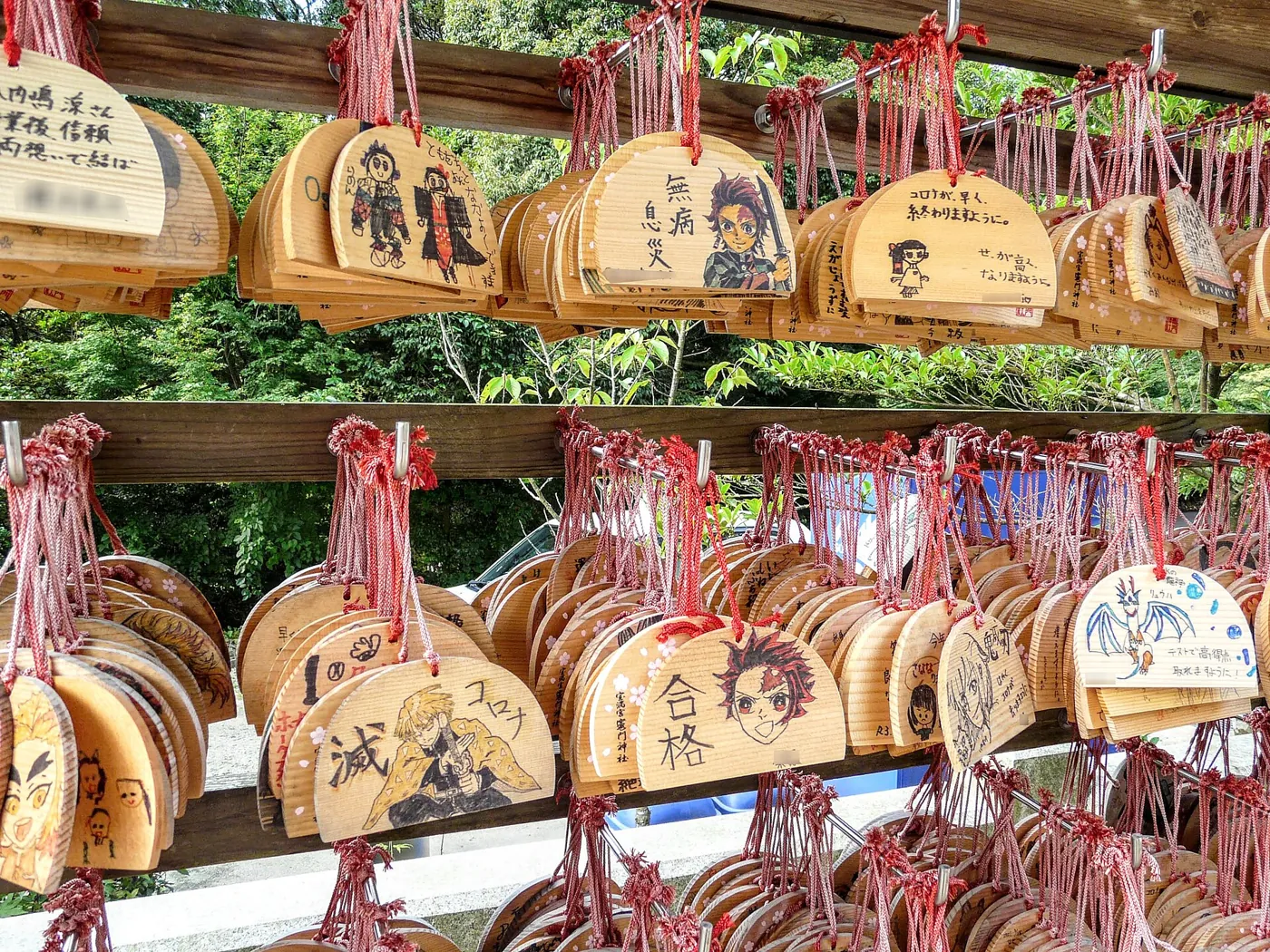 Ema絵馬
Getting there
Hotels in Hyogo
Ad: we may earn a commission if you book through these links, at no extra cost to you.
More shrines in Hyogo
Open the scanner and compare →