Katsurahama Jinja Shrine 桂浜神社
Official explanation
The history of Katsurahama Jinja Shrine can be traced back to the eighth century. The shrine is located just north of Katsurahama Beach, on the island of Kurahashi. It was mentioned in Japan’s oldest poetry anthology and was patronized by prominent historical figures, such as Emperor Meiji (1852–1912). As the city of Kure developed, the Shinto deities enshrined at Katsurahama Jinja changed to match the shifting identity of the city.
The first mention of a shrine standing on Katsurahama Beach can be found in a poem composed by Ōishi Minomaro in 736. Minomaro came ashore at Kurahashi Island while traveling with a diplomatic mission to the ancient Korean kingdom of Silla (57 BCE – 935 CE) and was struck by the scenic beauty of the location. The poem he composed is preserved in the Man’yōshū (Collection of Ten Thousand Leaves), the oldest anthology of Japanese poetry, which was compiled during the late Nara period (710–794).
Read the full explanation
Originally a small Shinto shrine, Katsurahama Jinja was dedicated to Munakata Sanjoshin (the Three Munakata Goddesses), female deities of the sea who grant safe sailing and bountiful catches, who were worshipped mainly by fishermen. With the rise of warrior activity on the Seto Inland Sea, visitors increasingly prayed for success in military matters rather than fishing. When governor Tagaya Hiroshige, himself a sailor and warrior, rebuilt the main sanctuary in 1480, he rededicated the shrine to the warrior deity Hachiman. In 1982, the main sanctuary was designated an Important Cultural Property by the national government.
The main sanctuary’s architecture is characteristic of the Kamakura period (1185–1333), though it was built over a century after the period ended. It was constructed in a traditional Shinto architectural style called sangensha nagarezukuri, characterized by an asymmetrical gabled roof and four pillars that visually divide the front of the building into three equal spaces. The roof is covered with wooden shingles, and the building’s pillars are all cylindrical rather than squared, which is atypical in shrine architecture. A worship hall was added later, but it was built taller than the neighboring main sanctuary. As this was later considered offensive to the deities enshrined there, the main sanctuary’s pillars were boosted on stilts to raise it slightly higher than the worship hall.
The shrine’s torii was built on the beach directly facing the sea in order to greet the many visitors who arrived by ship. In the modern era, when Kure gained prominence as the location of a naval base, Katsurahama Jinja became known throughout the country as a place to pray for military success. Notable visitors with military ties include Emperor Meiji (1852–1912) and the war hero Fleet Admiral Tōgō Heihachirō (1848–1934). Some of these visitors left votive tablets called ema. These wooden plaques represent the prayers and wishes of visitors to the shrine, and many of them are displayed in the front hall. To honor the shrine’s connection to the sea, this hall was constructed using shaped timber from the Kure shipyard. For this reason, the hall’s floorboards are curved like the sides of a ship.
出典: 地域観光資源の多言語解説文データベース(観光庁) — www.mlit.go.jp/tagengo-db. この英語解説文は観光庁の地域観光資源の多言語解説整備支援事業で作成しました。
Source: Japan Tourism Agency, Multilingual Explanation Database. This English text was produced by the Japan Tourism Agency's multilingual explanation project and is shown unedited. Opening hours and services may have changed since it was written.
旅Hiroshima & Miyajima tours
Live prices and reviews from GetYourGuide. Many tours can be cancelled for free — check each listing.
See all Hiroshima & Miyajima tours →
Ad: we may earn a commission if you book through these links, at no extra cost to you.
Things you may see here
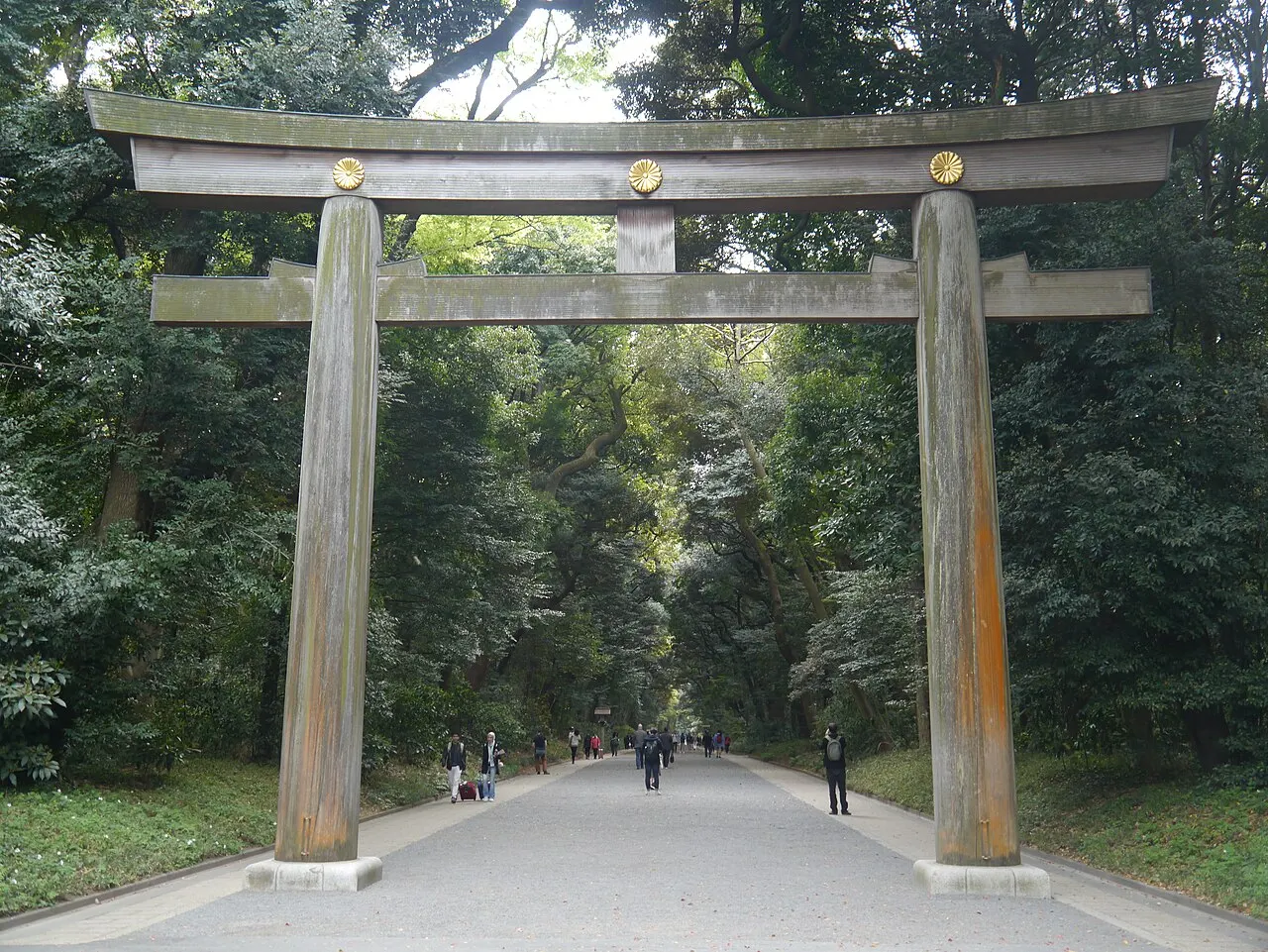 Torii gate鳥居
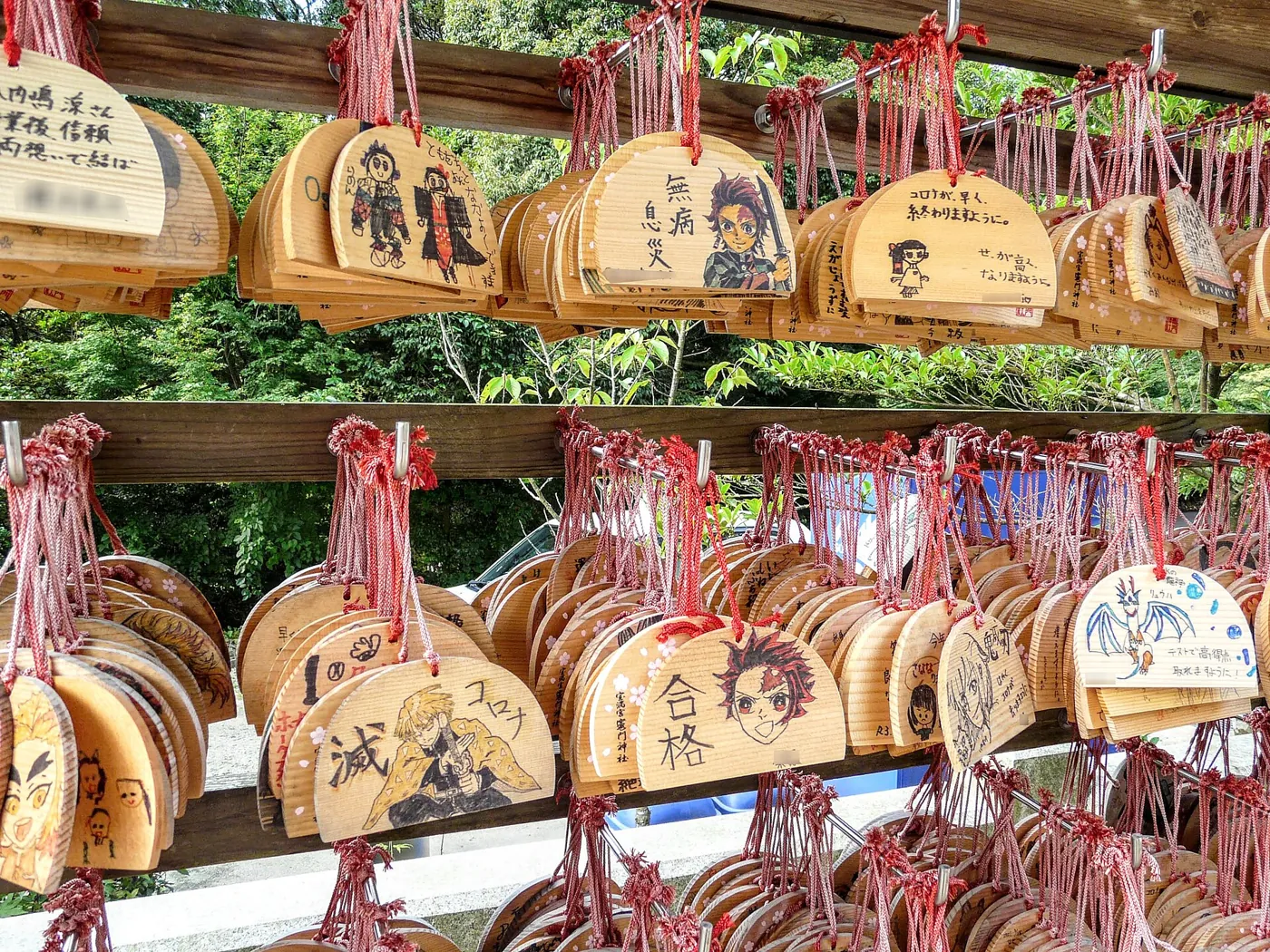 Ema絵馬
Treasure hunts nearby
Getting there
Stay overnight on Miyajima
Ad: we may earn a commission if you book through these links, at no extra cost to you.
More shrines in Hiroshima
Open the scanner and compare →