Itsukushima Shrine: Komochi Yamauba 厳島神社:子持山姥
Official explanation
Not all ema images depict animals, historical heroes, or other auspicious motifs. This painting by the Kyoto-based artist Nagasawa Rosetsu (1754–1799) portrays a fearsome-looking yamauba (“mountain witch”) and her adoptive child. The boy is Kintaro, whose legend is one of the staples of Japanese folklore. Raised by the yamauba on a mountain in Hakone (just south of Tokyo), Kintaro was a child with superhuman strength who fought monsters and demons from an early age. In his free time, he would throw rocks the size of a small house and fell trees with his bare hands. Rosetsu depicts the infant Kintaro clinging to his mother, whose once vivid but now faded kimono hints at her past as a courtesan in Kyoto. Considered one of the artist’s finest achievements, the painting was donated to Itsukushima Shrine in 1797 by a group of wealthy merchants from Hiroshima, some of whom had housed Rosetsu during his visit to the city a few years earlier. The painting displayed here is a reproduction.
出典: 地域観光資源の多言語解説文データベース(観光庁) — www.mlit.go.jp/tagengo-db. この英語解説文は観光庁の地域観光資源の多言語解説整備支援事業で作成しました。
Source: Japan Tourism Agency, Multilingual Explanation Database. This English text was produced by the Japan Tourism Agency's multilingual explanation project and is shown unedited. Opening hours and services may have changed since it was written.
旅Hiroshima & Miyajima tours
Live prices and reviews from GetYourGuide. Many tours can be cancelled for free — check each listing.
See all Hiroshima & Miyajima tours →
Ad: we may earn a commission if you book through these links, at no extra cost to you.
Things you may see here
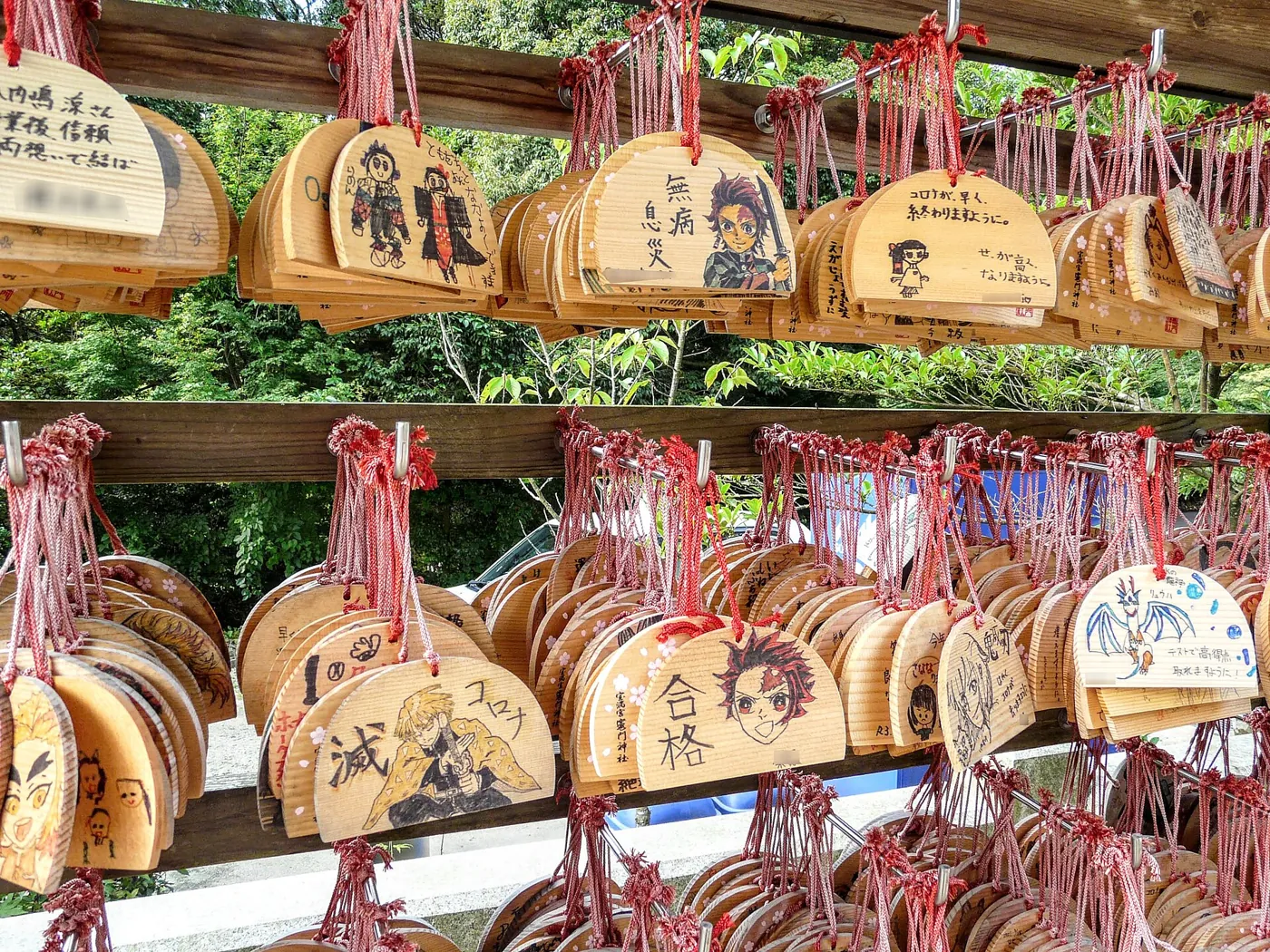 Ema絵馬
Treasure hunts nearby
Getting there
Stay overnight on Miyajima
Ad: we may earn a commission if you book through these links, at no extra cost to you.
More shrines in Hiroshima
Open the scanner and compare →