Itsukushima Shrine: Images of the Thirty-Six Immortals of Poetry 厳島神社:三十六歌仙のイメージ
Official explanation
These six paintings are all that remains of a series of 36 portraits presented to Itsukushima Shrine at some point during the Edo period (1603–1868), although records indicate that similar series were donated to the shrine as early as 1516. The series represents the Thirty-Six Immortals of Poetry, a group of waka poets from the seventh to the tenth centuries. The poets were selected in the early eleventh century by Fujiwara no Kinto (966–1041), a renowned poet and court official who anthologized their works.
This group became a popular motif for serial paintings in the Kamakura period (1185–1333). In these series, each poet is usually depicted in a realistic manner, although never based on sketches from life, and the portrait is accompanied by a famous verse from the poet’s works. Sets of these portraits were often presented to shrines and temples as ema paintings, donated as a sign of the donor’s faith and as a gift to please the deities, and were frequently displayed in their entirety on the shrine grounds.
出典: 地域観光資源の多言語解説文データベース(観光庁) — www.mlit.go.jp/tagengo-db. この英語解説文は観光庁の地域観光資源の多言語解説整備支援事業で作成しました。
Source: Japan Tourism Agency, Multilingual Explanation Database. This English text was produced by the Japan Tourism Agency's multilingual explanation project and is shown unedited. Opening hours and services may have changed since it was written.
貸Private tours in Hiroshima & Miyajima
Your own guide and often your own car — the route, pace and pickup are set around you. Prices are usually per group, so they work out well for 2–6 people.
See all Hiroshima & Miyajima tours →
Ad: we may earn a commission if you book through these links, at no extra cost to you.
Things you may see here
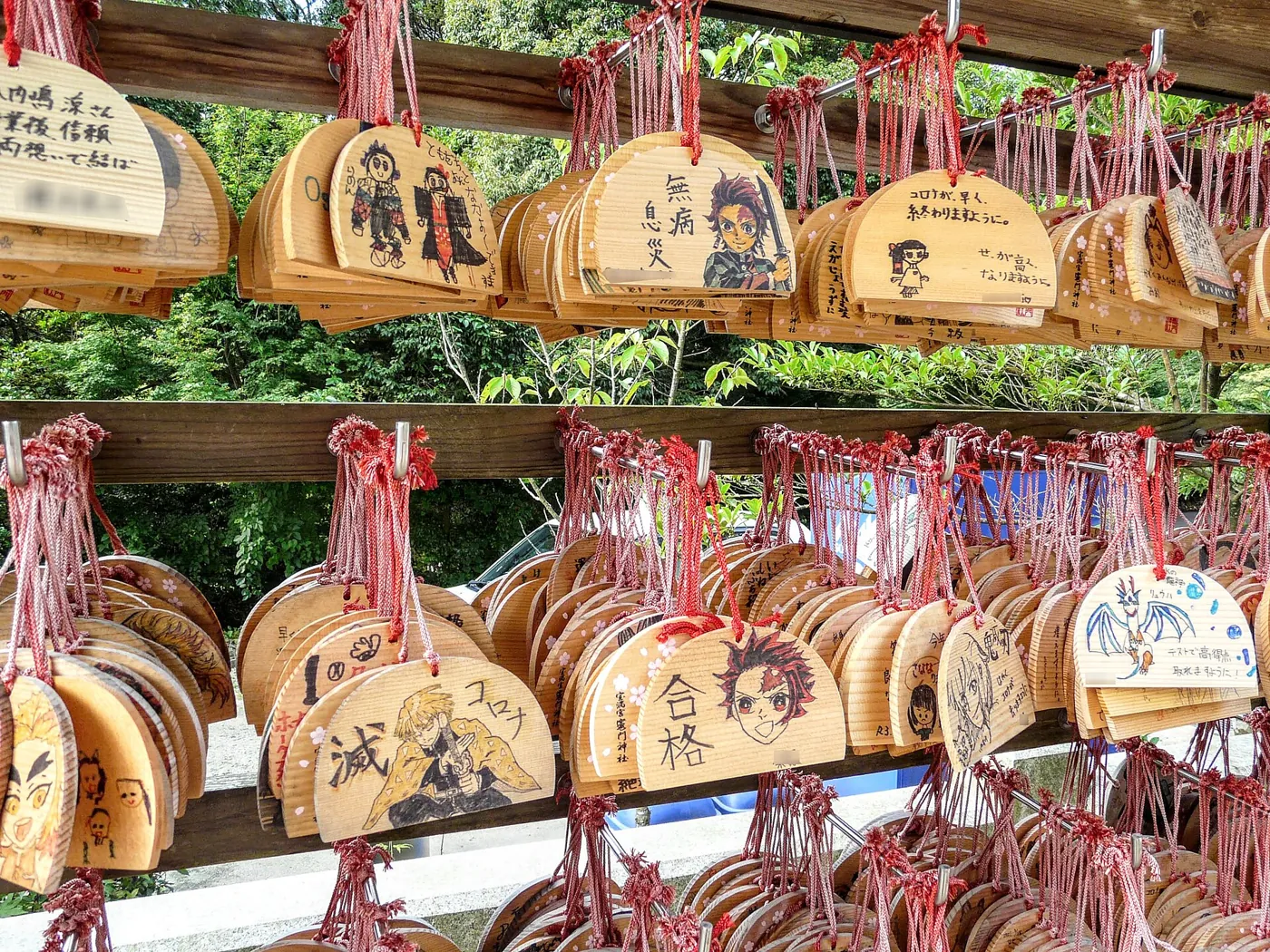 Ema絵馬
Treasure hunts nearby
Getting there
Stay overnight on Miyajima
Ad: we may earn a commission if you book through these links, at no extra cost to you.
More shrines in Hiroshima
Open the scanner and compare →