Itsukushima Shrine: Image of Tokiwa Gozen (Ema Images) 厳島神社:常盤御前の絵(絵馬の絵)
Official explanation
This Edo-period (1603–1868) painting depicts Tokiwa Gozen (1138–c.1180), the mother of the great samurai hero Minamoto no Yoshitsune (1159–1189), fleeing with her sons through the snow during a conflict between the rival Taira and Minamoto clans. It was presented to the shrine as an ema devotional offering.
The word ema (“horse picture”) commonly refers to the wooden votive tablets on which wishes and prayers are written and offered at Shinto shrines and Buddhist temples. Historically, however, ema were images or other depictions of horses, on which Shinto deities were thought to ride. In ancient Japan, living horses were presented to shrines, often associated with prayers related to rain. Only institutions such as the government, and well-off communities and individuals, had the means to donate actual horses, so ordinary people would present clay or wooden figurines instead. These statues gradually gained widespread popularity before giving way to drawings and paintings, and by the Muromachi period (1336–1573) ema motifs had come to include not only horses but also other animals as well as famous individuals, such as poets, aristocrats, and samurai. While wealthy devotees would present large, often elaborate works of art such as ema, others would make do with much smaller, simple images, which developed into the wooden tablets used today.
Read the full explanation
Itsukushima Shrine holds an extensive collection of ema presented to the shrine over the centuries. The oldest of these pictures is from 1520 and depicts bugaku, the ancient performing art introduced to Itsukushima from Kyoto in the twelfth century.
出典: 地域観光資源の多言語解説文データベース(観光庁) — www.mlit.go.jp/tagengo-db. この英語解説文は観光庁の地域観光資源の多言語解説整備支援事業で作成しました。
Source: Japan Tourism Agency, Multilingual Explanation Database. This English text was produced by the Japan Tourism Agency's multilingual explanation project and is shown unedited. Opening hours and services may have changed since it was written.
旅Hiroshima & Miyajima tours
Live prices and reviews from GetYourGuide. Many tours can be cancelled for free — check each listing.
See all Hiroshima & Miyajima tours →
Ad: we may earn a commission if you book through these links, at no extra cost to you.
Things you may see here
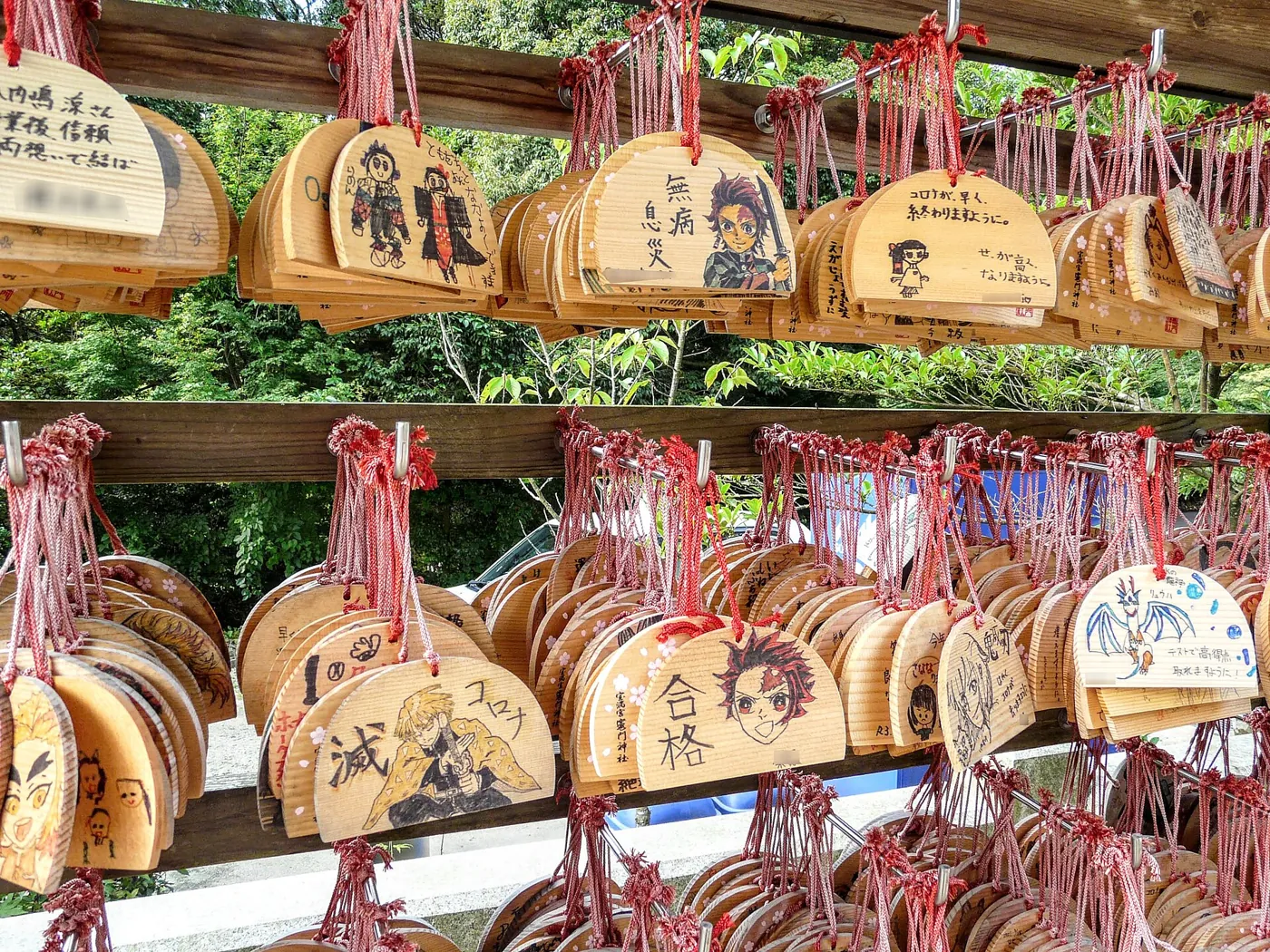 Ema絵馬
Treasure hunts nearby
Getting there
Stay overnight on Miyajima
Ad: we may earn a commission if you book through these links, at no extra cost to you.
More shrines in Hiroshima
Open the scanner and compare →