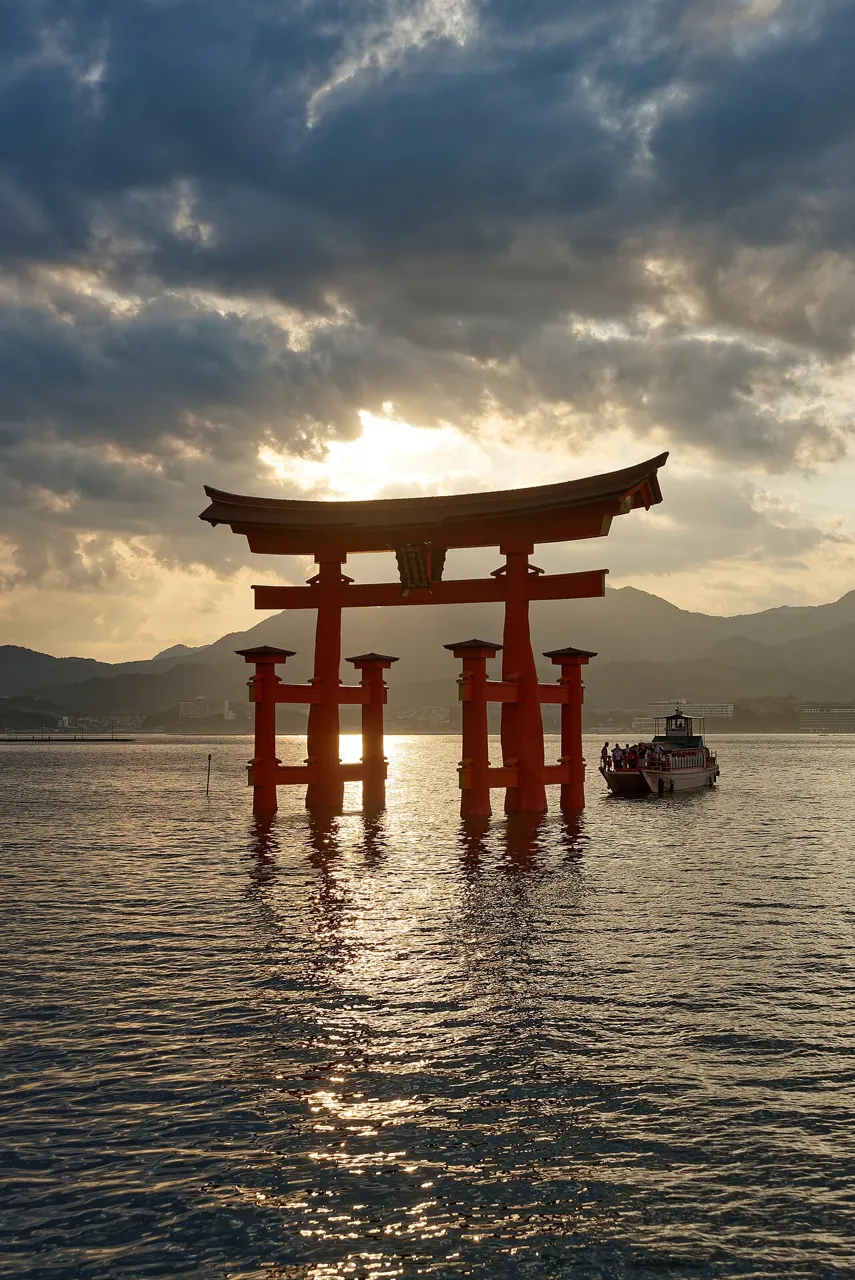
Itsukushima Shrine: Eight Views of Itsukushima 厳島神社:厳島八景
Official explanation
The “eight views of Itsukushima” depicted in this picture scroll were selected by the Buddhist priest Joshin of Miyajima’s Komyoin Temple in the early 1700s. The practice of choosing a number of iconic “views” to represent a place was introduced from mainland Asia, where it originated with the eight views of Xiaoxiang, a popular subject of poems, drawings, and paintings in Song China (960–1279). Xiaoxiang is a region in south-central China (present-day Hunan Province) famed for its natural beauty. The eight views concept was likely introduced to Japan in the late fourteenth century and inspired a great number of travelers, priests, and literati, who went on to pick out their own favorite views in various parts of the country. This tradition was later modified and expanded upon, as demonstrated by famous serial works such as Thirty-six Views of Mount Fuji by Hokusai (1760–1849). The ink paintings in the Eight Views of Itsukushima scroll offer a highly stylized depiction of the island’s natural beauty.
出典: 地域観光資源の多言語解説文データベース(観光庁) — www.mlit.go.jp/tagengo-db. この英語解説文は観光庁の地域観光資源の多言語解説整備支援事業で作成しました。
Source: Japan Tourism Agency, Multilingual Explanation Database. This English text was produced by the Japan Tourism Agency's multilingual explanation project and is shown unedited. Opening hours and services may have changed since it was written.
旅Hiroshima & Miyajima tours
Live prices and reviews from GetYourGuide. Many tours can be cancelled for free — check each listing.
See all Hiroshima & Miyajima tours →
Ad: we may earn a commission if you book through these links, at no extra cost to you.
Treasure hunts nearby
Getting there
Stay overnight on Miyajima
Ad: we may earn a commission if you book through these links, at no extra cost to you.
More shrines in Hiroshima
Open the scanner and compare →