Daishoin: Chokugando Hall 大聖院:勅願堂
Official explanation
Chokugando Hall is the main hall (hondo) of Daishoin and houses a statue of Fudo Myo-o, one of the Five Wisdom Kings of Buddhism and the temple’s principal deity (honzon). The original Chokugando was the oldest structure on the temple grounds, built on the orders of Emperor Toba (1103–1156) upon his visit to Miyajima in the twelfth century. Chokugan means “emperor’s prayer” and refers specifically to an appeal for peace and prosperity throughout the realm. The current hall was constructed in 1910 and its focal point is a wooden image of Namikiri Fudo Myo-o, the “wave-breaking” manifestation of a fierce-looking deity that is widely worshiped in Shingon Buddhism.
The legend of Namikiri Fudo Myo-o tells how Kukai (774–835), the priest who established the Shingon school and is also considered the founder of Daishoin, was caught in a storm on his way back to Japan from China, where he had been studying. With the sea raging around him, Kukai carved a likeness of Fudo Myo-o out of a sacred piece of wood. The fearsome deity immediately stilled the waves, allowing Kukai to return home safely.
Read the full explanation
Namikiri Fudo Myo-o was worshiped by the sixteenth-century warlord Toyotomi Hideyoshi (1537–1598), who chose the deity as his personal protector and installed a statue of it on his ship before commanding an invasion of the Korean Peninsula in 1592. The statue now housed at Chokugando is said to have been donated by Hideyoshi and is believed to protect travelers to Miyajima, who must journey across the water to get to the island. Also housed within the building, in each corner of the hall, are statues of the other four Wisdom Kings: Gozanze (east), Gundari (south), Daiitoku (west), and Kongoyasha (north). After exiting the hall, visitors can write a wish or a prayer to the deities on an ema (wooden votive tablet), which are available in several shapes and can be hung on the wall next to Chokugando Hall. The tablets are displayed there until the next prayer ceremony, at which time they are ritually burned.
出典: 地域観光資源の多言語解説文データベース(観光庁) — www.mlit.go.jp/tagengo-db. この英語解説文は観光庁の地域観光資源の多言語解説整備支援事業で作成しました。
Source: Japan Tourism Agency, Multilingual Explanation Database. This English text was produced by the Japan Tourism Agency's multilingual explanation project and is shown unedited. Opening hours and services may have changed since it was written.
旅Hiroshima & Miyajima tours
Live prices and reviews from GetYourGuide. Many tours can be cancelled for free — check each listing.
See all Hiroshima & Miyajima tours →
Ad: we may earn a commission if you book through these links, at no extra cost to you.
Things you may see here
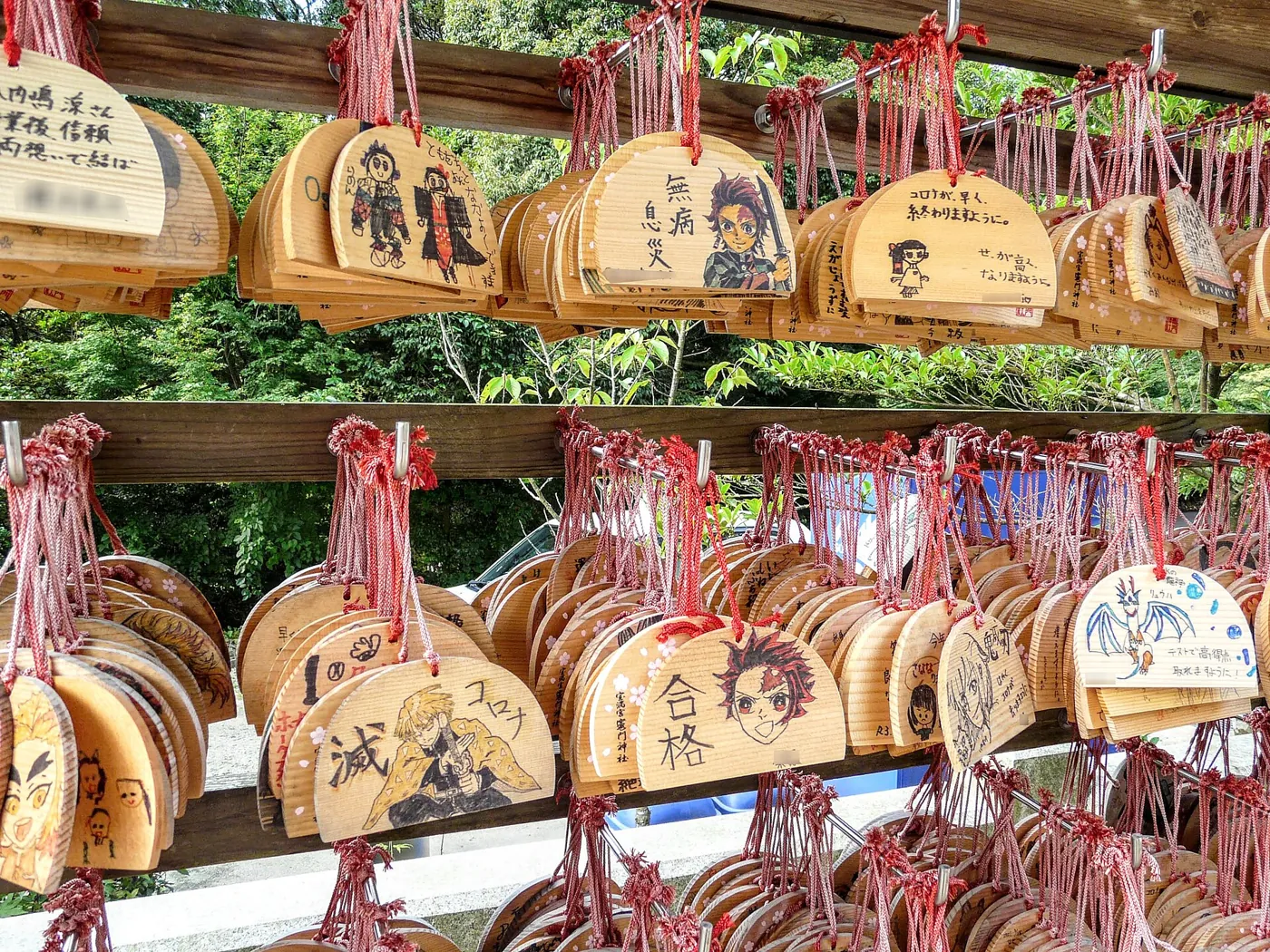 Ema絵馬
Treasure hunts nearby
Getting there
Stay overnight on Miyajima
Ad: we may earn a commission if you book through these links, at no extra cost to you.
More temples in Hiroshima
Open the scanner and compare →