Onsenji Temple 温泉寺
Official explanation
Onsenji Temple, located in Gero’s hills, is dedicated to Yakushi Nyorai, the Buddha of medicine and healing, who is said to have led the local people to discover Gero’s hot spring. According to local legend, a strong earthquake in 1265 stopped the flow of water from the hot spring at nearby Mt. Yugamine. Afterward, local residents began to notice an egret flying above the Hida River every day. They decided to follow the bird, which seemed to be injured, and eventually found it soothing its wounds in a natural hot spring. Under a hillside pine tree where the egret had stopped to rest, the people discovered a statue of Yakushi Nyorai. From then on, they believed the Buddha had taken the shape of an egret in order to show them a new hot spring source. The fact that the newly discovered hot spring was on flat land instead of high in the mountains made it easily accessible. Gero was eventually recognized as one of the top three hot spring towns in Japan, and it became a popular resort destination, attracting visitors who wished to cure their ailments by bathing in the hot spring. Thankful visitors can go to Onsenji Temple to pay their respects to Yakushi Nyorai.
Onsenji Temple’s spacious grounds are most majestic in autumn, when the bright red maple leaves are illuminated at night. The temple is located on Mt. Nakane, at the top of a 173-step stone staircase leading up from Jizodo Hall in the hot spring district, affording visitors a panoramic view of the district and the wider town of Gero. Visitors suffering from physical ailments may want to stop by the Yukake Yakushi statue in front of the main hall, a figure said to cure illness. Visitors pour warm water on the same part of the statue that is ailing them, and pray for a cure.
Read the full explanation
At the top of 173 stone steps is Onsenji, a temple dedicated to Yakushi Nyorai, the Buddha of healing and medicine. The temple is located near the center of Gero’s hot spring district, and its grounds offer views over the town.
A white egret offers salvation
Gero has been famed for its hot springs for more than a thousand years. However, it is said that the waters stopped flowing for a period in 1265. The revival of the hot springs is attributed to a white egret that villagers noticed flying to the Hida River every day. Upon following the bird, they discovered a new hot spring source where the bird was bathing. The egret then took to the sky and landed on the branch of a pine tree on the hillside where Onsenji now stands. Beneath the tree, the villagers uncovered a statue of Yakushi Nyorai, the Buddha of medicine and healing, and believed the deity had assumed the form of the white egret. Onsenji was established to remember this legend and dedicated to Yakushi Nyorai.
Pilgrimages of healing
During the Edo period (1603–1867), up to 30,000 people a year visited Gero to bathe in its famed waters. Today, a hot spring source still exists beneath the main hall of Onsenji Temple. Water also flows from the Yakushi Nyorai statue near the main hall and is said to have healing powers when applied to the body.
The temple retains many votive plaques from the Edo period, attesting to the hot springs’ popularity. The plaques are called ema, on which visiting worshippers wrote their requests. Some of the pillars in the main hall have markings that appear to be such prayers. It is thought that those who could not afford ema, which require a donation, wrote their requests directly on the pillars.
Onsenji’s seasonal scenery
The grounds of Onsenji Temple are beautiful year-round, especially during autumn, when the leaves turn vibrant hues of red and yellow. For a few weeks each November, the temple holds a festival to celebrate the seasonal colors, illuminating maple trees in the evening and allowing access to areas usually off-limits, such as the ornate Iokaku pavilion.
出典: 地域観光資源の多言語解説文データベース(観光庁) — www.mlit.go.jp/tagengo-db. この英語解説文は観光庁の地域観光資源の多言語解説整備支援事業で作成しました。
Source: Japan Tourism Agency, Multilingual Explanation Database. This English text was produced by the Japan Tourism Agency's multilingual explanation project and is shown unedited. Opening hours and services may have changed since it was written.
旅Takayama, Shirakawa-gō & Matsumoto tours
Live prices and reviews from GetYourGuide. Many tours can be cancelled for free — check each listing.
See all Takayama, Shirakawa-gō & Matsumoto tours →
Ad: we may earn a commission if you book through these links, at no extra cost to you.
Things you may see here
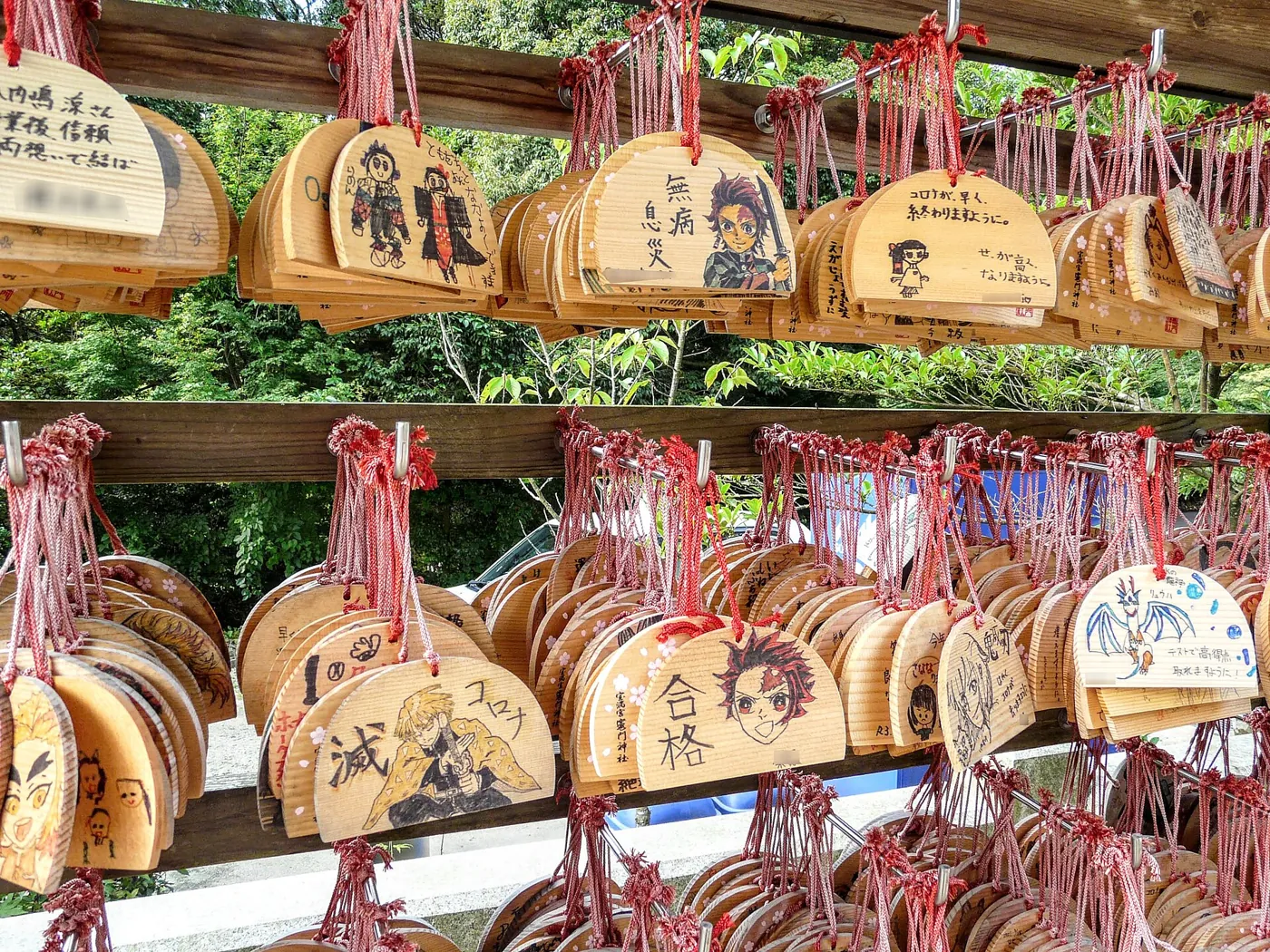 Ema絵馬
Getting there
Stay in Takayama
Ad: we may earn a commission if you book through these links, at no extra cost to you.
More temples in Gifu
撮Standing in front of one?Open the scanner and compare →