Nikko Futarasan Chugushi Shrine 日光二荒山中宮祠神社
Official explanation
Chugushi Shrine is part of Nikko Futarasan-jinja Shrine. It is midway between the main shrine of Futarasan (near Nikko Toshogu Shrine) and the original shrine at the summit of Mt. Nantai that the Buddhist monk Shodo Shonin (735–817) established in 784. Mt. Nantai is the main deity of the shrine, and the shrine grounds encompass the entire mountain. It took many years for Shodo to succeed in climbing Mt. Nantai and establishing a temple there.
Shodo was drawn to Mt. Nantai because of his devotion to Kannon, the bodhisattva of compassion. Mt. Nantai was previously known as Futarasan (“san” means mountain), and as Fudarakusan before that. “Fudaraku” is the Japanese rendering of “Potalaka,” the mythical mountain paradise of Kannon in India, which may explain the special importance of Mt. Nantai to Shodo.
Read the full explanation
Religious practice in this area was originally a blend of an early form of Shinto, Buddhism, and the mountain religion known as Shugendo. It was only with the separation of Shinto and Buddhism that occurred after the Meiji Restoration of 1868 that Futarasan, including Chugushi, became exclusively Shinto.
Chugushi Shrine Highlights
Kaguraden
Sacred dances (kagura) are offered to the gods, and Daikokuten, the god of wealth and one of Japan’s Seven Lucky Gods, is enshrined here.
Worship Hall (haiden) and Inner Sanctuary (honden)
Both structures were built in 1701 and are designated Important Cultural Properties. The worship hall is open to the public and many rites and ceremonies are held here. The inner sanctuary, located behind the worship hall, is where the main deity is enshrined.
Seven Lucky Gods (shichi fukujin)
In Japan, seven deities from the Hindu, Buddhism, and Shinto pantheons are collectively known as the Seven Lucky Gods. Stone figures of these seven deities are located around the shrine complex.
Entrance to Mt. Nantai
The entrance to the path leading to the summit of Mt. Nantai is just beyond the main buildings of the shrine precincts. The path is open during the climbing season, from May 5 through October 25.
Museum
The Chugushi Museum holds an excellent collection of swords, including Nenekirimaru, an Important Cultural Property renowned as Japan’s longest sword. Other treasures include three portable shrines (mikoshi), which were given to the shrine in 1389, a metal priest’s staff (shakujo), said to have been used by Shodo Shonin, and religious objects excavated at the summit of Mt. Nantai. The museum is located to the east of the shrine.
Imperial Residence
Between the main shrine buildings and the museum is a wooden, two-storied building used by Emperor Taisho (1879–1926) when he visited the area. It now serves as the shrine office and the office of the religious association affiliated with Mt. Nantai. It is not open to the public.
Chugushi Inari jinja Shrine
Outside the Chinese-style gate with curved gables that is the main entrance to the shrine compound is a shrine to Uga no Mitama no Kami, a deity associated with food and agriculture. Uga no Mitama no Kami is often identified with Inari, the deity of agriculture (particularly rice farming) and success in business.
出典: 地域観光資源の多言語解説文データベース(観光庁) — www.mlit.go.jp/tagengo-db. この英語解説文は観光庁の地域観光資源の多言語解説整備支援事業で作成しました。
Source: Japan Tourism Agency, Multilingual Explanation Database. This English text was produced by the Japan Tourism Agency's multilingual explanation project and is shown unedited. Opening hours and services may have changed since it was written.
旅Takayama, Shirakawa-gō & Matsumoto tours
Live prices and reviews from GetYourGuide. Many tours can be cancelled for free — check each listing.
See all Takayama, Shirakawa-gō & Matsumoto tours →
Ad: we may earn a commission if you book through these links, at no extra cost to you.
Things you may see here
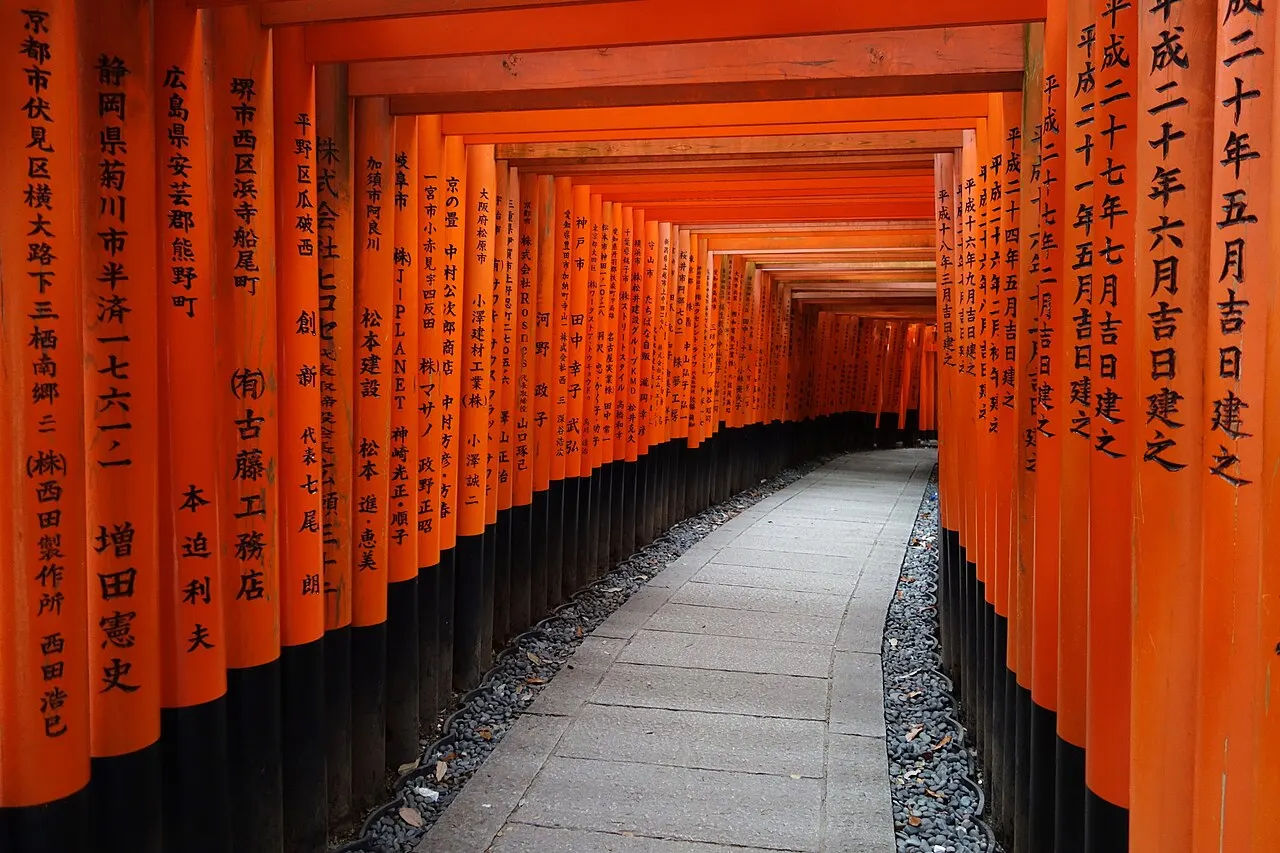 Inari foxes稲荷の狐
Getting there
Stay in Takayama
Ad: we may earn a commission if you book through these links, at no extra cost to you.
More shrines in Gifu
Open the scanner and compare →