Hasshogu Shrine 八所宮
Official explanation
Hasshogu Shrine in the Yoshitake district of Munakata is said to have been founded in 674. Four pairs of deities are venerated at the shrine, including those who created the islands of Japan and those who protected Emperor Jimmu (believed to Japan’s first emperor), on a journey through northern Kyushu.
Local legend recounts that Emperor Jimmu was traveling through the area from his base in Hyuga (Miyazaki) to conquer the lands of Yamato (present-day Nara) when a deity appeared, riding a red horse. The deity guided the emperor safely through the area. Several historic votive tablets (ema) at the shrine depict this story.
Read the full explanation
It is said that a shrine was built here at the request of Emperor Tenmu (631–686), Japan’s fortieth emperor, to enshrine the deities who protected Emperor Jimmu. Hasshogu Shrine has played a role in protecting the imperial family and their retainers since it was established. Toyotomi Hideyoshi (1537–1598), the famed warlord and politician who completed the sixteenth-century unification of Japan begun by Oda Nobunaga (1534–1582), prayed here for victory when he came to subdue the powerful warlords of Kyushu in 1586. After his success, he dedicated several treasures to the shrine, including a sword.
An annual autumn festival has been celebrated at Hasshogu Shrine for over 200 years. Held on the third weekend of October, the festival starts with an evening procession of local people in Edo-period (1603–1867) dress, carrying lanterns and portable shrines from Hasshogu Shrine to the Tsuri River. The approach to the shrine is lined with food stalls, adding to the festive atmosphere. Other events during the festival weekend include horseback archery performances, traditional dances, and children’s sumo matches. The festival concludes at midnight on the Sunday.
出典: 地域観光資源の多言語解説文データベース(観光庁) — www.mlit.go.jp/tagengo-db. この英語解説文は観光庁の地域観光資源の多言語解説整備支援事業で作成しました。
Source: Japan Tourism Agency, Multilingual Explanation Database. This English text was produced by the Japan Tourism Agency's multilingual explanation project and is shown unedited. Opening hours and services may have changed since it was written.
旅Kyūshū tours
Live prices and reviews from GetYourGuide. Many tours can be cancelled for free — check each listing.
Ad: we may earn a commission if you book through these links, at no extra cost to you.
Things you may see here
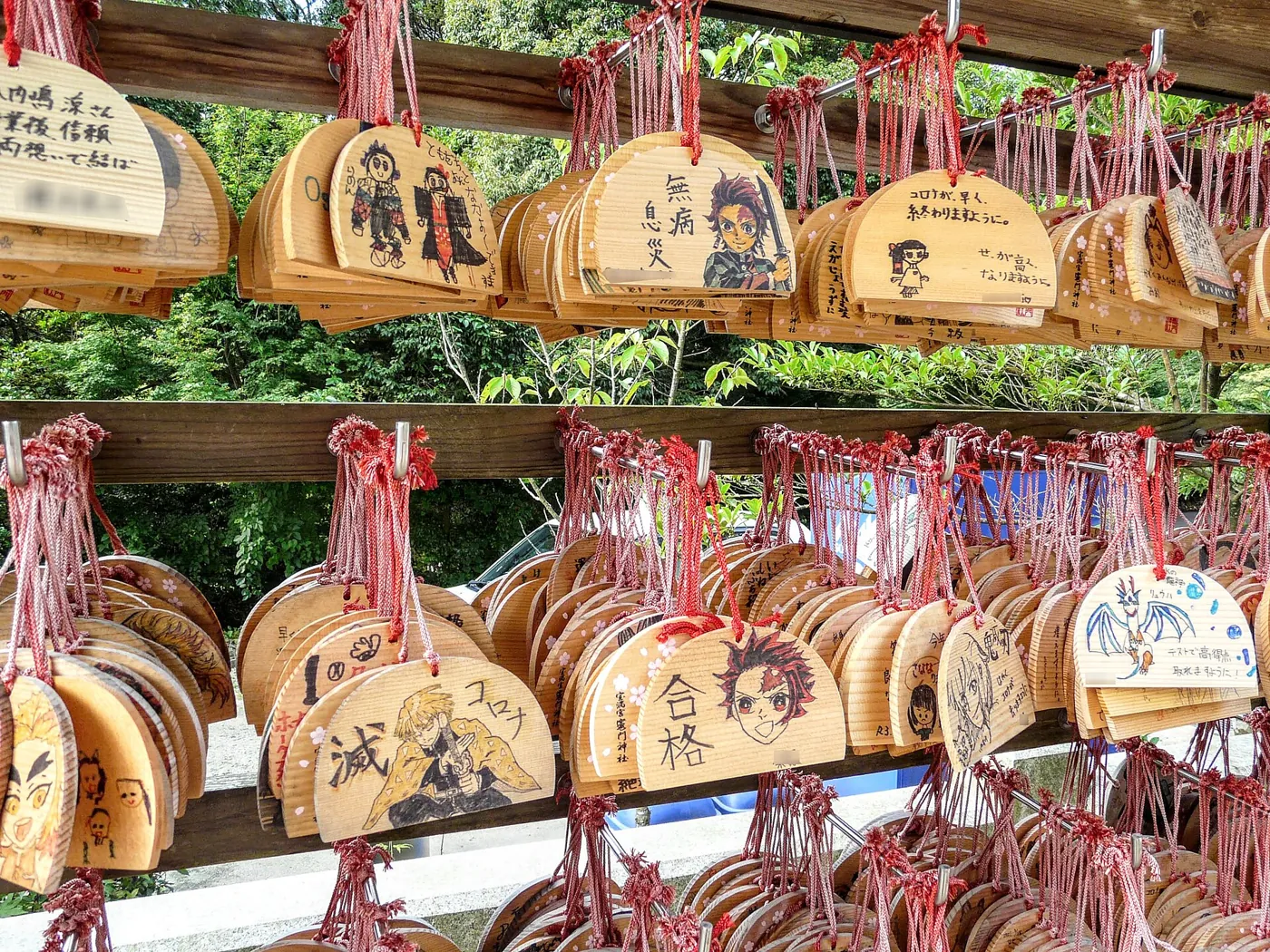 Ema絵馬
Getting there
Hotels in Kyūshū
Ad: we may earn a commission if you book through these links, at no extra cost to you.
More shrines in Fukuoka
Open the scanner and compare →