Sanage Shrine 猿投神社
Official explanation
Sanage Shrine is an ancient Shinto sanctuary whose vast grounds cover a large part of Mt. Sanage. The 629-meter mountain is thought to have been worshiped as the abode of the divine for millennia. The shrine consists of the main complex at the southern foot of the mountain and the Higashinomiya (Eastern Shrine) and Nishinomiya (Western Shrine) shrines higher up on the slopes.
The shrine appears in records as far back as the ninth century and is listed in the authoritative Engishiki, a compilation of regulations and procedures completed in 927 CE. From the thirteenth century onward, it enjoyed the protection of successive local lords and flourished as a regional center of learning and commerce as well as religion. Japanese religious thought and practice at that time were dominated by a complex mixture of Shinto and Buddhism, and Sanage Shrine came to encompass a vast number of sub-shrines, sub-temples, and monasteries. It was designated the sannomiya (the third-highest ranked shrine) in Mikawa Province (the eastern half of present-day Aichi Prefecture). It was the third shrine a newly appointed daimyo lord would visit on the local pilgrimage he was required to undertake after assuming his position.
Read the full explanation
Sanage Shrine’s fortunes declined during the Edo period (1603–1867), in part due to a lack of powerful supporters. In 1853, most of its buildings were lost to fire. A further setback came with the destruction of Buddhist buildings and images that followed the government-ordered separation of Shinto and Buddhism shortly after the Meiji Restoration in 1868. Of the shrine’s Buddhist structures that had either escaped the flames or were rebuilt after the blaze, only one survived the demolition. The one remaining Buddhist hall, Yamanaka Kannondo, is located on a hillside just north of the main shrine. The current shrine buildings were erected between 1856 and 1965 and stand in a straight line along the approach to the main sanctuary (honden), the innermost building.
Visitors to Sanage Shrine can write wishes on wooden ema tablets and dedicate them to the enshrined deities. The tablets are decorated with an image of a left-handed scythe in reference to Prince Ousu, the shrine’s main deity. In mythology, Ousu was the twin brother of Yamato Takeru, a legendary warrior prince and one of Japan’s most popular folk heroes. It was once believed that one twin would always be born right-handed and the other left-handed, and the left-handed scythe came to symbolize Ousu, who is said to have been an eager clearer of the wilderness for cultivation.
出典: 地域観光資源の多言語解説文データベース(観光庁) — www.mlit.go.jp/tagengo-db. この英語解説文は観光庁の地域観光資源の多言語解説整備支援事業で作成しました。
Source: Japan Tourism Agency, Multilingual Explanation Database. This English text was produced by the Japan Tourism Agency's multilingual explanation project and is shown unedited. Opening hours and services may have changed since it was written.
旅Nagoya & Ise tours
Live prices and reviews from GetYourGuide. Many tours can be cancelled for free — check each listing.
Ad: we may earn a commission if you book through these links, at no extra cost to you.
Things you may see here
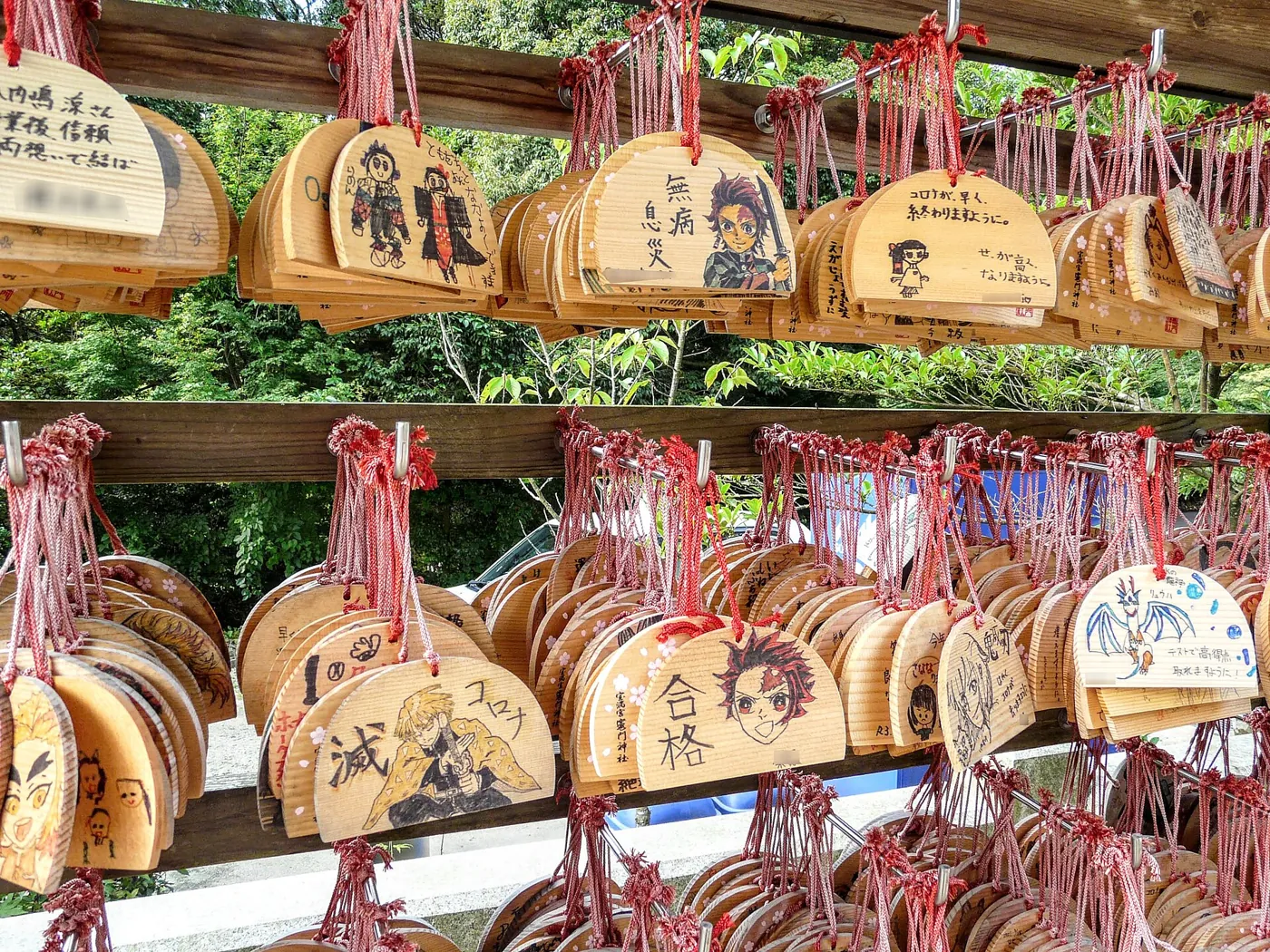 Ema絵馬
Getting there
Hotels in Nagoya
Ad: we may earn a commission if you book through these links, at no extra cost to you.
More shrines in Aichi
Open the scanner and compare →